
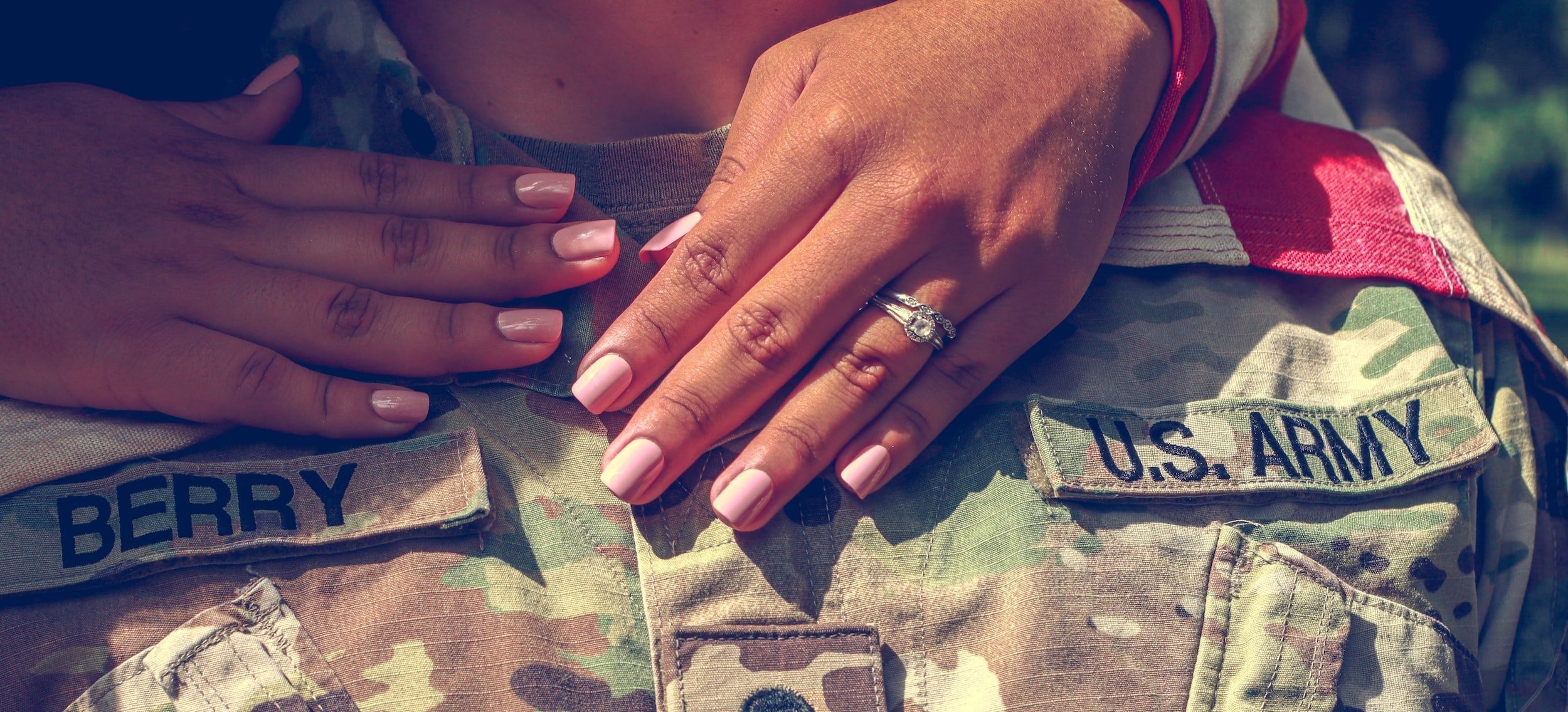
Military Families
Counseling Support That Understands Military Life & the Family Behind It

Military service affects more than the person wearing the uniform. Deployments, PCS moves, unpredictable schedules, reintegration, career transitions, and the demands of military culture can influence relationships, parenting, communication, and the stability of the entire household.
Sometimes families adapt quickly. Other times, the strain begins to show in ways no one expected.
At HOPE Therapeutic Alliance, we provide counseling for military members, Veterans, spouses, couples, children, and families navigating the realities that can come with military life.
Military Life Can Change How a Family Functions
Every military family is different, but frequent change often requires family members to continually adjust their roles.
A spouse may become responsible for nearly everything during a deployment and then struggle to redistribute those responsibilities after reunion. Children may react to separation, relocation, school changes, or a parent's return differently than adults expect. Couples may discover that reconnecting after months apart is more complicated than simply being together again.
Even positive transitions can require adjustment. Counseling provides a place to address what is happening within the family without assuming that military service itself is the problem.
Reasons Military Families Come to Counseling
We work with military-connected families experiencing concerns such as:
Changes in family roles and responsibilities
Transition from active-duty service to civilian life
Supporting a service member or Veteran experiencing mental health concerns
Caregiver and spouse stress
Blended family or co-parenting challenges
Balancing military expectations with individual and family needs
Deployment preparation, separation, and reintegration
PCS moves and repeated transitions
Relationship disconnection or communication difficulties
Parenting during deployment or unpredictable schedules
Children struggling with moves, separation, or family changes
Trauma, anxiety, depression, grief, or chronic stress
Counseling That Understands the Context
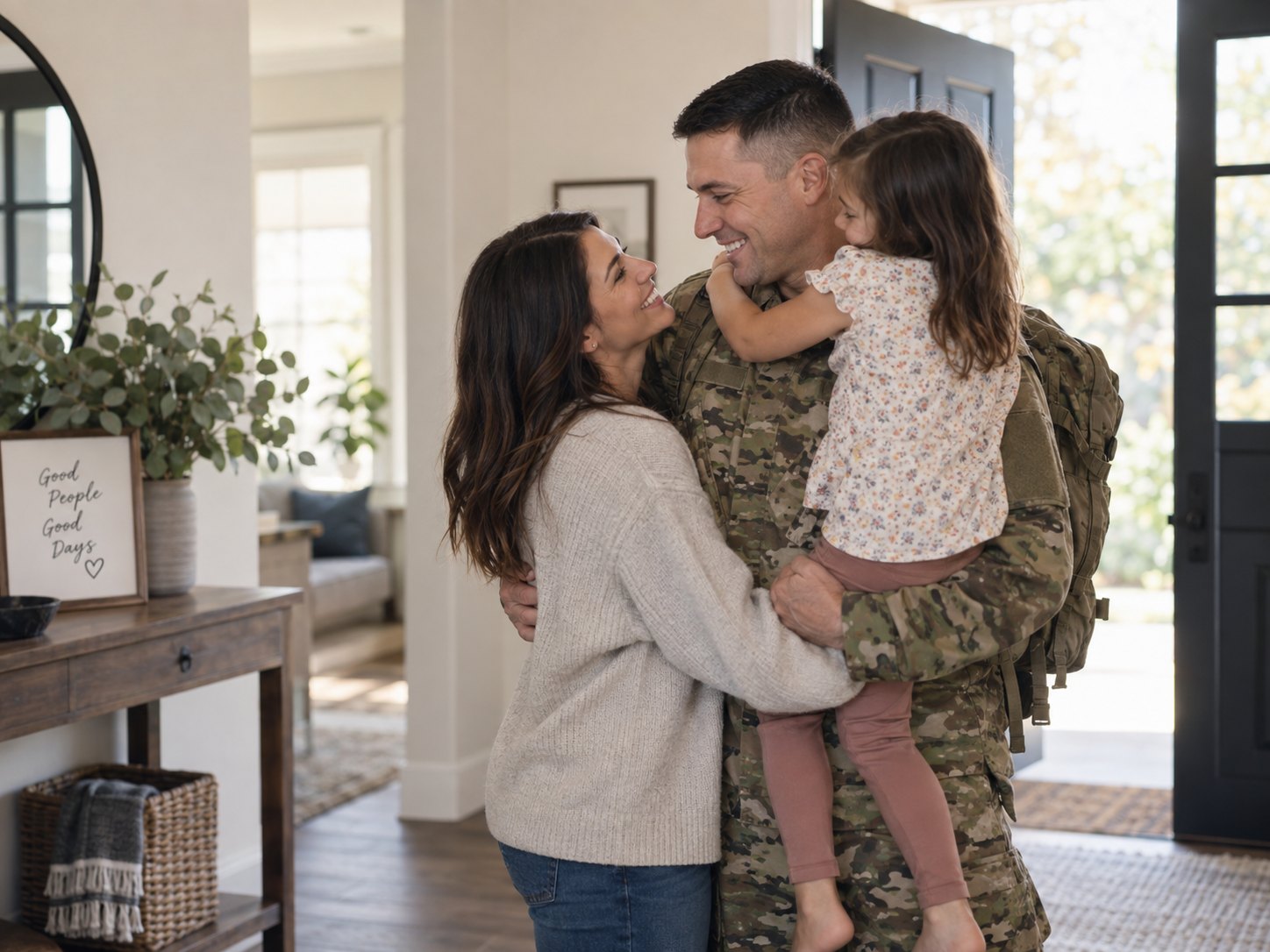
You should not have to spend half of your therapy session explaining what a PCS is, why a training schedule changed again, or why transitioning out of the military can affect far more than employment.
Military-informed counseling considers the culture, structure, expectations, and pressures surrounding military life while still seeing you as an individual, couple, or family rather than defining you by military status.
Our clinicians use evidence-based and structured approaches based on the needs of each client, including trauma-focused treatment, individual counseling, couples therapy, family counseling, and child and adolescent services.
When appropriate, treatment may incorporate approaches such as EMDR, Cognitive Processing Therapy (CPT), TF-CBT, ACT, or Gottman Method Couples Therapy.
Support for the Whole Military Family
Sometimes the service member needs support, or it might be the spouse, or even a child who is showing everyone that the family is struggling. And sometimes no single person is the problem. The family has simply been adapting for so long that old ways of communicating, parenting, or connecting are no longer working.
Our goal is to identify what has changed, understand how each person is responding, and help your family develop a healthier way to move forward together.
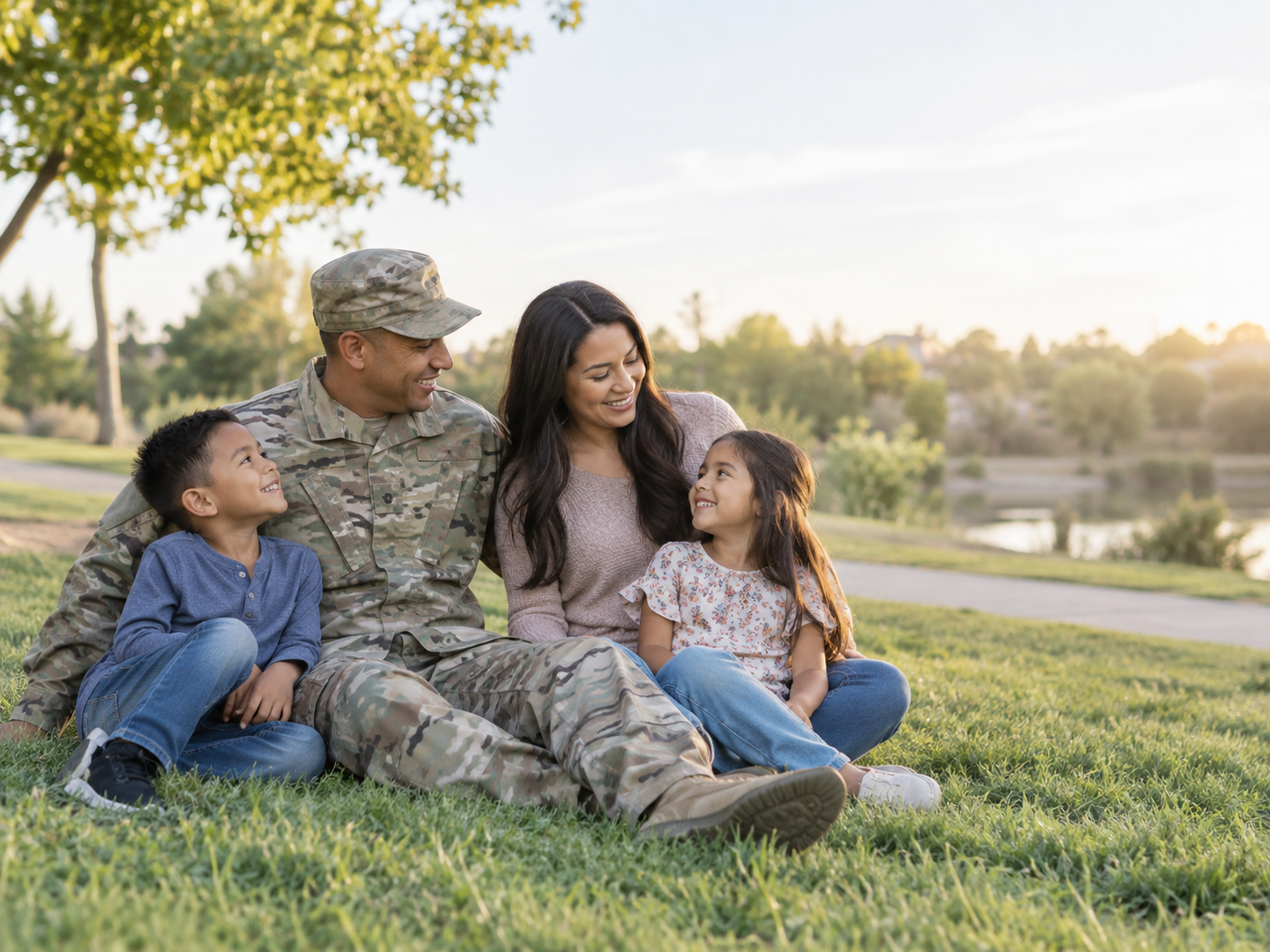
Military-Informed Care
Our team has experience working with military members, Veterans, and military-connected families. We understand that military culture can influence how people approach stress, vulnerability, responsibility, relationships, and asking for help.
But good military-informed counseling is not about making every concern about the military. It is about knowing when military experiences matter, when they do not, and how they interact with everything else happening in your life.