
The Weight No One Sees: Why Father's Day Is Also a Mental Health Conversation for Men in San Antonio
Father's Day Celebrates Fathers, But Rarely Their Struggles
Father's Day looks a certain way from the outside. Cookouts, fishing trips, smiling photos, grateful kids. People celebrate what you provide, what you show up for, what you sacrifice. And you probably let them, because that is what you do.
But here is what does not make it into those posts: the weight you were already carrying before the day even started.
You are balancing work, marriage, finances, kids, aging parents, health concerns, and the pressure to hold it all together for everyone around you. You are the person others call when something goes wrong. And you rarely feel like you have someone to call when you are the one struggling.
That gap, between how much you give and how little you allow yourself to receive, is exactly what this conversation is about.
The Invisible Burden Many Men Carry
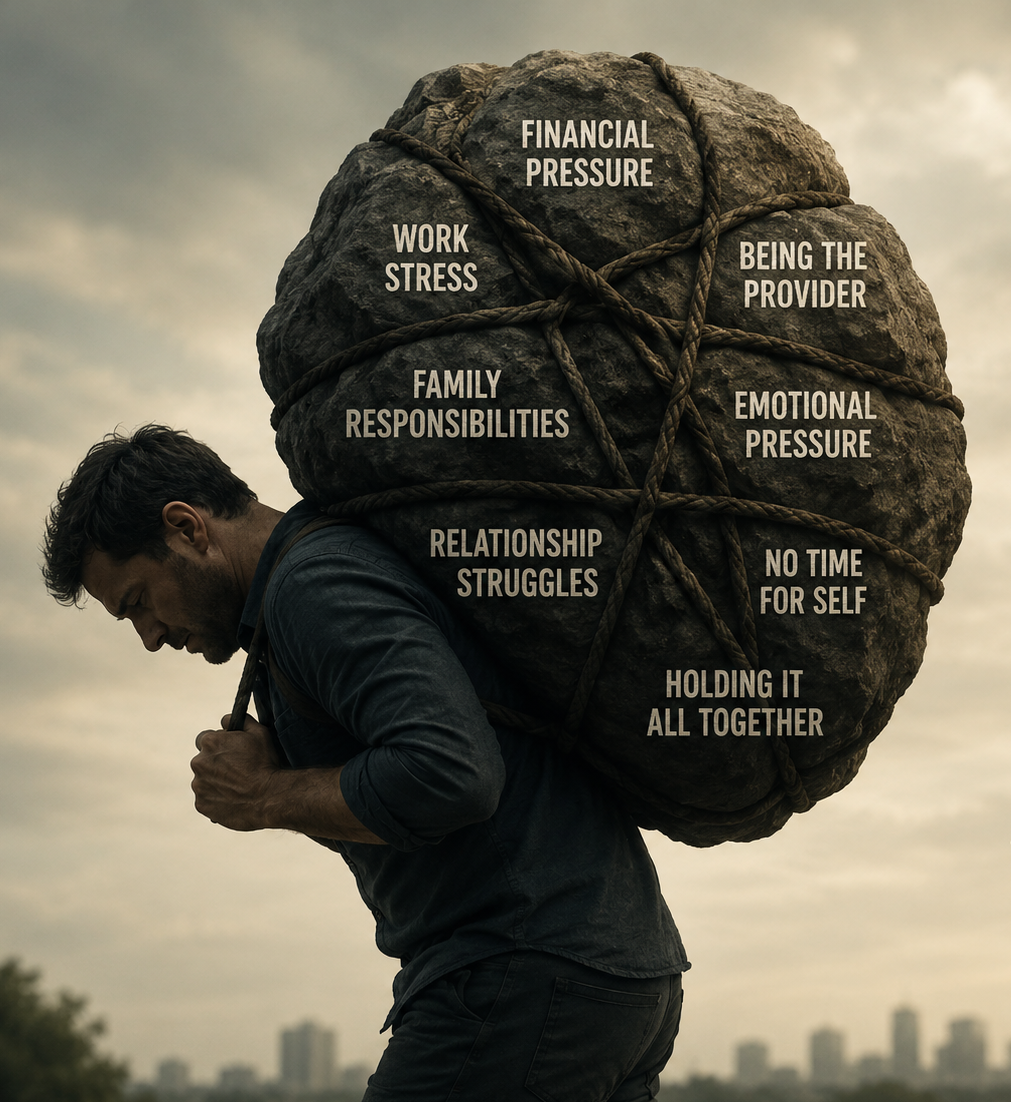
If you are a father, your mind probably never fully stops. Bills, deadlines, your kids' future, the repair you have been putting off, the expense you did not plan for.
Over time, you get so used to carrying all of it that you stop noticing how much of yourself it is consuming. What started as dedication becomes exhaustion. What felt like resilience starts to feel like numbness, and what used to feel like strength starts to feel like just getting through the day.
And here is the part many men miss: you probably do not think of any of this as a mental health concern. You are not sitting around feeling sad, you just feel burned out. Overwhelmed. Irritable. Disconnected. Done.
That is still worth paying attention to.
When Stress Does Not Look Like Stress
You are still going to work. You are still paying the bills. You are still handling your responsibilities. So you must be fine, right?
Not necessarily.
Mental health struggles often show up long before someone hits a breaking point. You might notice you are snapping at your family more than you used to. You pull away from friends without really meaning to. Activities you used to enjoy do not do much for you anymore. You cannot sleep, but you cannot fully relax either. Your body is exhausted and your mind will not stop.
Because it happens gradually, you tell yourself it is just life. You normalize it, and it keeps building.
The Pressure to Be Strong All the Time

You have probably been getting the same message your whole life: be dependable, handle it, do not complain, keep going. Those qualities are not bad. The problem is when you start believing you have to maintain them no matter what is happening inside you.
So you become good at looking okay. You keep showing up, keep handling things, keep supporting everyone around you, while privately dealing with stress, anxiety, grief, or depression that nobody sees. From the outside, you look solid. On the inside, you may be running on empty.
That is not strength. That is a slow drain, and the longer you operate that way, the harder it becomes to recognize how far from okay you actually are.
What It Actually Costs You
Here is what most people do not talk about: carrying everything without support has a real price tag. And you are paying it whether you realize it or not. It shows up in your body first. Tension that does not go away. Headaches. Poor sleep. A general feeling of being worn down that no amount of rest seems to fix. Chronic stress does not stay in your head. It works its way into your physical health over time.
It shows up in your relationships. You become harder to reach. Your partner feels the distance even if they cannot name it. Your kids pick up on the irritability, the distraction, the absence, even when you are physically in the room. The people you are working hardest to provide for are the ones most affected by what you are not addressing.
It shows up in your work. Focus gets harder. Decision fatigue sets in. The motivation that used to come naturally starts requiring effort just to manufacture.
None of this happens all at once. It creeps in slowly, which is exactly why most men do not see it coming until it has already done significant damage.
Why Men Often Stay Silent
Staying quiet is not always denial. For a lot of men, it is protection. You do not want to be a burden. You do not want to be judged or seen differently. Maybe you have never been in a space where talking about this felt safe or even possible. Maybe you watched the men around you growing up handle everything alone and assumed that was just how it was supposed to work.
Over time, staying silent becomes the default. But emotional struggles do not go away because you ignore them. They build. And eventually they start affecting your relationships, your work, your health, and your ability to show up the way you actually want to.
Silence is not the same as coping. It is just postponing.
The Mental Health Challenges Fathers Face
Being a father can be one of the most meaningful things you will ever do. It can also be one of the most relentless. You want to provide security, be present, support your partner, prepare your kids for real life, and still keep your career moving. That is a lot to hold, and it does not leave much room for your own needs.
When Everyone Depends on You
When your schedule is built entirely around everyone else, your own well-being becomes an afterthought. Rest feels like a luxury. Taking care of yourself feels selfish or optional. So you skip it, and eventually the cost shows up anyway. Chronic irritability. Emotional withdrawal. Burnout. A hollow feeling underneath outward success. You are doing everything right on paper and still feel like something is missing.

Mental Health Challenges Do Not Always Look Like Depression
Here is something worth knowing: what you are dealing with might not look like what most people picture when they think about mental health struggles.
Depression does not always look like sadness. Sometimes it looks like anger.
Anxiety does not always look like worry. Sometimes it looks like overworking.
Burnout does not always look like breaking down. Sometimes it looks like going distant.
Loneliness does not always look like isolation. Sometimes it looks like staying busy every waking moment.
Unresolved trauma does not always look like distress. Sometimes it looks like needing to control everything.
If you have been waiting to recognize yourself in the traditional picture of someone struggling, you may have already been struggling for a long time.
The Relationship Toll Nobody Warns You About
One of the quieter costs of unaddressed stress is what it does to the people closest to you.
When you are running on empty, you are not as available as you think you are. You might be physically present, but emotionally you have checked out. Your partner starts to feel like they are managing the household alone even though you are there every night.
Your kids stop bringing you things because they sense you are already maxed out. The connection you are working so hard to protect starts to erode precisely because you are not taking care of the person at the center of it.
This is not about blame. It is about cause and effect. When you do not address what is happening inside you, the people around you absorb it. Taking care of yourself is not separate from taking care of your family. It is part of it.
What Therapy Actually Looks Like for Men

A lot of men avoid therapy because of what they think it is going to be. Lying on a couch. Talking about your feelings for an hour. Being told to journal. That is not what most modern therapy looks like, and it is definitely not what good therapy looks like for men who want practical results.
Therapy is a place to get an honest read on what is actually going on, figure out what patterns are keeping you stuck, and build tools you can use in real situations. It is problem-solving with someone who is trained to see what you might be too close to see in yourself.
What Men Often Gain From Therapy
Men who engage in therapy frequently report things like better stress management, stronger communication with their partners and kids, less anxiety and irritability, healthier ways of coping, and a clearer sense of who they are and what they want. Most importantly, they stop carrying everything alone.
You Have Permission to Not Be Fine
Here is something nobody probably says to you often enough: you do not have to be okay all the time. You are allowed to be exhausted. You are allowed to be overwhelmed. You are allowed to admit that what you are carrying is heavy. Acknowledging that is not weakness. It is accuracy.
The men who course correct are not the ones who never struggle. They are the ones who are honest with themselves about when something needs to change. That honesty is harder than it sounds when you have spent years conditioning yourself to keep going no matter what. But it is also the starting point for everything getting better.
A Different Definition of Strength

Father's Day is a good time to think about what strength actually means. It is not the ability to endure indefinitely without support. It is knowing when something is not working and being willing to do something about it.
Vulnerability and resilience are not opposites. In most cases, being willing to be honest about what you are carrying is exactly what allows you to keep going. The men who are doing it right are not always the ones holding the most weight. They are the ones who recognized when the weight was becoming a problem and got ahead of it before it started affecting the people they love.
You Do Not Have to Keep Carrying This
At HOPE Therapeutic Alliance, we work with men who have spent years making sure everyone else is okay while quietly running themselves into the ground. If that sounds familiar, whether you are dealing with stress, anxiety, burnout, trauma, relationship tension, or just a persistent sense that something is off, this is the place to start.
You do not have to be in crisis to reach out. You do not have to have it all figured out before you make the call. You do not have to keep waiting for things to get bad enough to justify asking for help. You just have to be willing to stop carrying it alone. Reach out to HOPE Therapeutic Alliance today.
The conversation starts whenever you are ready.