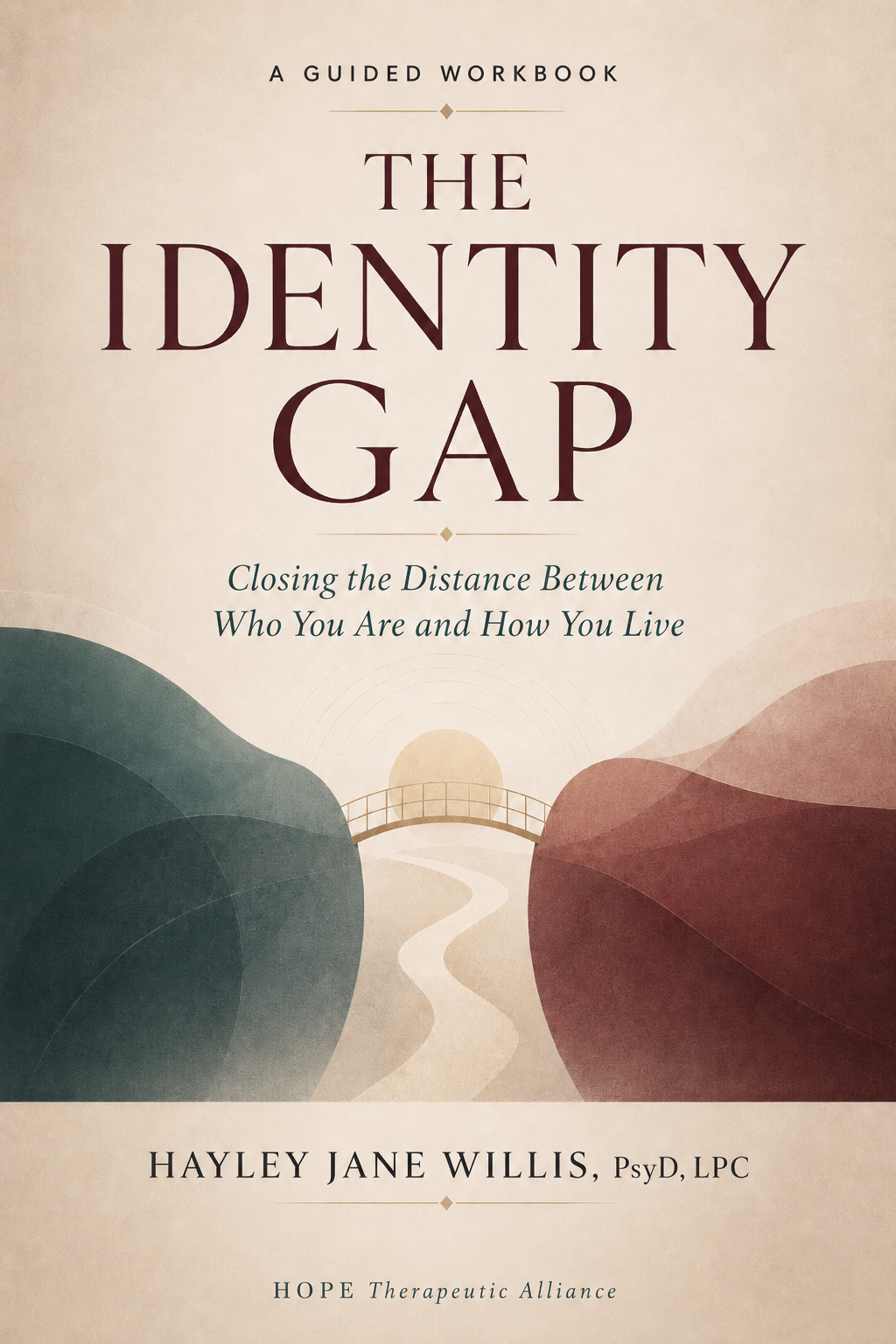
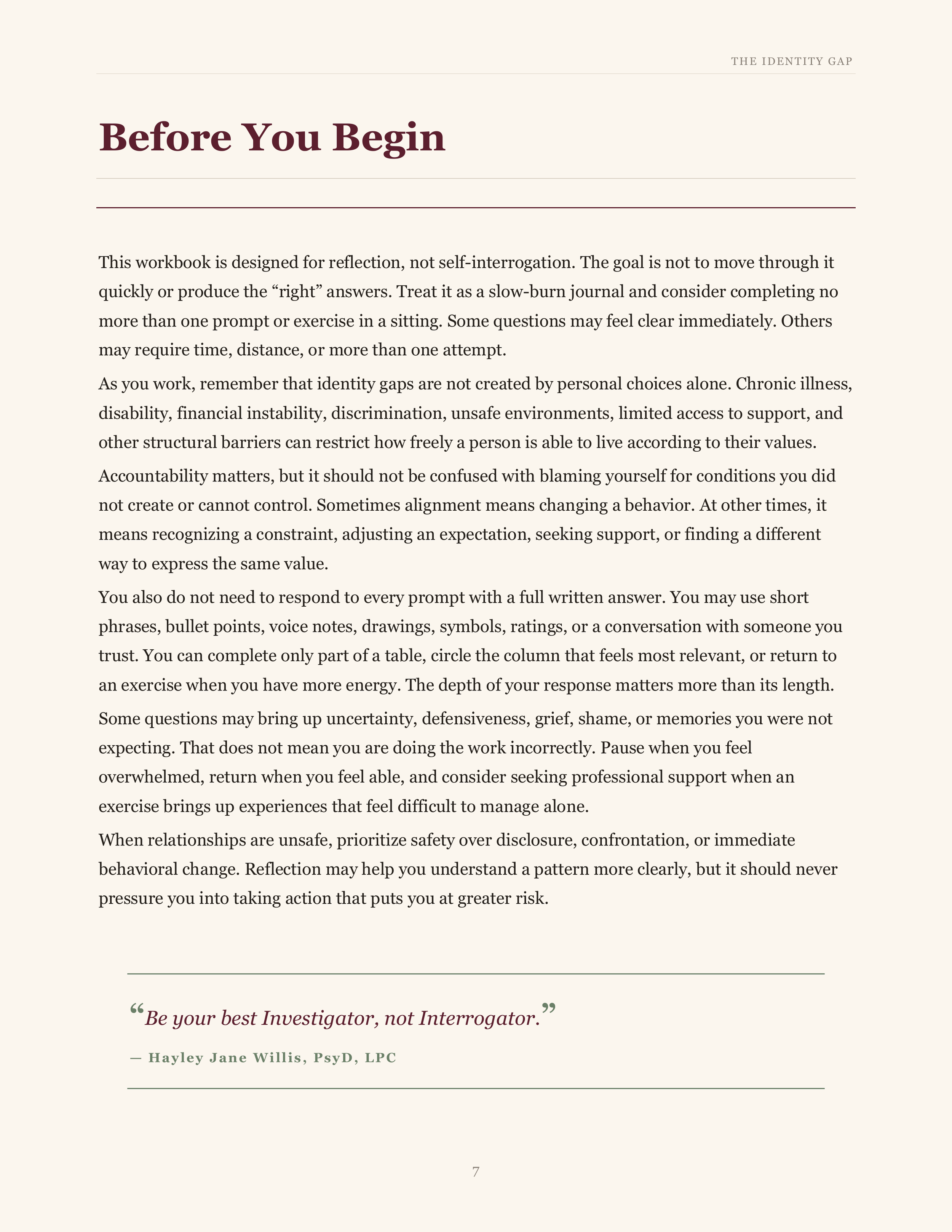
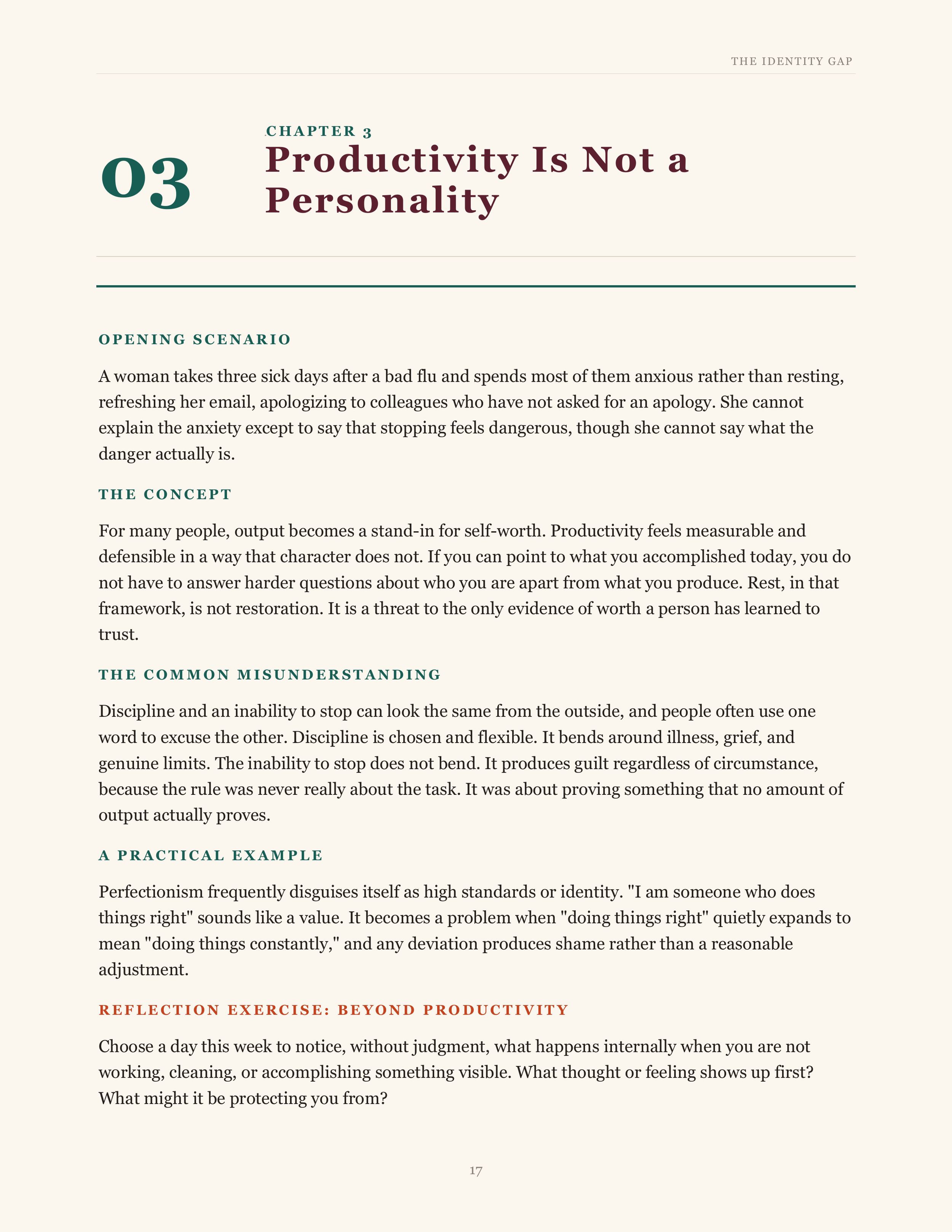
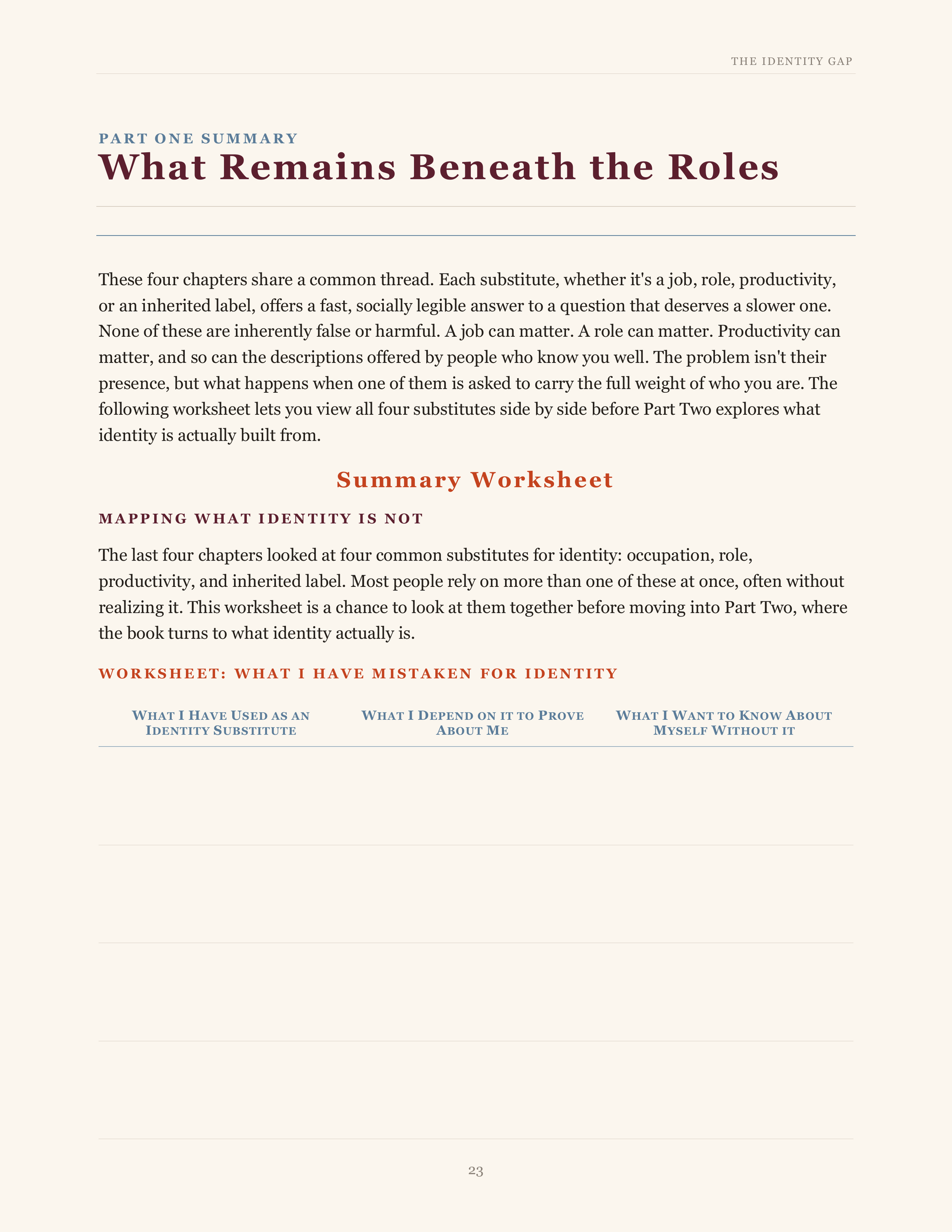
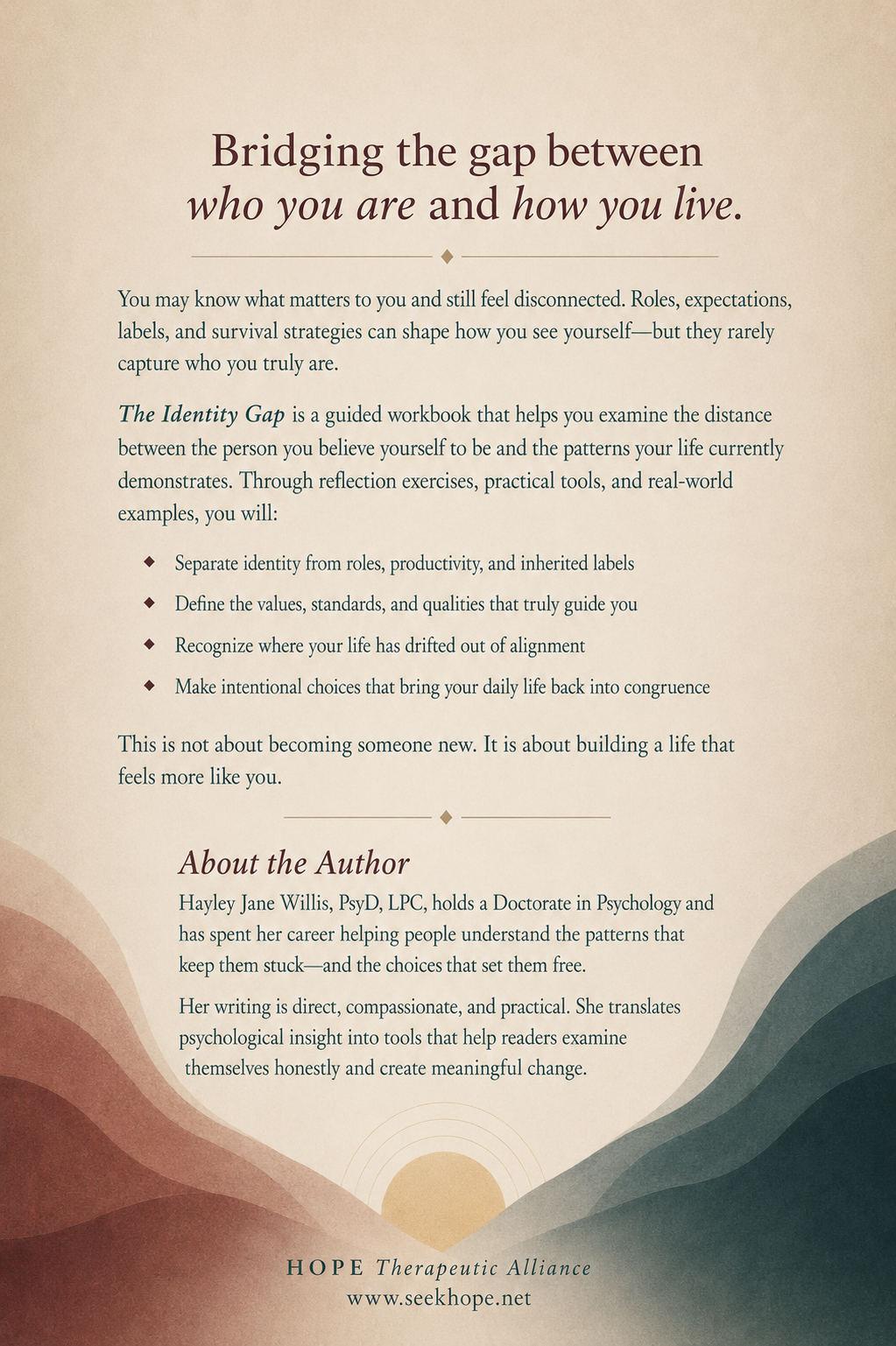
The Identity Gap is a guided workbook for anyone who knows who they want to be but feels disconnected from the way they are living. Through practical exercises, relatable examples, and reflection tools, readers can separate identity from roles, productivity, and inherited labels, clarify their values and personal standards, and begin making choices that create greater alignment between what they believe and how they live.
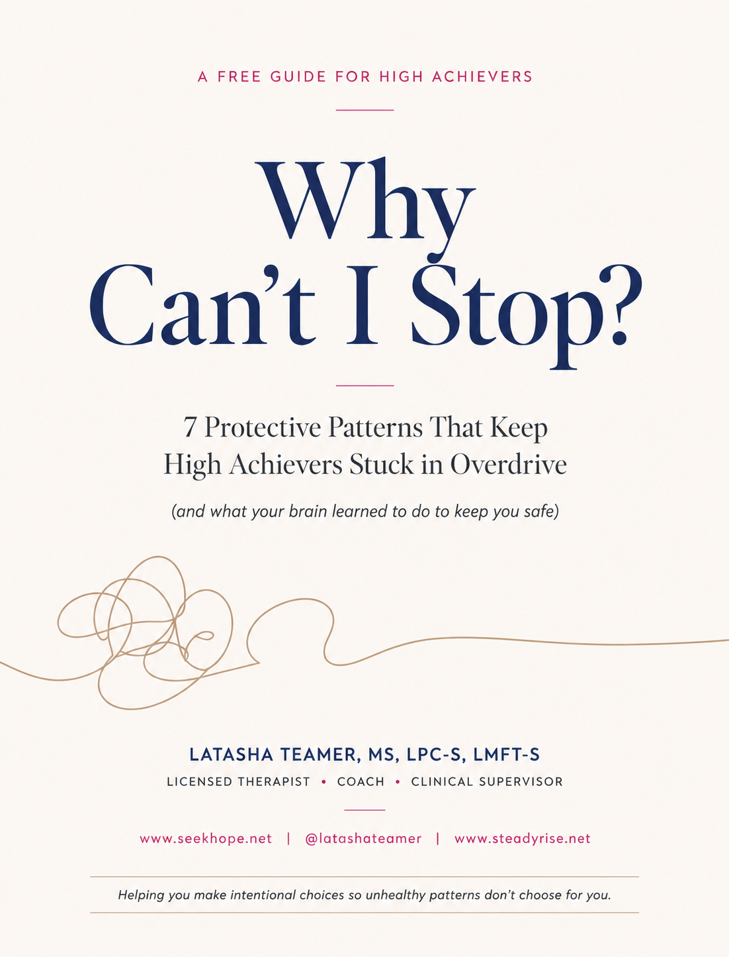
Why do successful people struggle to slow down? "Why Can't I Stop?" is a free psychology-based guide that helps high achievers understand the hidden protective patterns behind chronic busyness, burnout, perfectionism, people-pleasing, overthinking, and guilt when resting.
You'll learn those experiences can shape habits like:
Constant busyness
Feeling guilty when you rest
Never feeling like you've done enough
Carrying everyone else's burdens
Struggling to say no
Tying your worth to achievement
Feeling uncomfortable slowing down
Each section includes thoughtful reflection questions designed to help you recognize your own patterns and begin making more intentional choices.
*This resource is an educational tool intended to support personal growth and emotional wellness and is not a substitute for therapy or mental health treatment.
DIGITAL DOWNLOAD
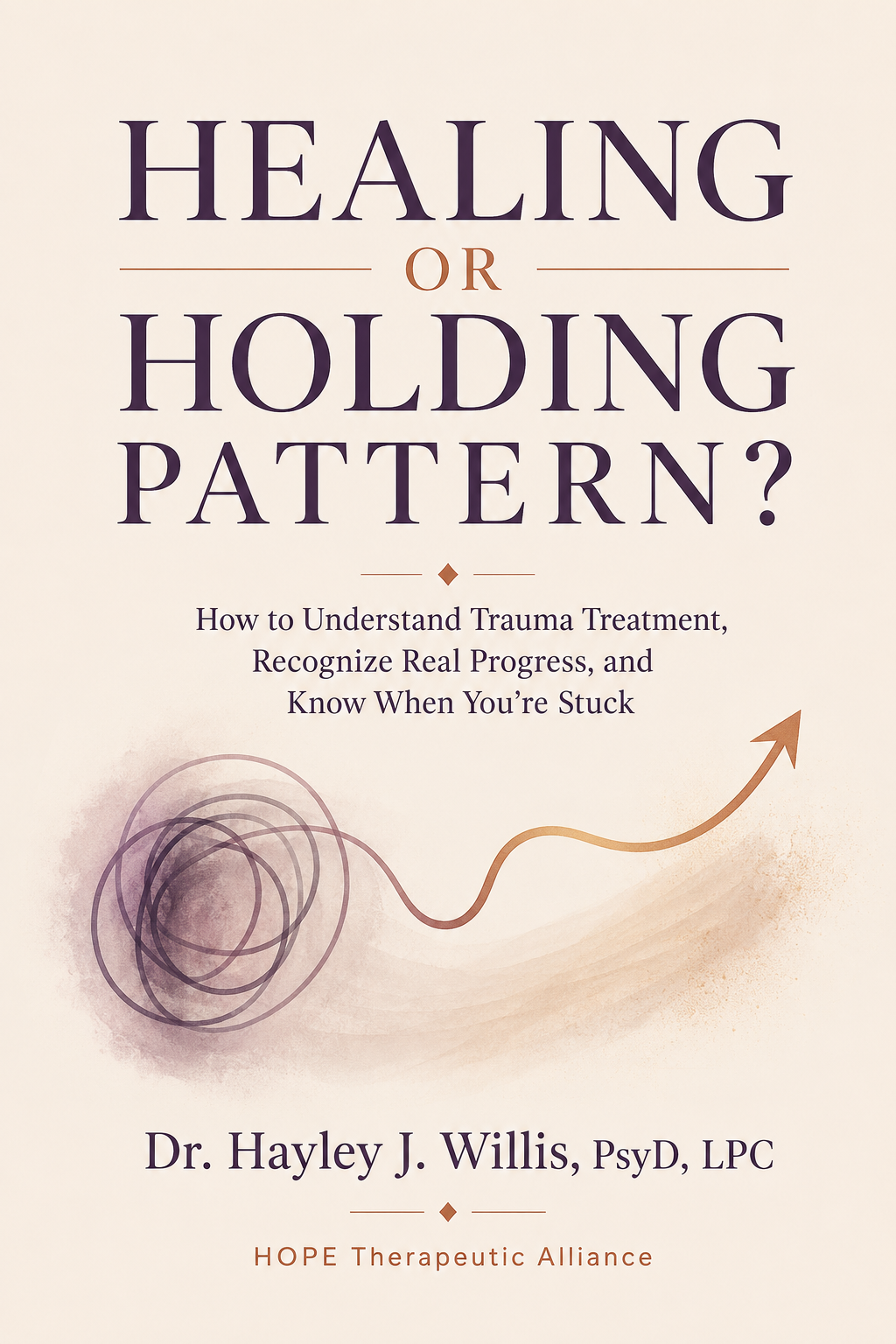
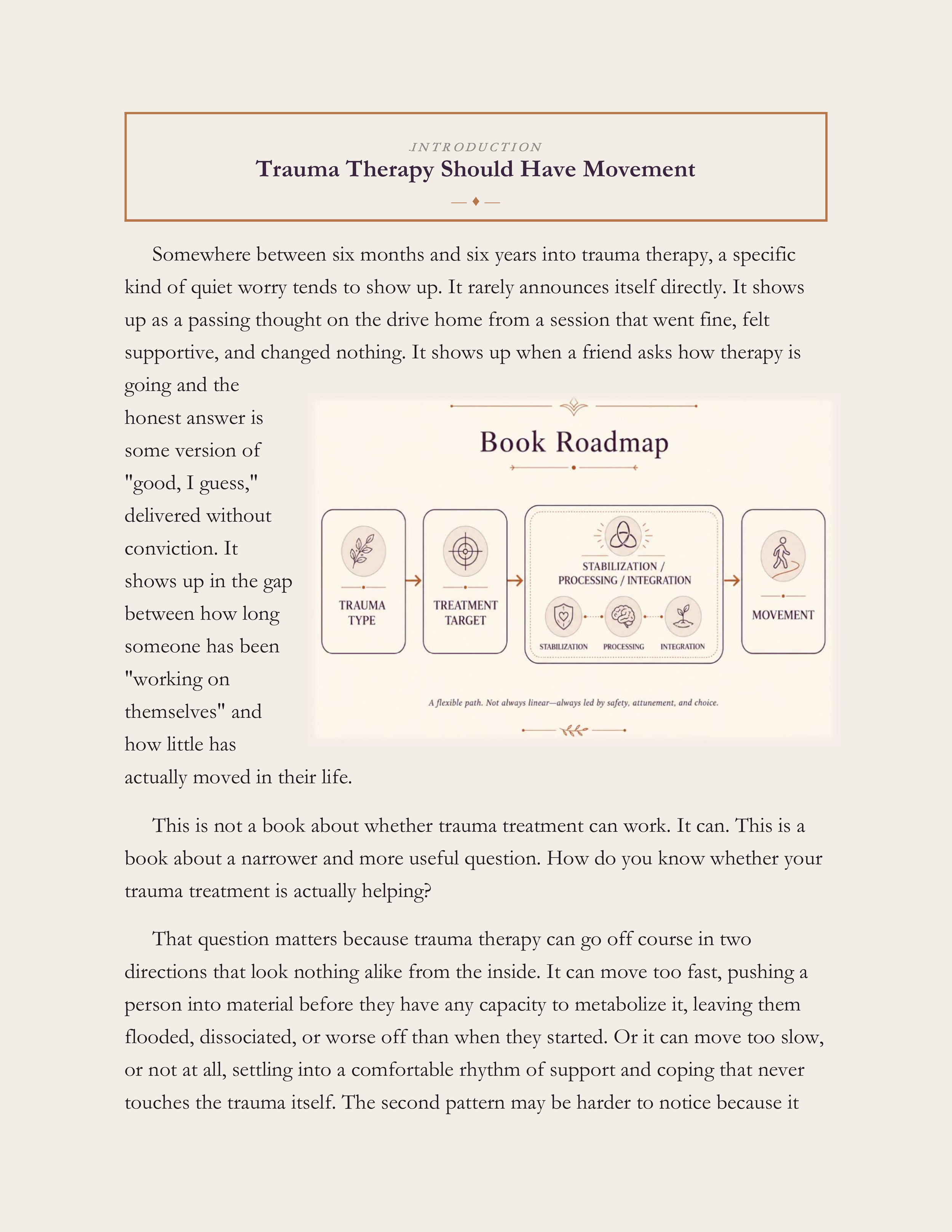
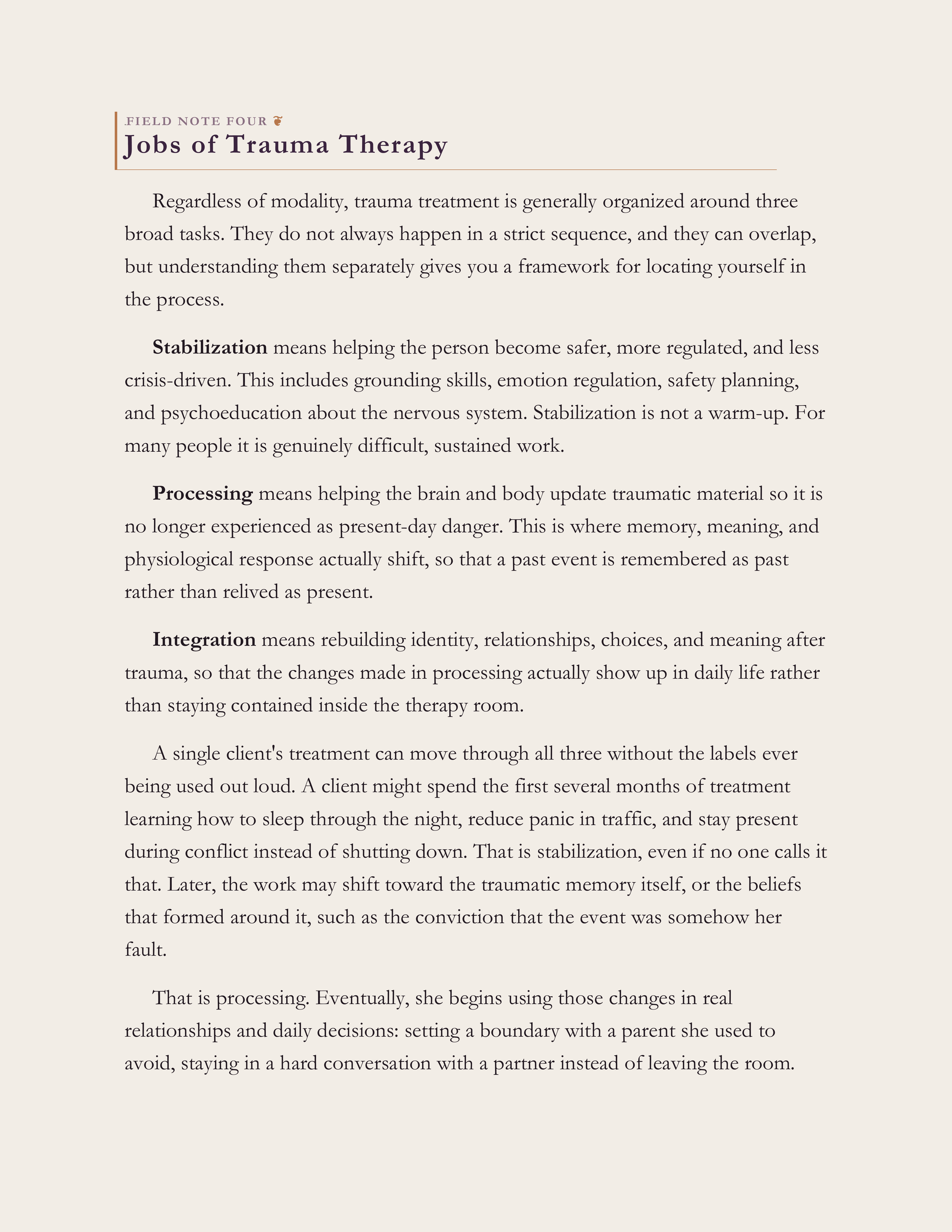
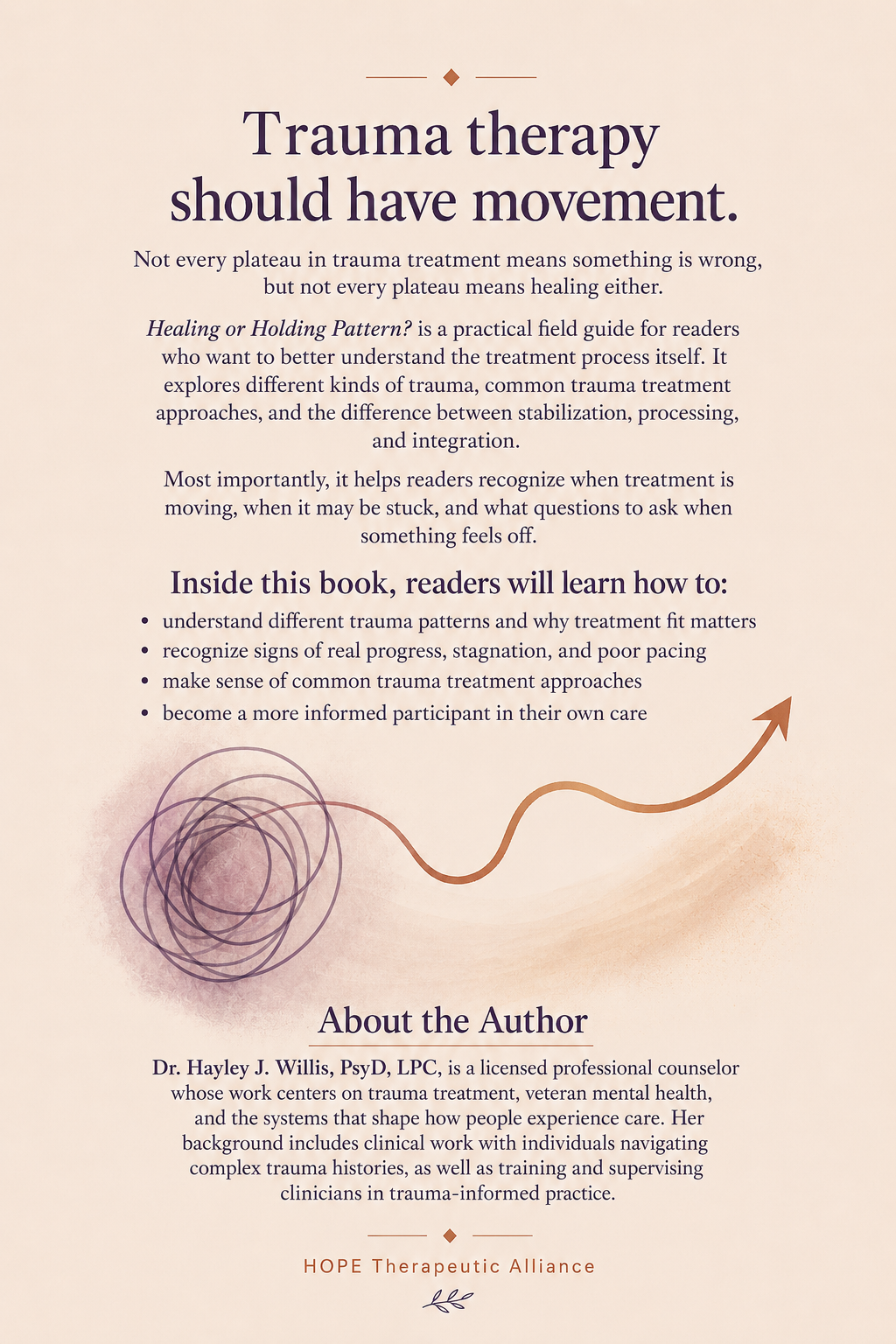
Healing or Holding Pattern? is for the person who has been showing up to therapy, learning the language, building insight, and still quietly wondering whether the work is actually helping.
Trauma therapy can be supportive, meaningful, and necessary, but it can also be difficult to evaluate from the inside. A plateau may be part of stabilization, or it may be a sign that treatment has quietly stopped moving. Discomfort may be part of healing, or it may mean the pace, fit, or approach needs to be revisited.
This field guide helps readers better understand the trauma treatment process itself. Inside, readers will learn how different trauma patterns call for different treatment targets, how stabilization, processing, and integration each serve a role in healing, and how to recognize signs of real progress, stagnation, poor pacing, and meaningful movement.
This is not a workbook and it does not ask readers to retell their trauma on the page. Instead, it gives them language for the questions that often stay vague: What are we doing here? Is this helping? Why this approach? How will we know if it is working?
Trauma therapy should not require blind faith. It should have enough structure, honesty, and direction that readers can become more informed participants in their own care.
*This resource is an educational tool intended to support personal growth and emotional wellness and is not a substitute for therapy or mental health treatment.
DIGITAL DOWNLOAD

You may love each other deeply and still feel like something is not landing. The Love Language Gap Index helps couples identify where love is being offered in one form, but received differently by the other partner.
This 10-minute experience gives you a simple way to spot the gap, understand what each partner may be missing, and take the next step toward more intentional connection.
*This resource is an educational tool intended to support personal growth and emotional wellness and is not a substitute for therapy or mental health treatment.
DIGITAL DOWNLOAD
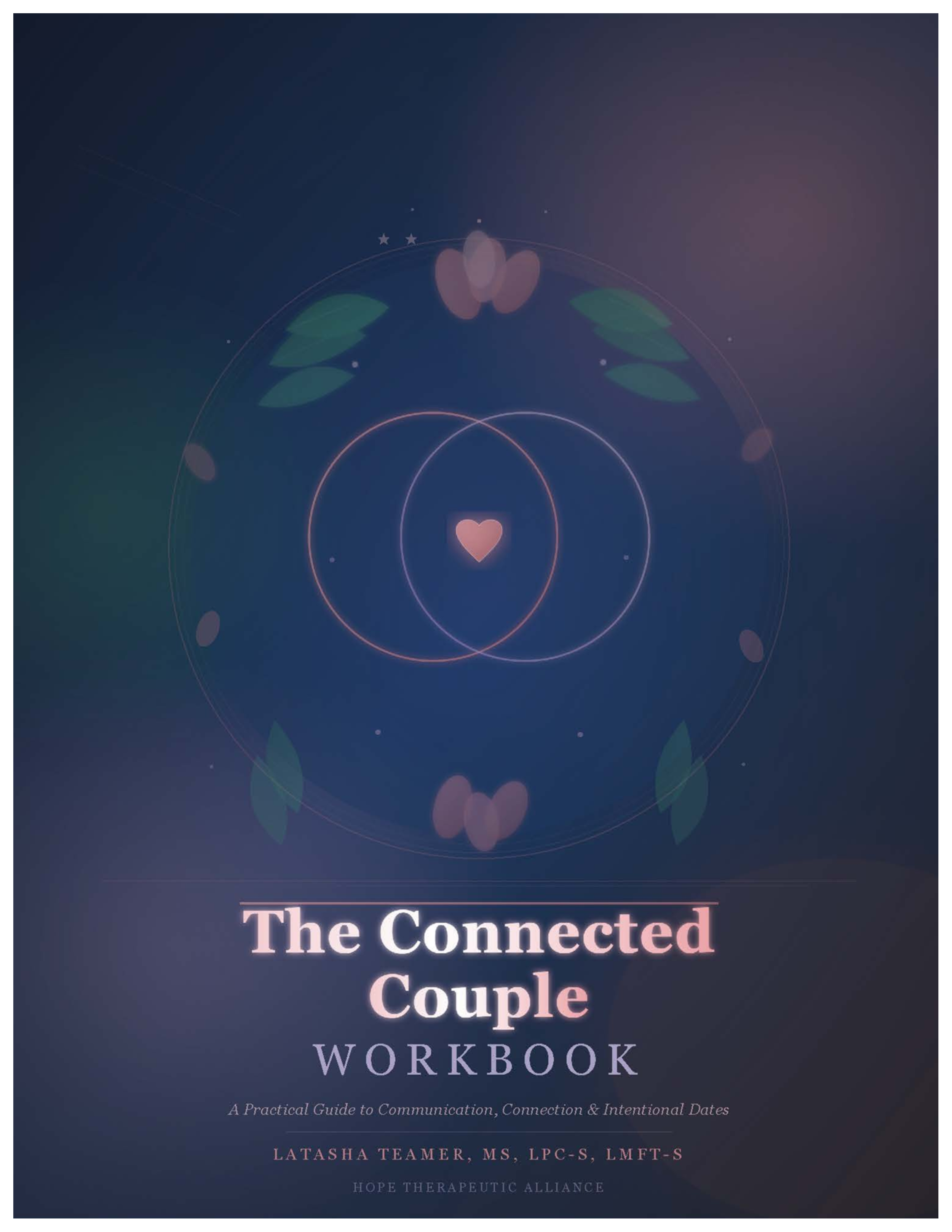
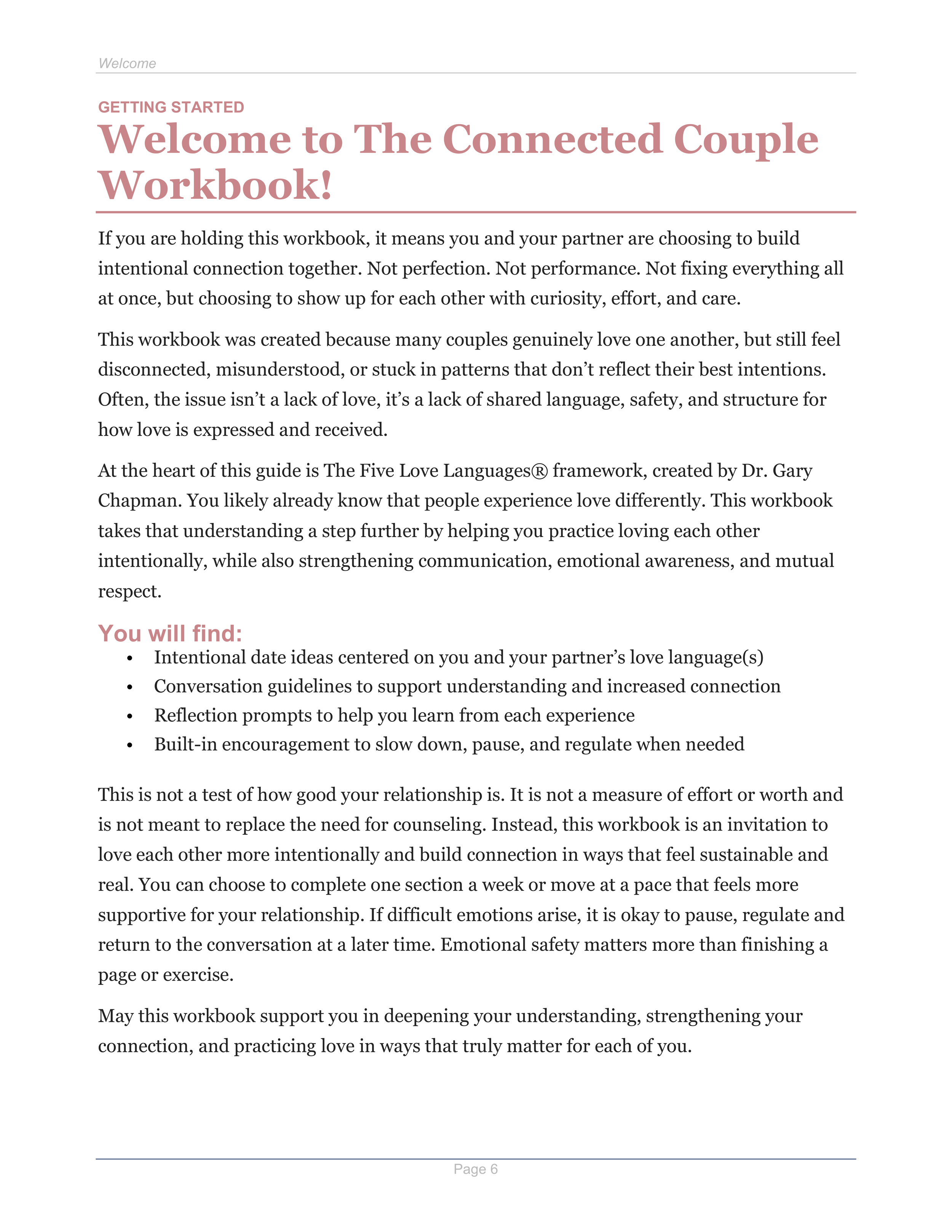
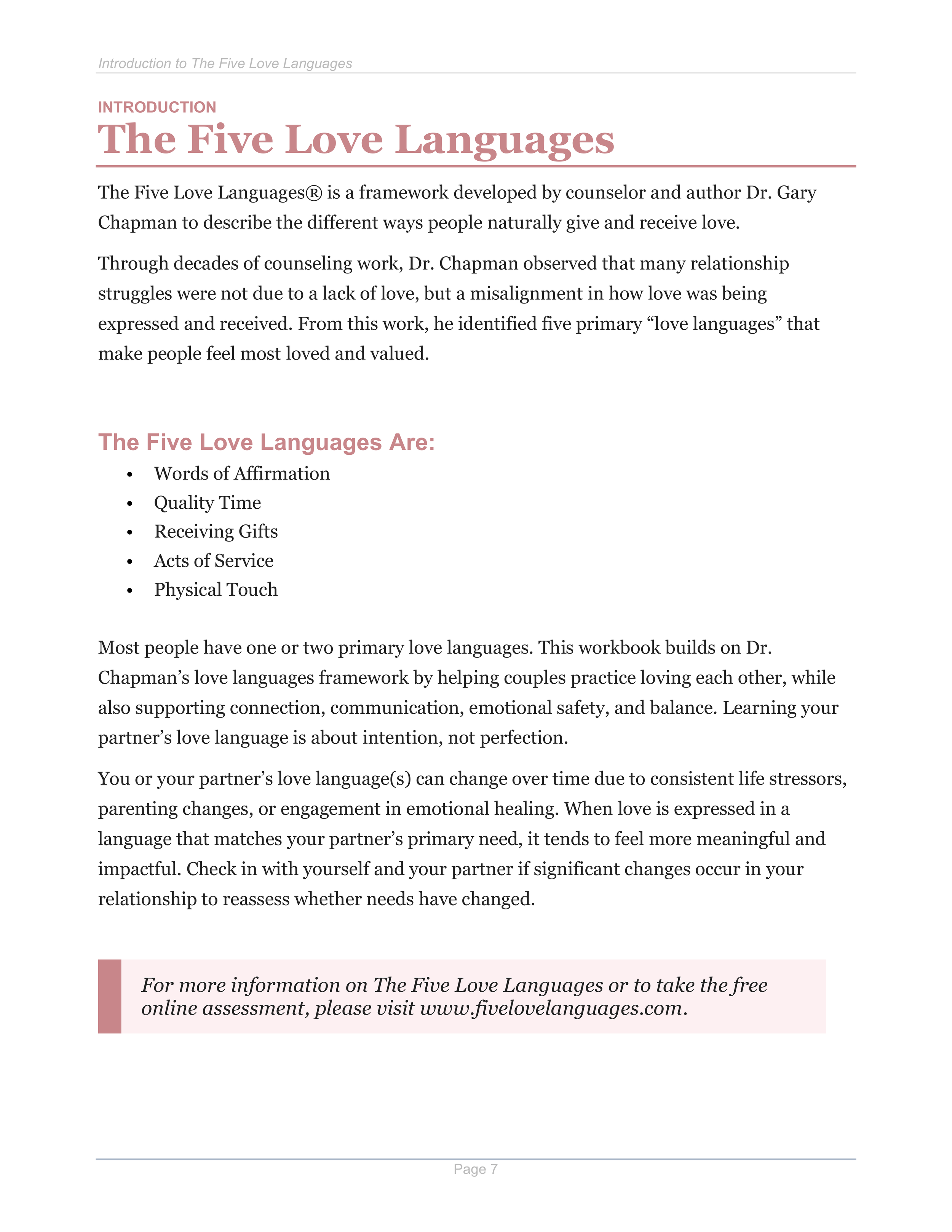
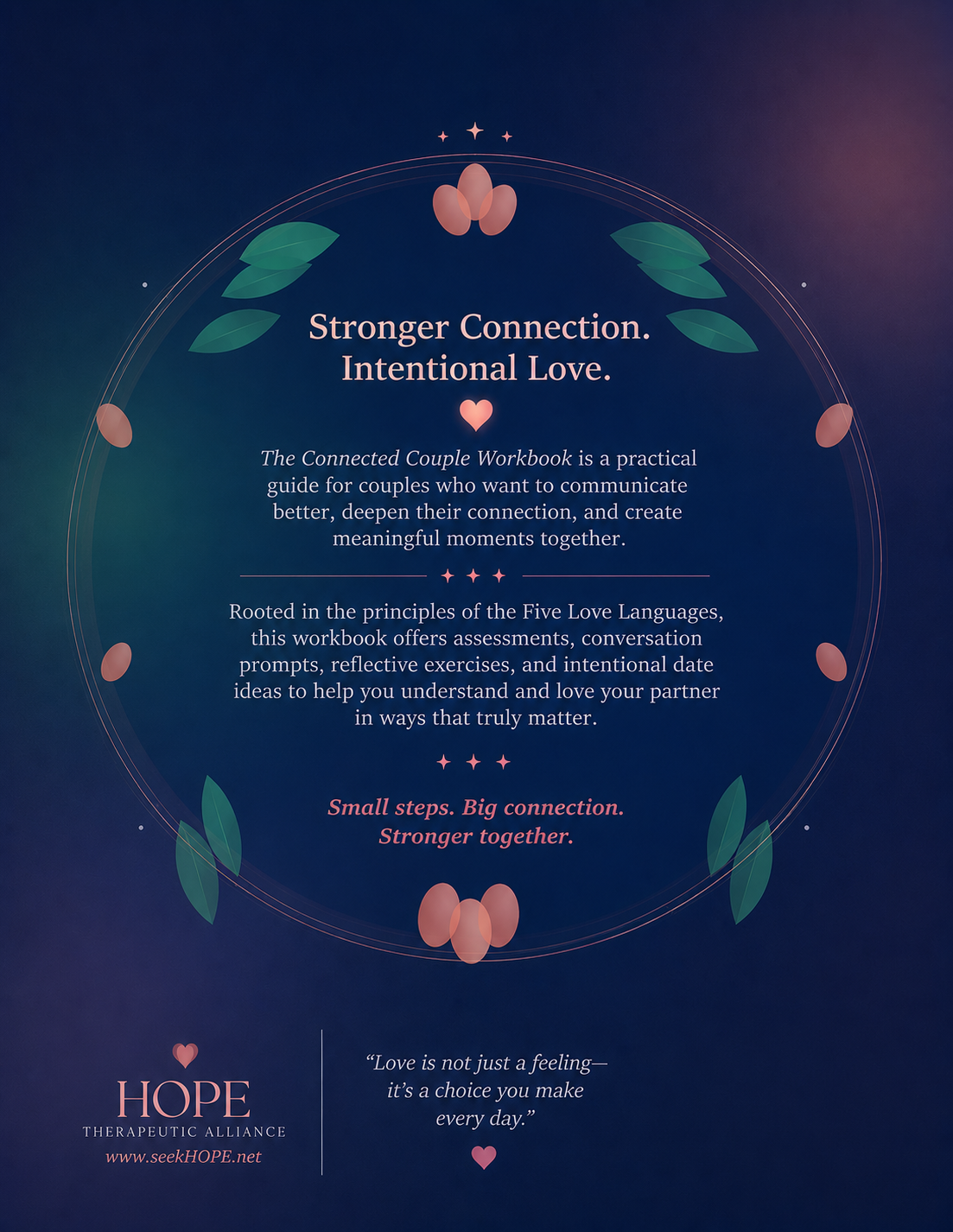
Every relationship has moments when you love each other deeply but still feel misunderstood. Maybe conversations turn into arguments, date nights have become rare, or life has gotten so busy that you've stopped feeling like a team. The Connected Couple Workbook was created to help you reconnect, one intentional conversation at a time.
Inside, you'll discover guided activities, thoughtful reflection prompts, communication exercises, intentional date ideas, and a six-week relationship challenge designed to help you better understand yourself, your partner, and the ways you naturally give and receive love. Built around the Five Love Languages® framework, this workbook moves beyond simply identifying your love language by showing you how to put that knowledge into practice in everyday life.
Whether you're dating, engaged, newly married, or have spent years together, this workbook invites you to slow down, communicate with greater intention, and strengthen the emotional connection that brought you together in the first place. You don't have to have a struggling relationship to benefit. If you simply want to grow closer, communicate better, and create a healthier, more connected partnership, this workbook is a great place to begin.
*This resource is an educational tool intended to support personal growth and emotional wellness and is not a substitute for therapy or mental health treatment.
DIGITAL DOWNLOAD


What tends to take over when the pressure rises: self-doubt, perfectionism, harsh self-talk, or one mistake you cannot seem to shake?
This free two-minute assessment helps you identify the mental pattern most likely affecting the way you compete. Answer eight quick questions to discover your Mental Game Type, receive a personalized scouting report, and learn one practical step you can begin using right away.
*This resource is an educational tool intended to support personal growth and emotional wellness and is not a substitute for therapy or mental health treatment.
DIGITAL DOWNLOAD

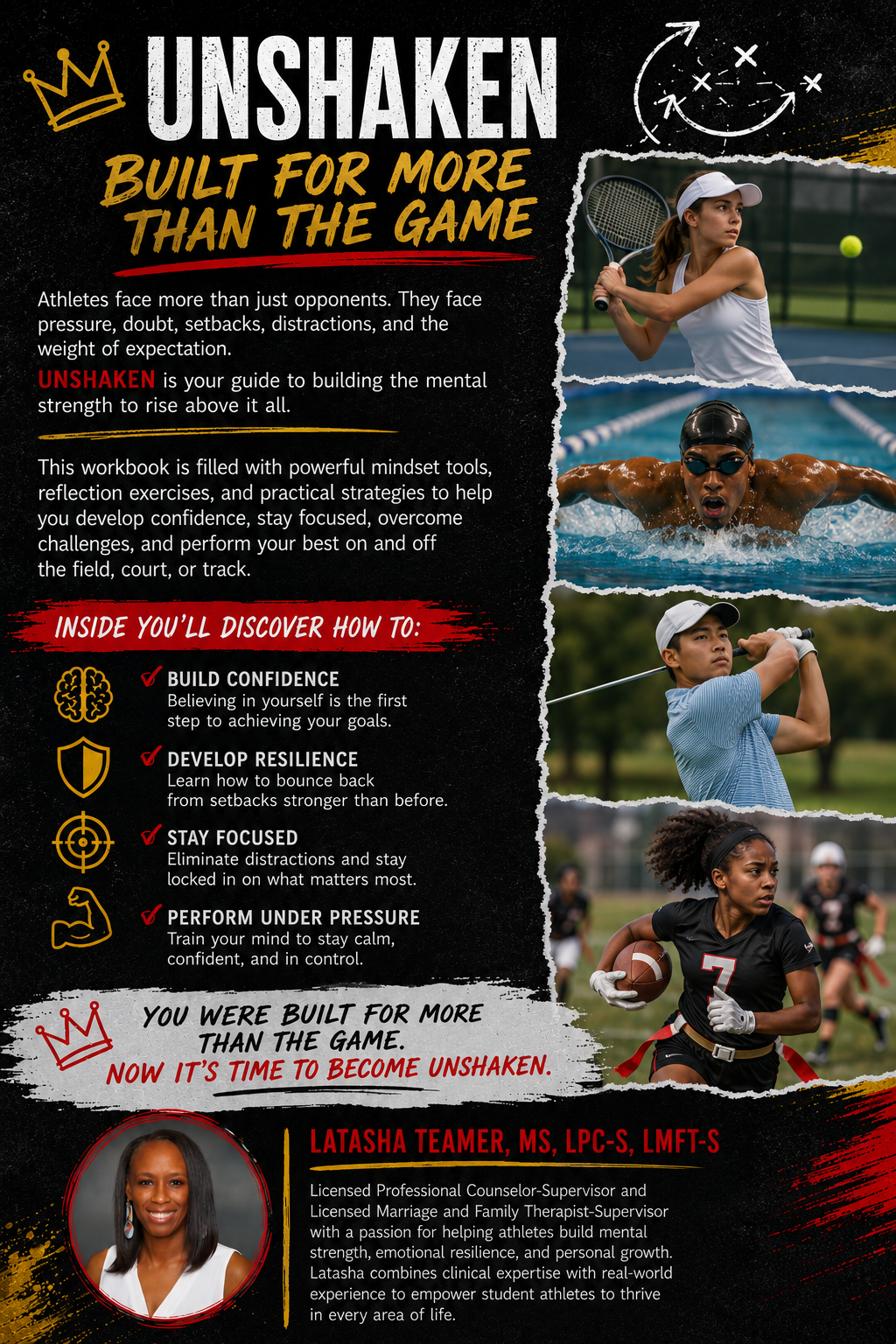
You already know that being a student-athlete requires more than talent. You are expected to perform, stay focused, recover quickly, manage school, meet expectations, and keep pushing, even when the pressure starts to feel heavier than anyone realizes.
Unshaken: Built for More Than the Game was created for those moments.
Inside this 73 page workbook, you will learn how to understand the thoughts, emotions, and pressures that can affect the way you compete. You will work through practical activities that help you manage negative self-talk, performance anxiety, perfectionism, mistakes, confidence struggles, and burnout. You will also build tools for staying present, trusting your preparation, and recovering when things do not go as planned.
You do not have to be fearless, perfect, or confident all the time to be a strong athlete. You simply need the skills to steady yourself, respond to challenges, and keep moving forward. Most importantly, this workbook will remind you that your sport is something you do, it is not all of who you are. Your value is bigger than your statistics, your position, your wins, and your losses.
You are more than one game, one season, or one performance. You are built for more than the game.
*This resource is an educational tool intended to support personal growth and emotional wellness and is not a substitute for therapy or mental health treatment.
PHYSICAL COPY
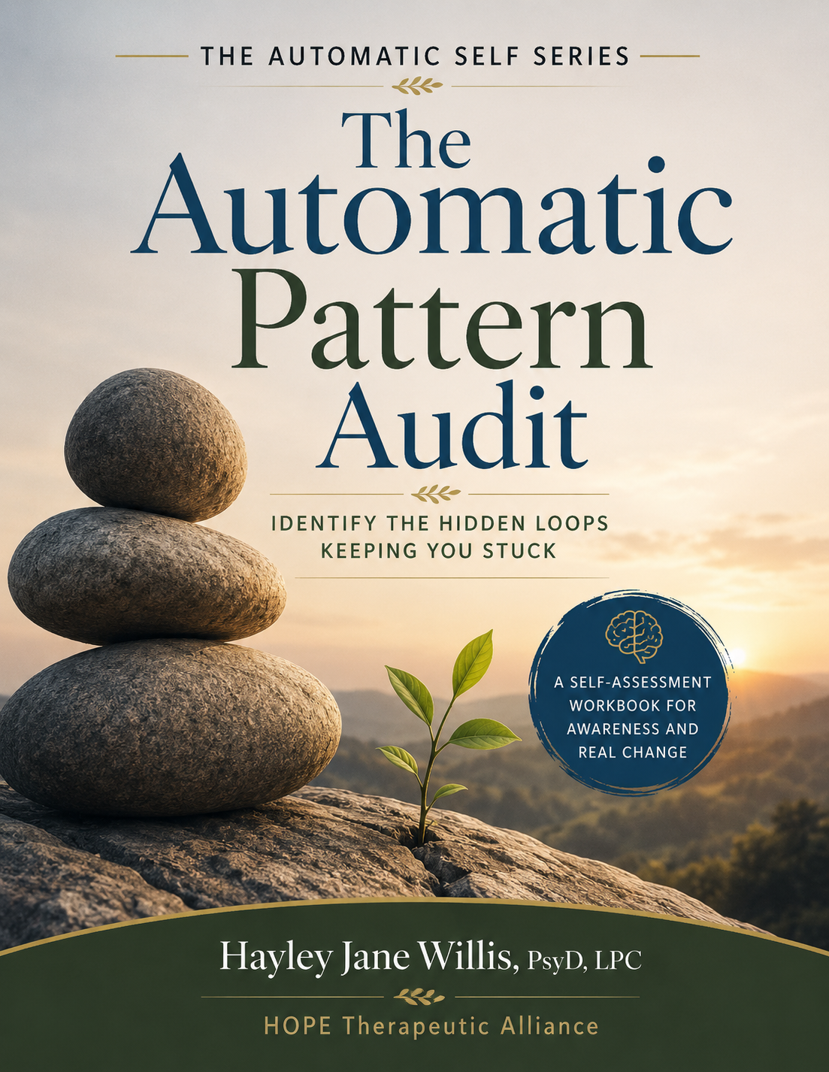
The Automatic Pattern Audit is a free reflective resource adapted from Why Change Is So Hardin The Automatic Self Series. This guided audit helps you identify the hidden emotional and behavioral loops that may be keeping you stuck in familiar patterns, even when those patterns no longer serve you. Through self-reflection and pattern recognition, you will begin exploring how avoidance, control, overthinking, emotional rehearsal, and other automatic responses develop as attempts to reduce discomfort and create safety. Rather than viewing these patterns as personal failures, this resource helps you understand the protective systems operating underneath them so you can begin building more intentional responses instead of automatic reactions.
*This resource is an educational tool intended to support personal growth and emotional wellness and is not a substitute for therapy or mental health treatment.
DIGITAL DOWNLOAD
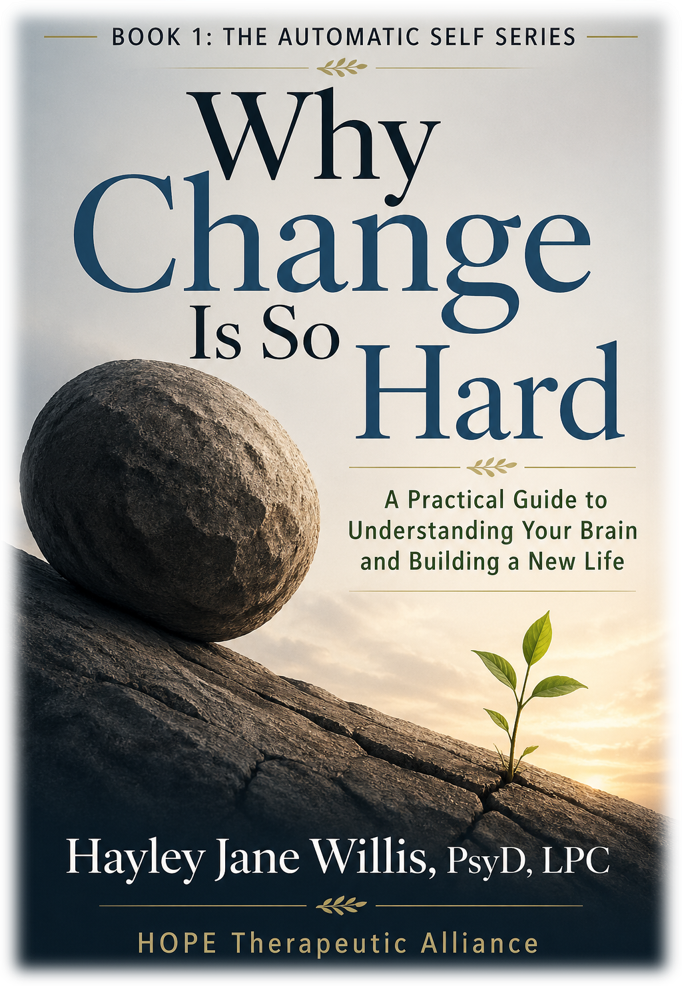
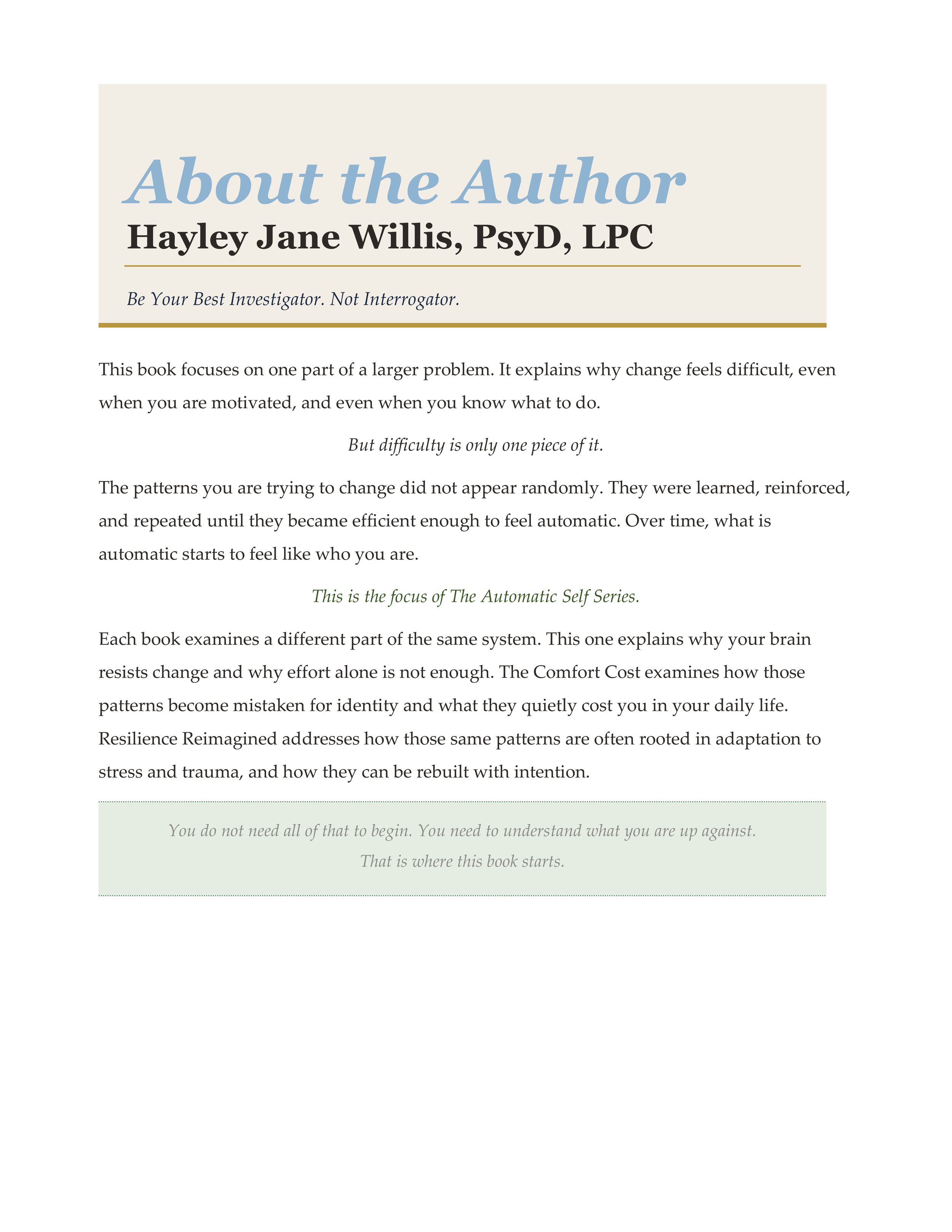
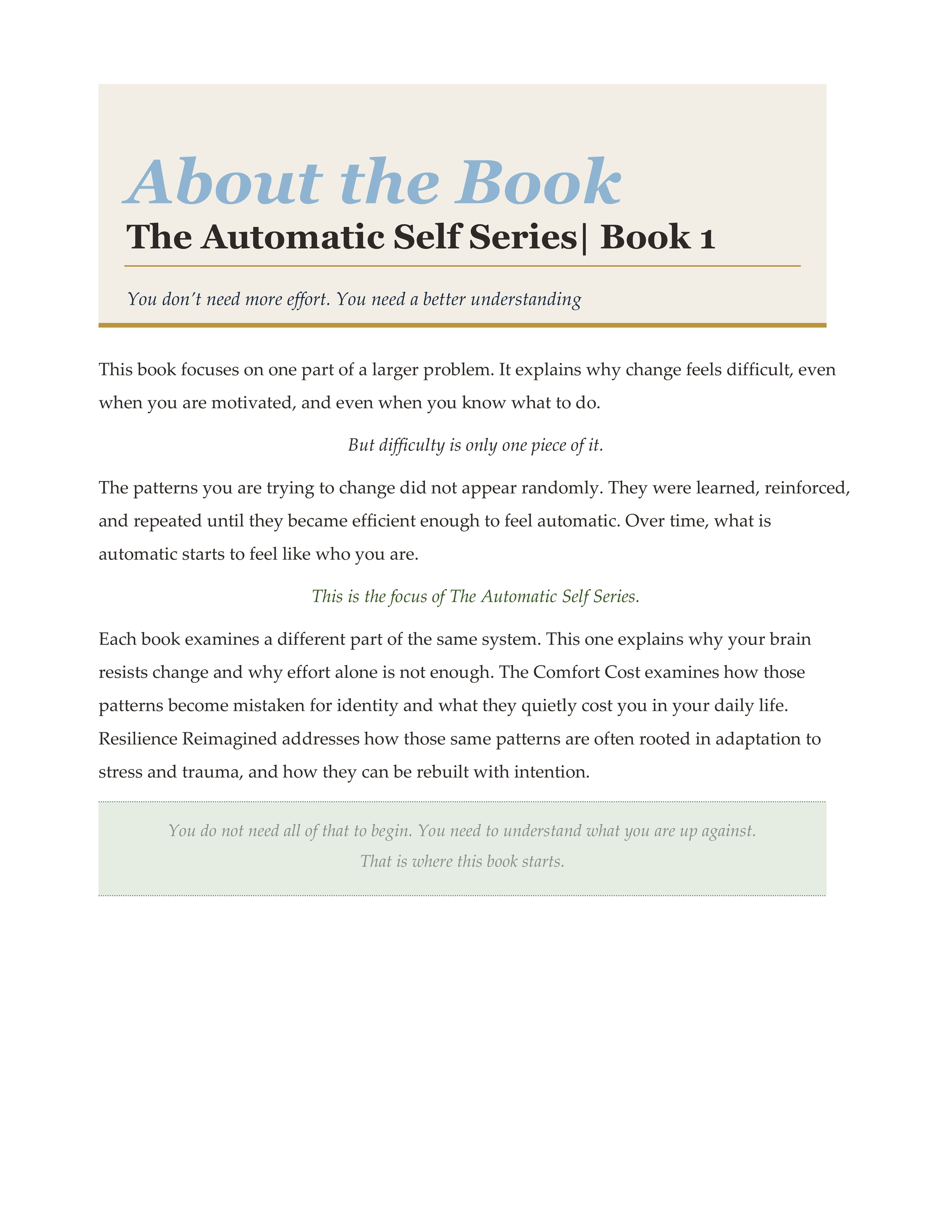
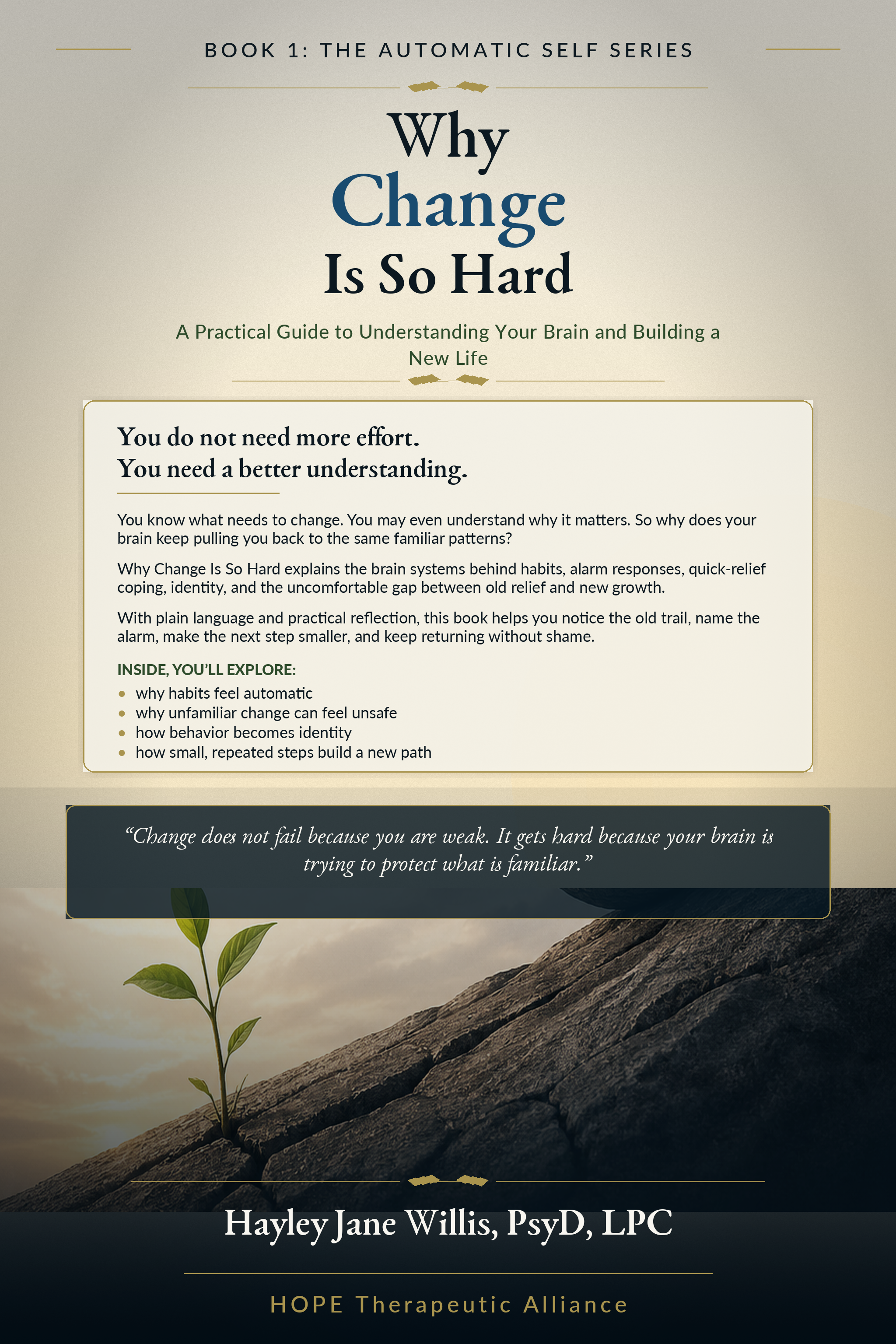
Change sounds exciting until your brain starts treating it like a threat. The first book in the Automatic Self Series explores why growth can feel so uncomfortable, even when you genuinely want it. Across 53 pages of guided reflection and practical insight, you will learn how the brain becomes attached to familiarity, how protective patterns quietly shape your decisions, and why resistance is often rooted in survival rather than laziness or lack of motivation. Instead of framing struggle as weakness, this book helps you understand the deeper mechanisms behind avoidance, emotional discomfort, and self-sabotaging cycles. This is a grounded, accessible starting point for anyone trying to step out of old patterns and create meaningful change without fighting themselves in the process.
*This resource is an educational tool intended to support personal growth and emotional wellness and is not a substitute for therapy or mental health treatment.
DIGITAL DOWNLOAD
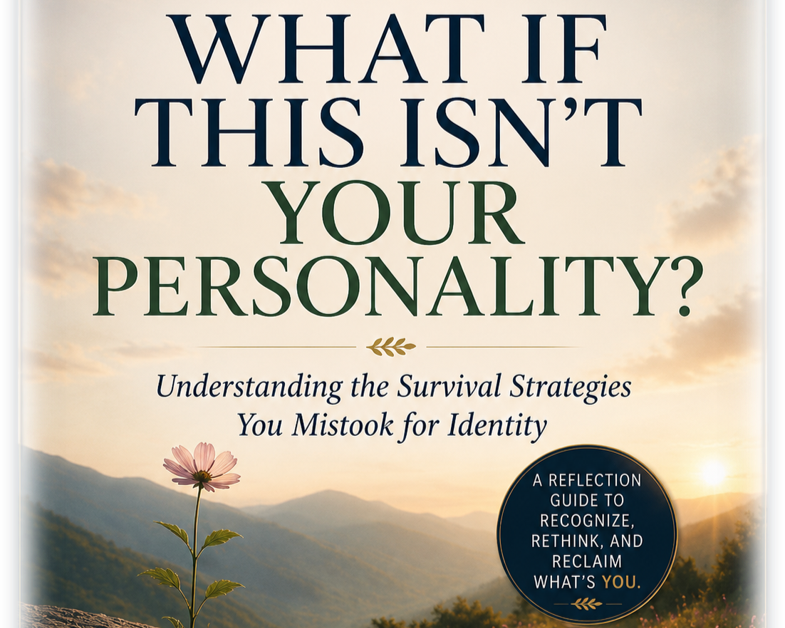
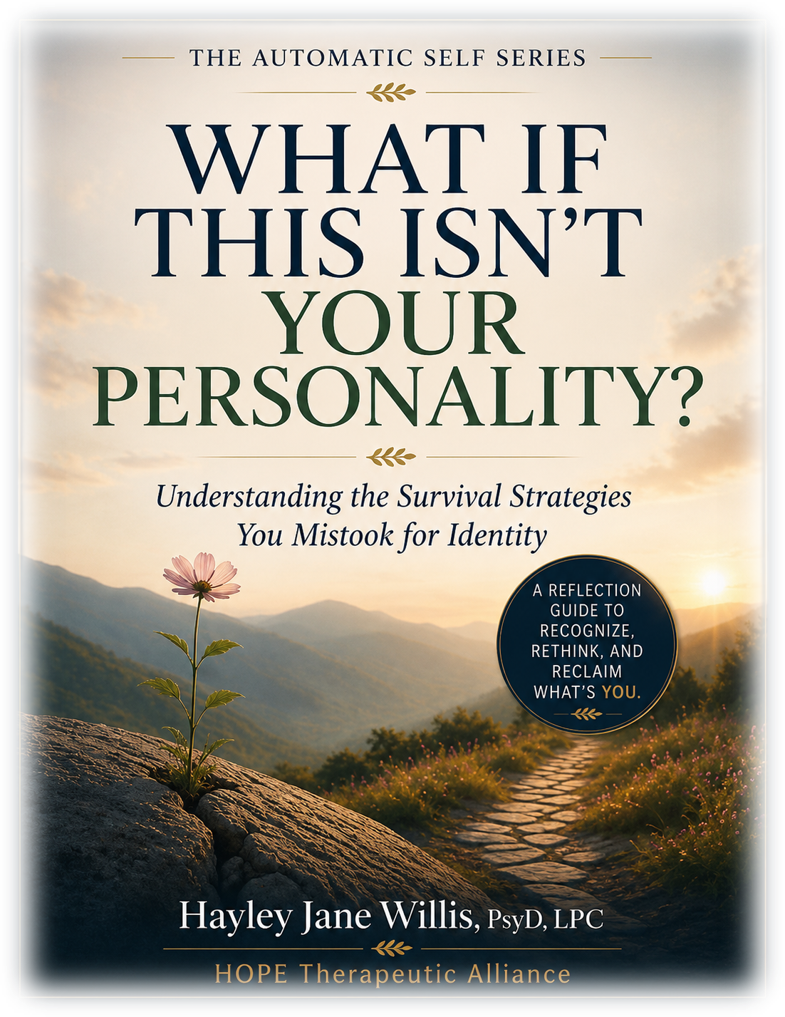
What If This Isn’t Your Personality? is a free reflective resource adapted from Resilience Reimagined: A Beginner's Guide to Trauma Healing. This guide explores how certain traits that feel permanent may have originally developed as survival strategies shaped by stress, unpredictability, criticism, emotional inconsistency, or prolonged emotional overwhelm. Through guided insight and reflection, you will begin examining whether patterns like hyper-independence, emotional detachment, over-responsibility, constant busyness, or chronic anxiety are truly personality, or adaptations your nervous system learned to feel safe. This resource helps create awareness around the protective patterns operating beneath the surface so you can begin moving from automatic survival toward intentional self-understanding and growth.
*This resource is an educational tool intended to support personal growth and emotional wellness and is not a substitute for therapy or mental health treatment.
DIGITAL DOWNLOAD
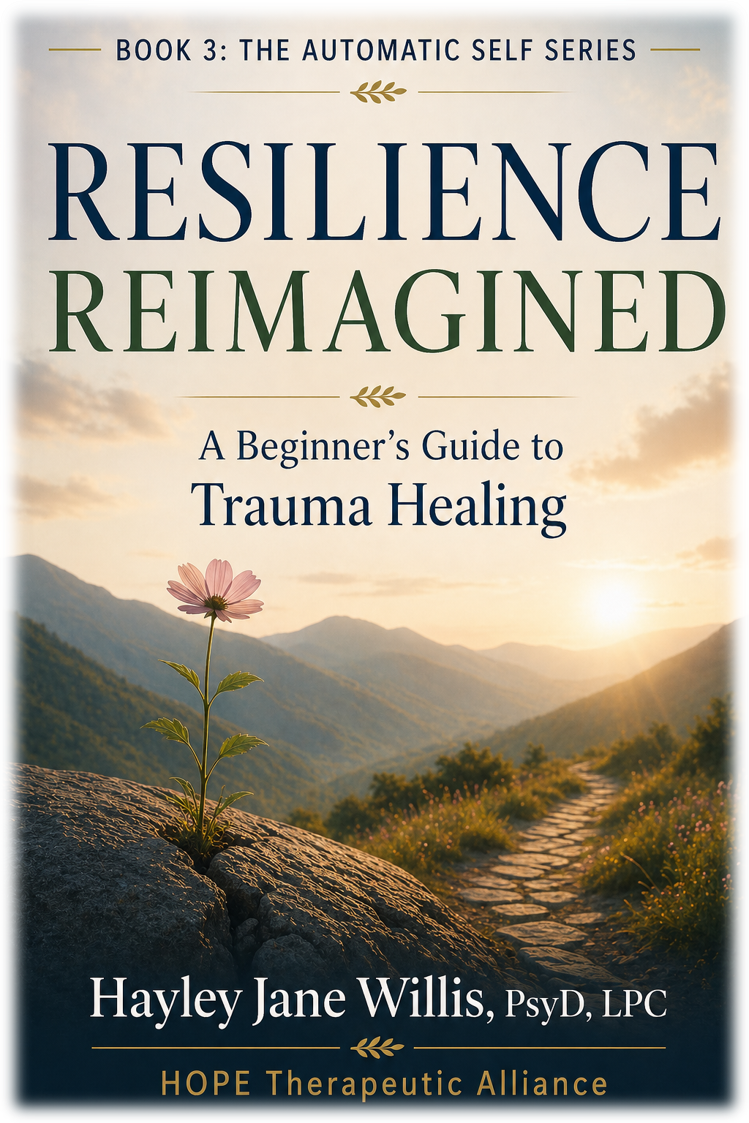
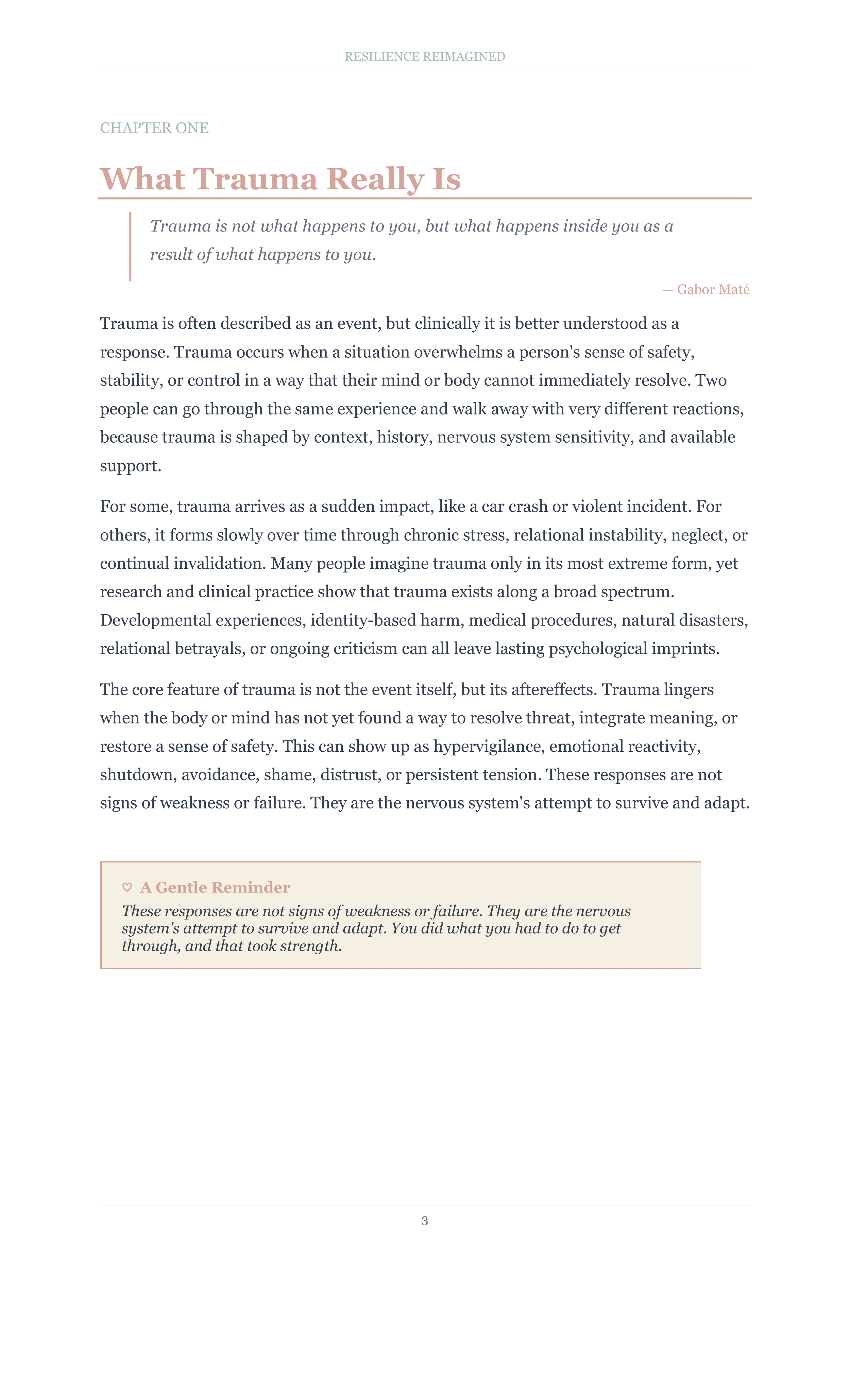
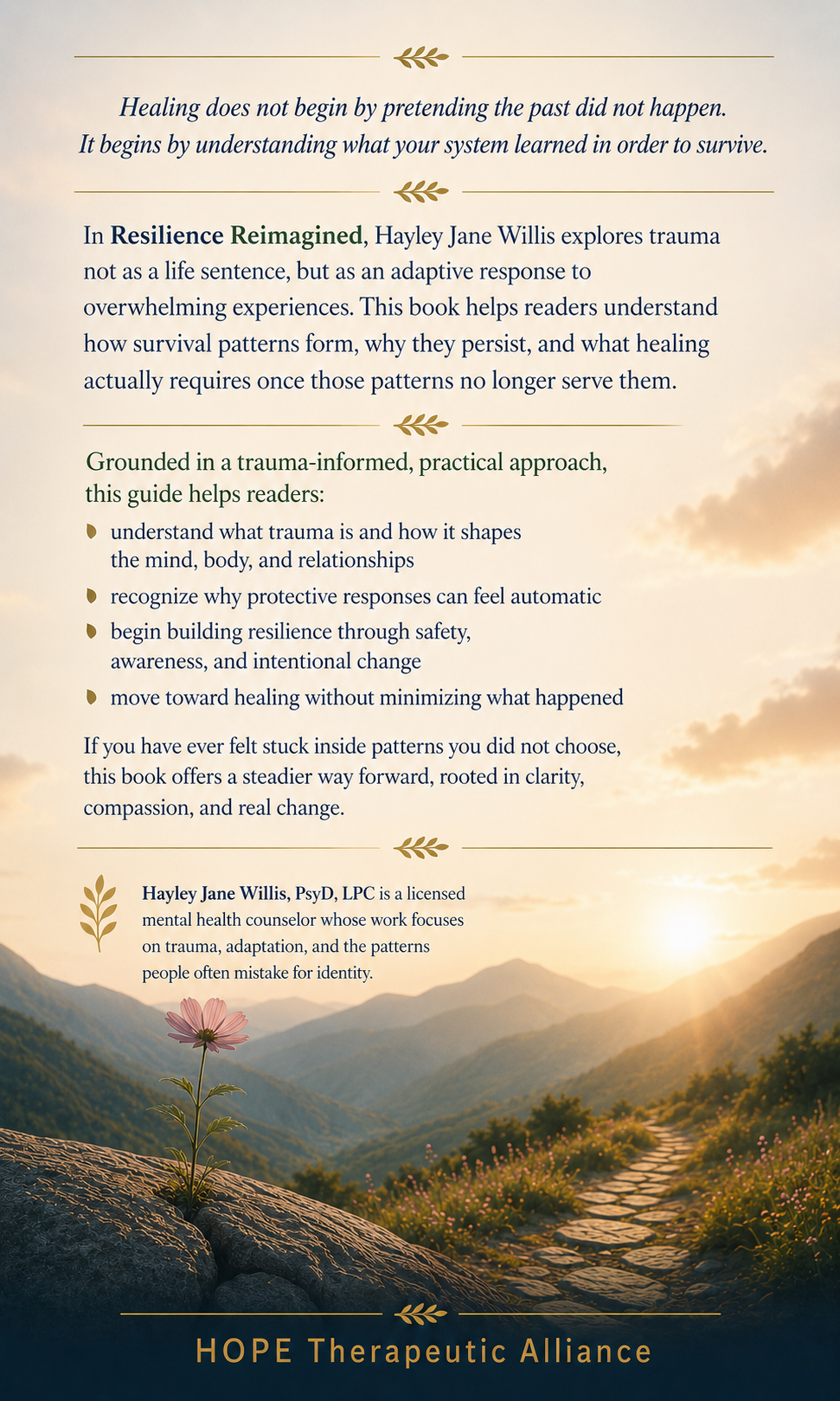
Resilience is not about becoming unbreakable. It is about learning how to adapt without losing yourself in the process. The final book in the Automatic Self Series moves beyond understanding your patterns and focuses on building lasting, sustainable change. Across 142 pages, you will learn how to strengthen emotional flexibility, respond to setbacks without collapsing into old habits, and create routines that support long-term growth instead of temporary motivation. This book reframes resilience as a skill that is intentionally built through awareness, repetition, and self-trust rather than sheer toughness. Through guided exercises and practical reflection, you will begin turning insight into consistency so the life you are building actually feels stable, authentic, and maintainable over time.
*This resource is an educational tool intended to support personal growth and emotional wellness and is not a substitute for therapy or mental health treatment.
DIGITAL DOWNLOAD

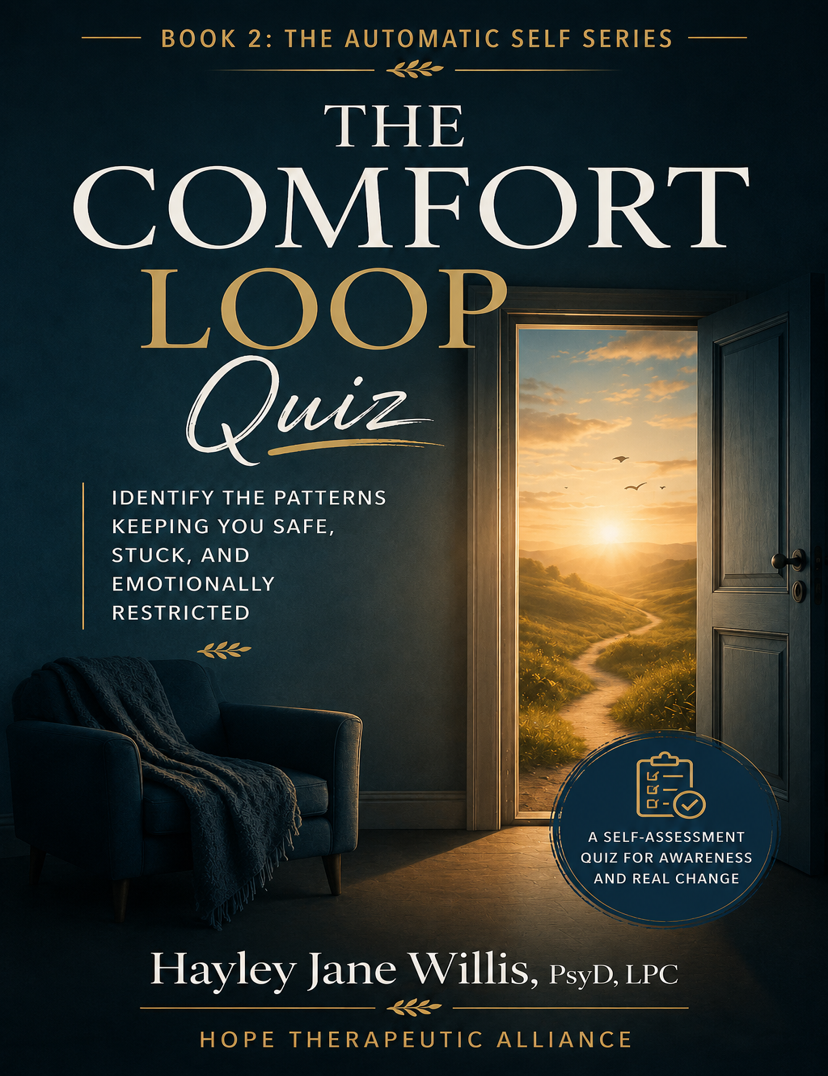
The Comfort Loop Quiz helps you identify the protective patterns that may be keeping you emotionally safe, but personally stuck. This free self-awareness resource explores the hidden ways people prioritize predictability, avoidance, performance, busyness, or control over vulnerability and growth. Through guided reflection, you will begin recognizing where comfort may be limiting your emotional freedom, relationships, and ability to live fully aligned with your values.
This free resource is adapted from The Comfort Cost, Book Two in The Automatic Self Series, and serves as an introduction to the deeper work of understanding how comfort, predictability, and emotional protection can quietly become barriers to living in alignment with your true values.
*This resource is an educational tool intended to support personal growth and emotional wellness and is not a substitute for therapy or mental health treatment.
DIGITAL DOWNLOAD
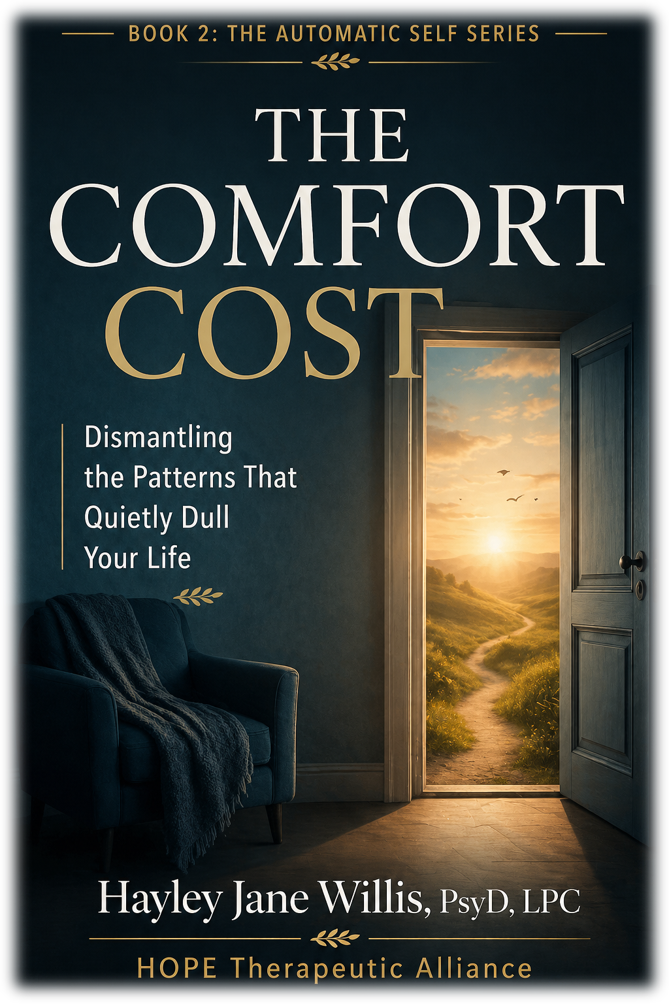
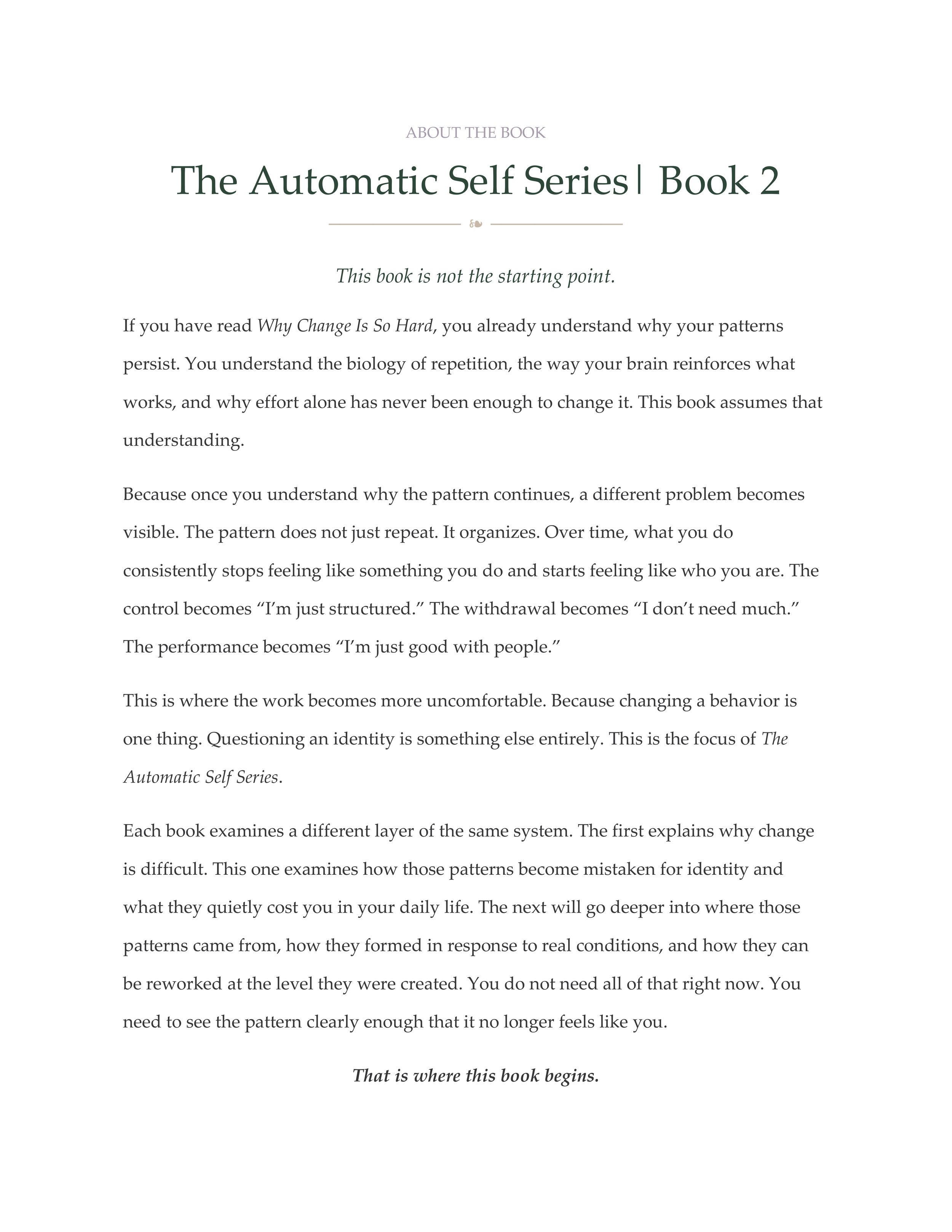
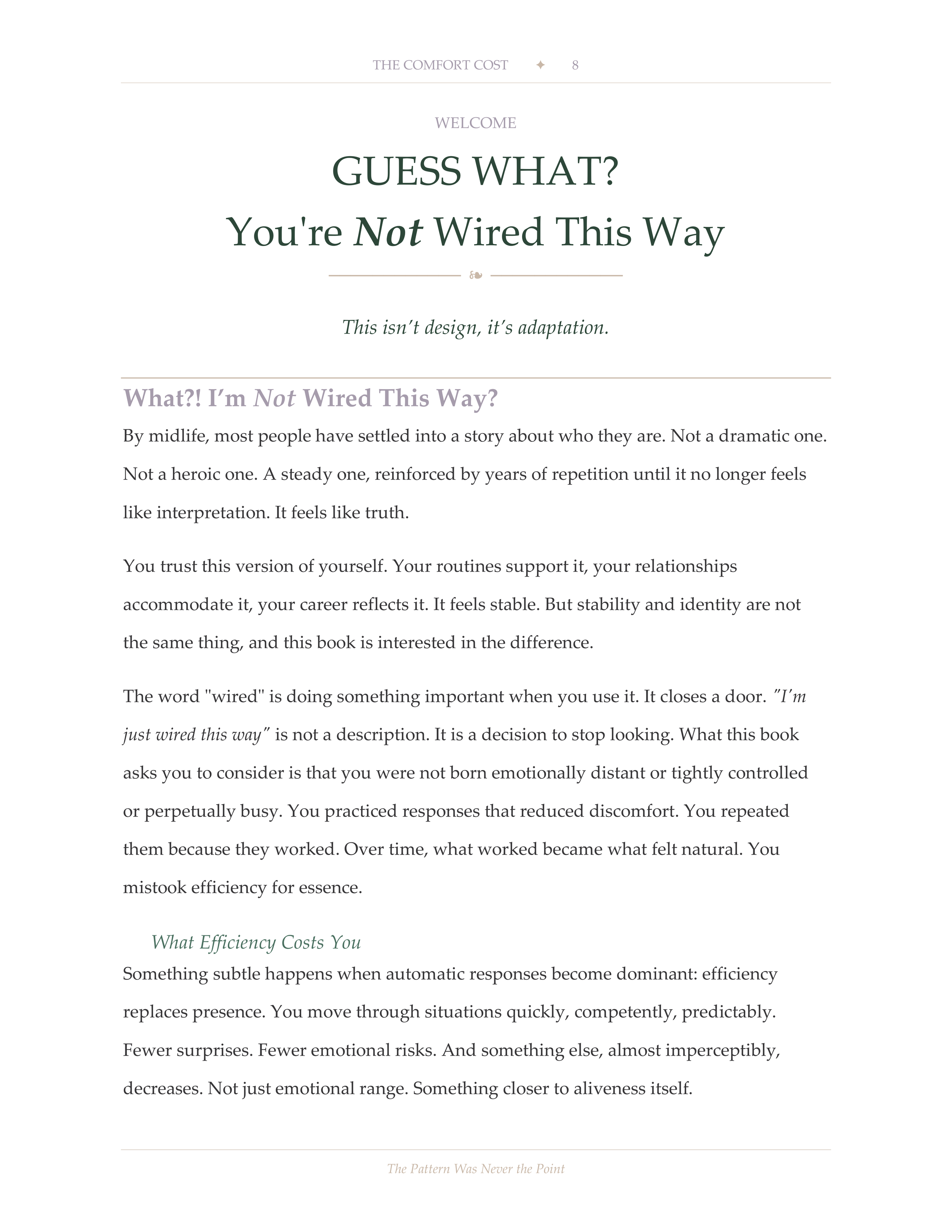
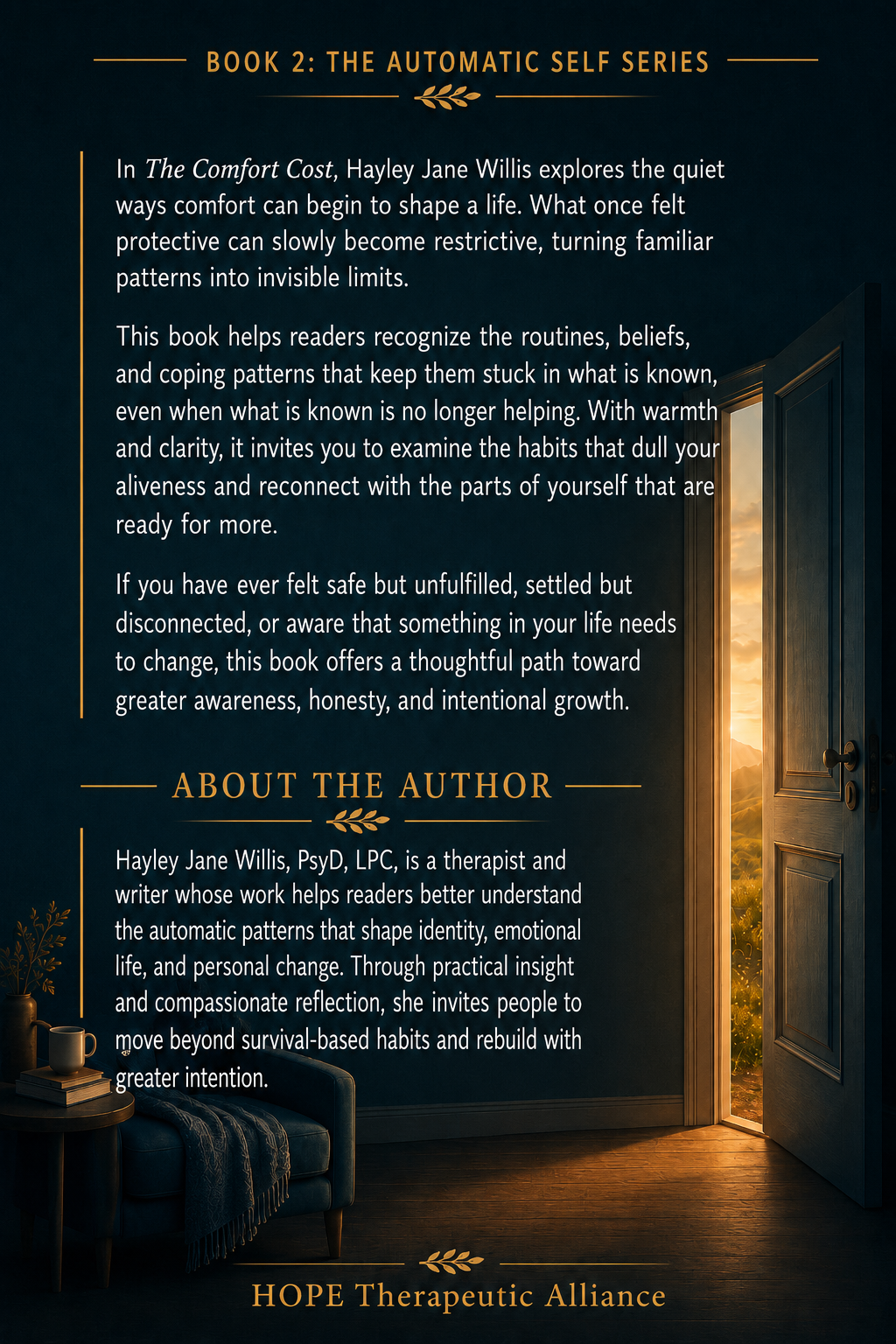
Comfort is not always peace. Sometimes it is avoidance dressed up as stability. Book Two in the Automatic Self Series explores the hidden price of staying emotionally safe, predictable, and familiar at the expense of growth. Through 71 pages of guided reflection, this journal helps you examine the routines, relationships, beliefs, and coping patterns that may protect you from discomfort while quietly limiting your life. You will begin identifying where fear, predictability, and self-protection have started making decisions for you. Rather than pushing toxic positivity or reckless change, this book helps you honestly evaluate what your current patterns are costing you and whether they still align with the life you actually want to build.
*This resource is an educational tool intended to support personal growth and emotional wellness and is not a substitute for therapy or mental health treatment.
DIGITAL DOWNLOAD
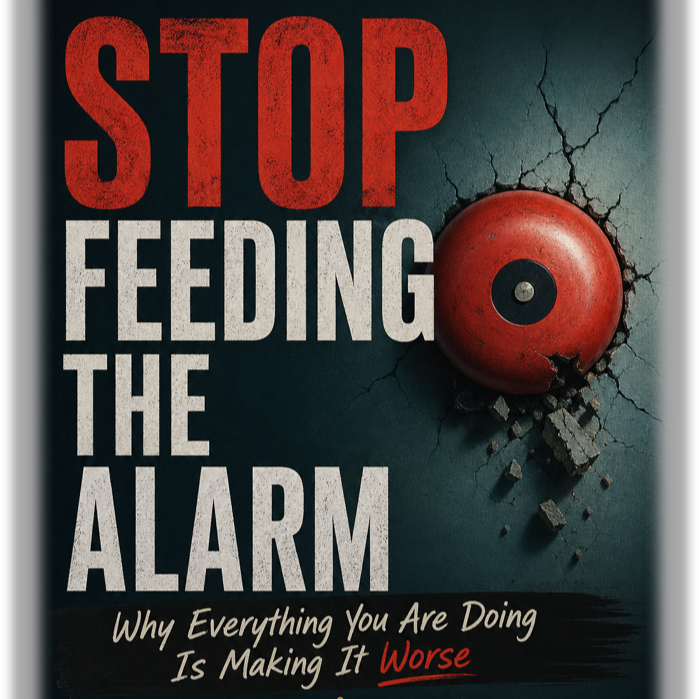
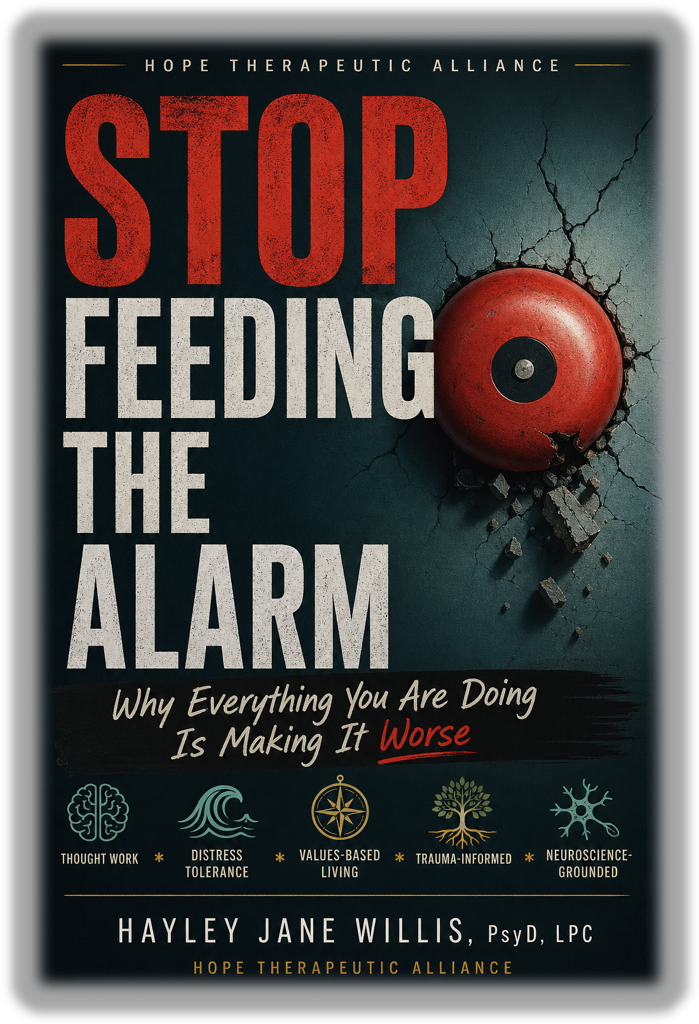
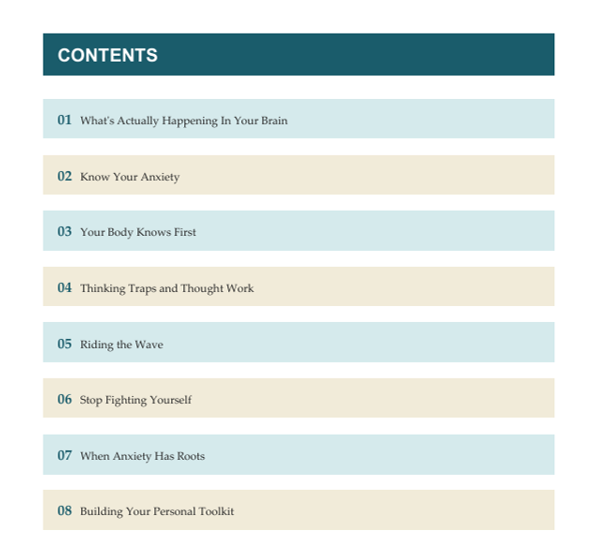
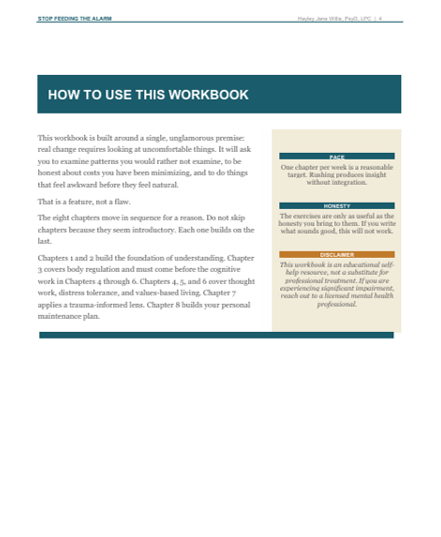
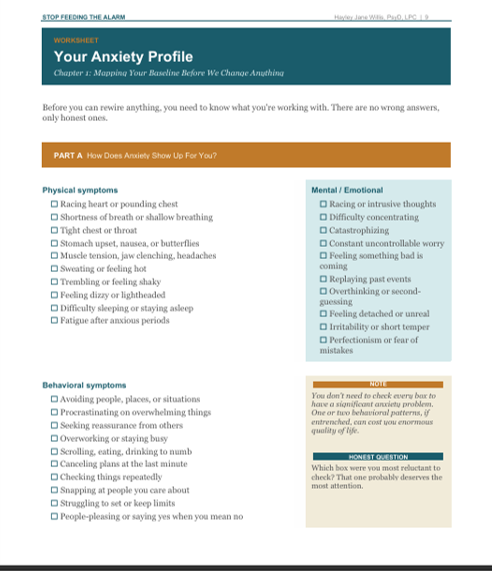
Anxiety does not always feel like fear. Sometimes it feels like overthinking, irritability, exhaustion, avoidance, tension, or a nervous system that never fully powers down. This 43-page workbook helps you understand why that happens and what keeps the cycle going. Rather than teaching you to “just calm down,” it helps you identify the hidden patterns, thoughts, and protective behaviors that quietly keep anxiety activated. Through practical exercises and guided prompts, you will learn how to regulate your nervous system, respond differently to uncertainty, and build a more stable relationship with your own mind and body. This is not about eliminating anxiety completely. It is about helping you stop living at the mercy of it.
*This resource is an educational tool intended to support personal growth and emotional wellness and is not a substitute for therapy or mental health treatment.
DIGITAL DOWNLOAD
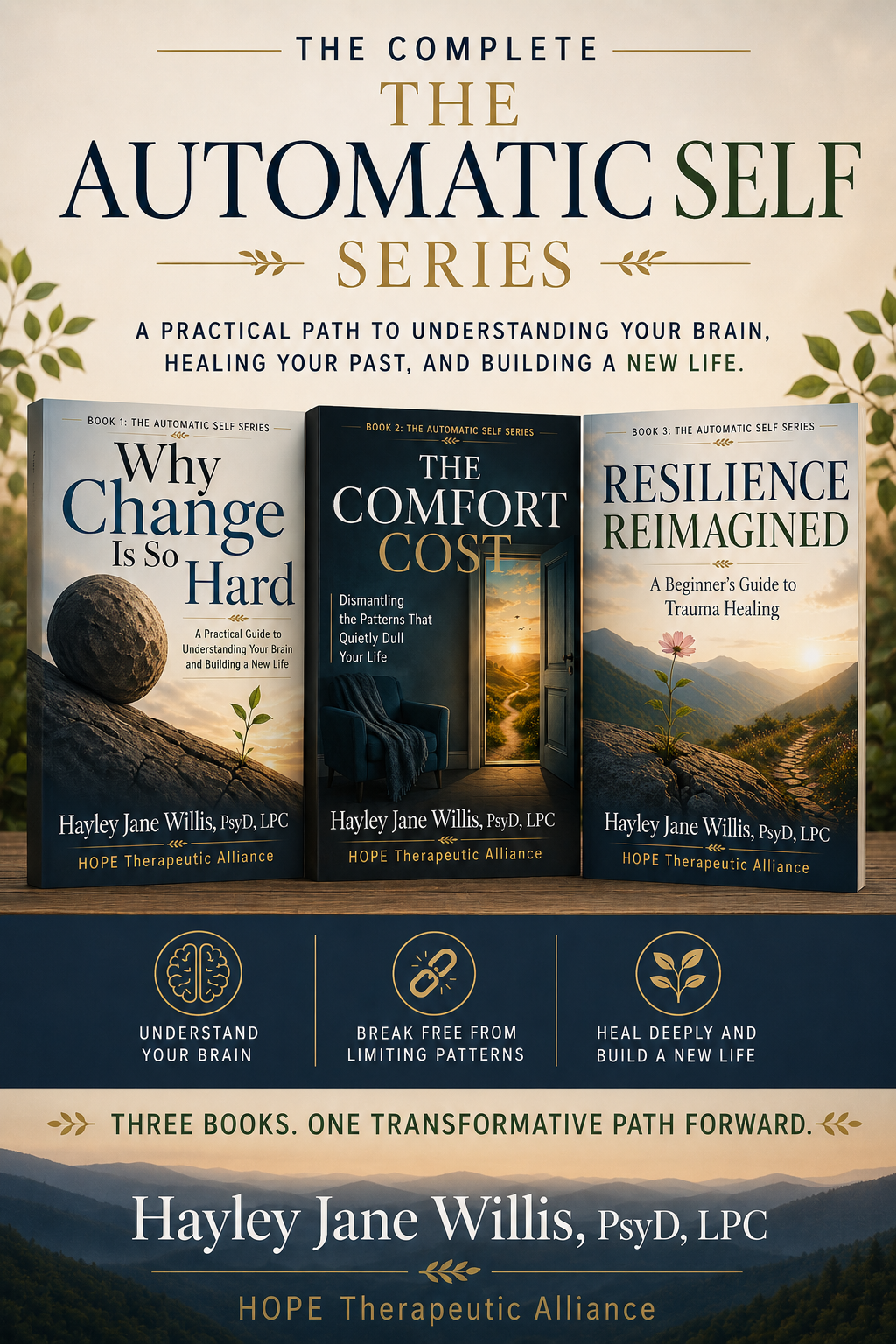
Why do people repeat the same patterns even when they want something different? The Automatic Self Series examines the psychological systems that operate beneath conscious awareness, influencing behavior, emotional reactions, relationships, and change. Through Resilience Reimagined, Why Change Is So Hard, and The Comfort Cost, readers gain a deeper understanding of how automatic processes shape daily life and what it takes to create meaningful, lasting change.
*This resource is an educational tool intended to support personal growth and emotional wellness and is not a substitute for therapy or mental health treatment.
DIGITAL DOWNLOAD
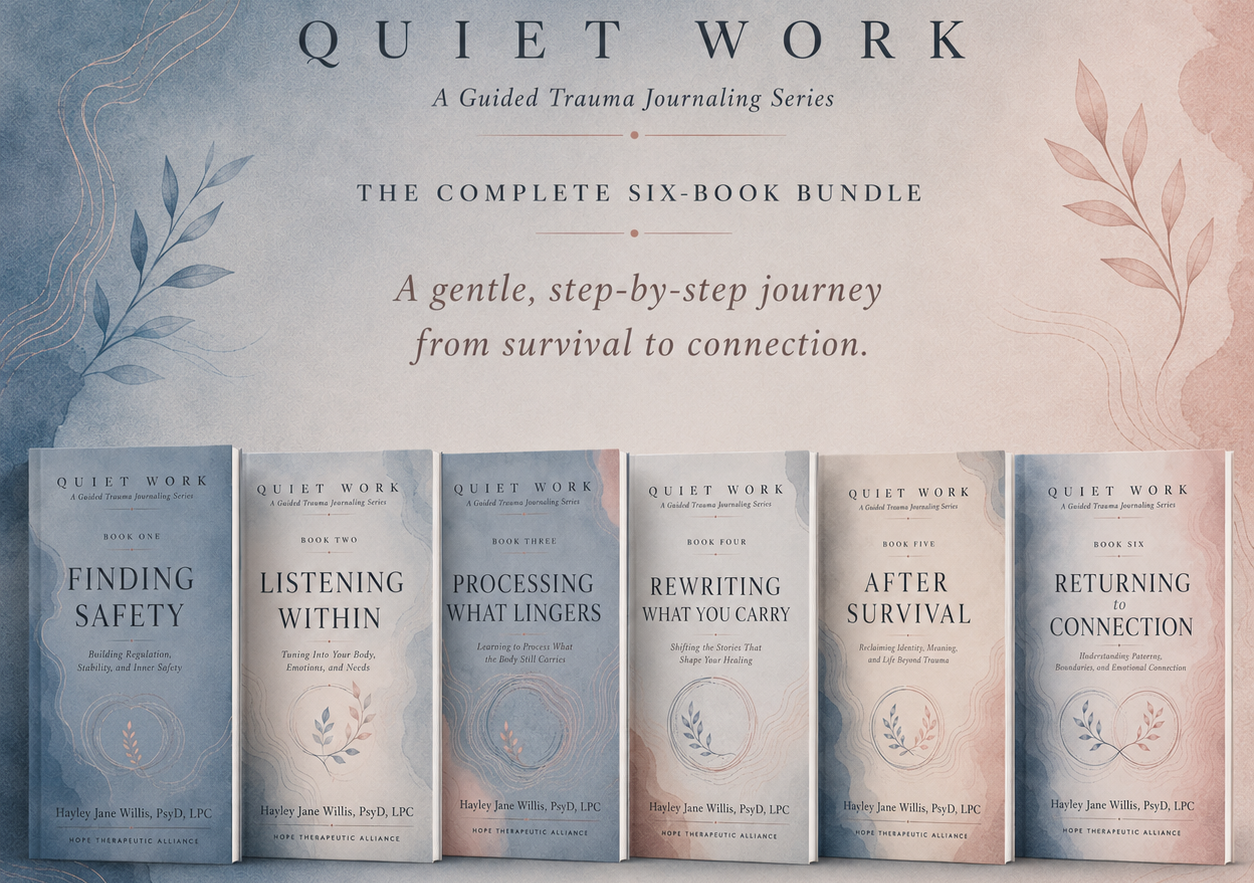
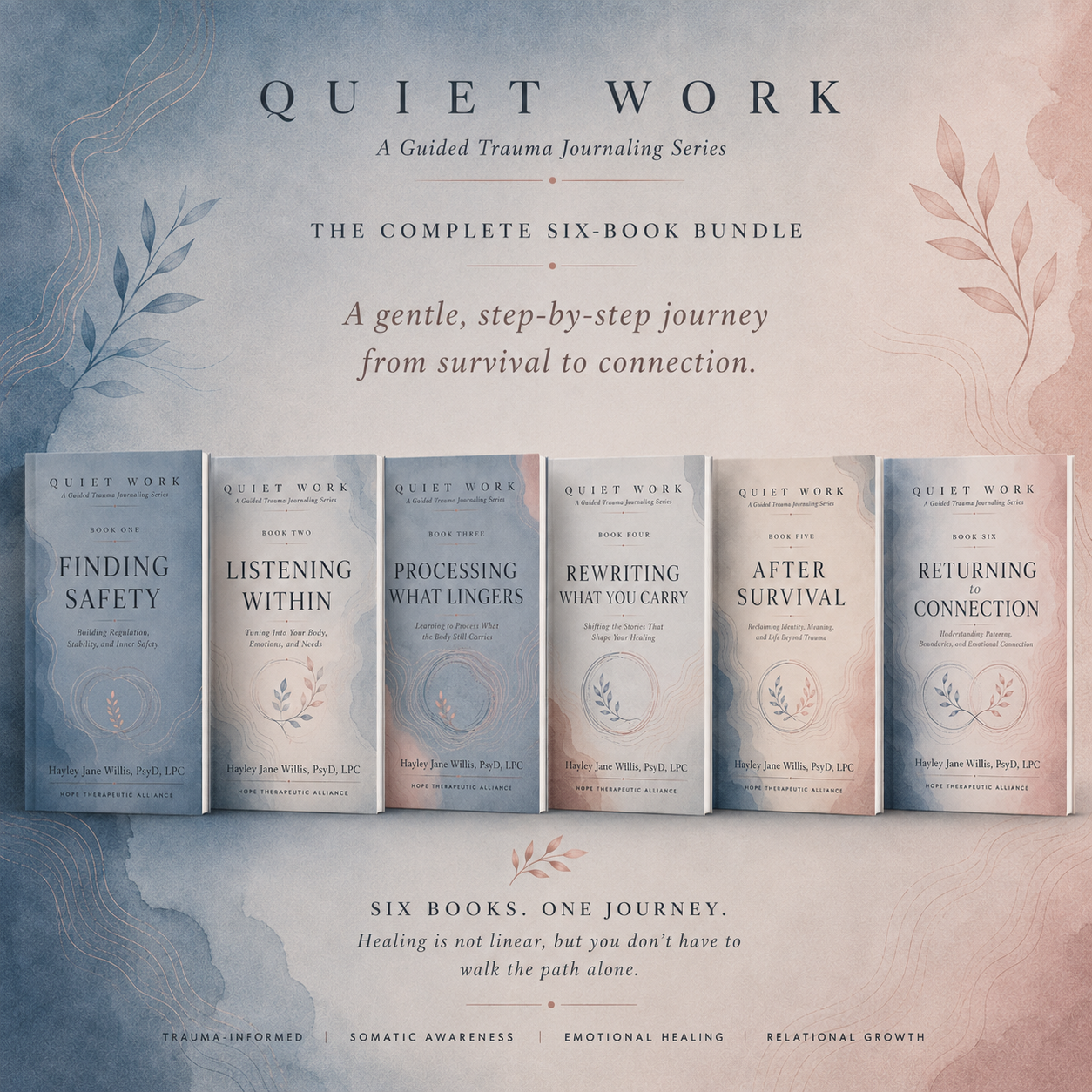
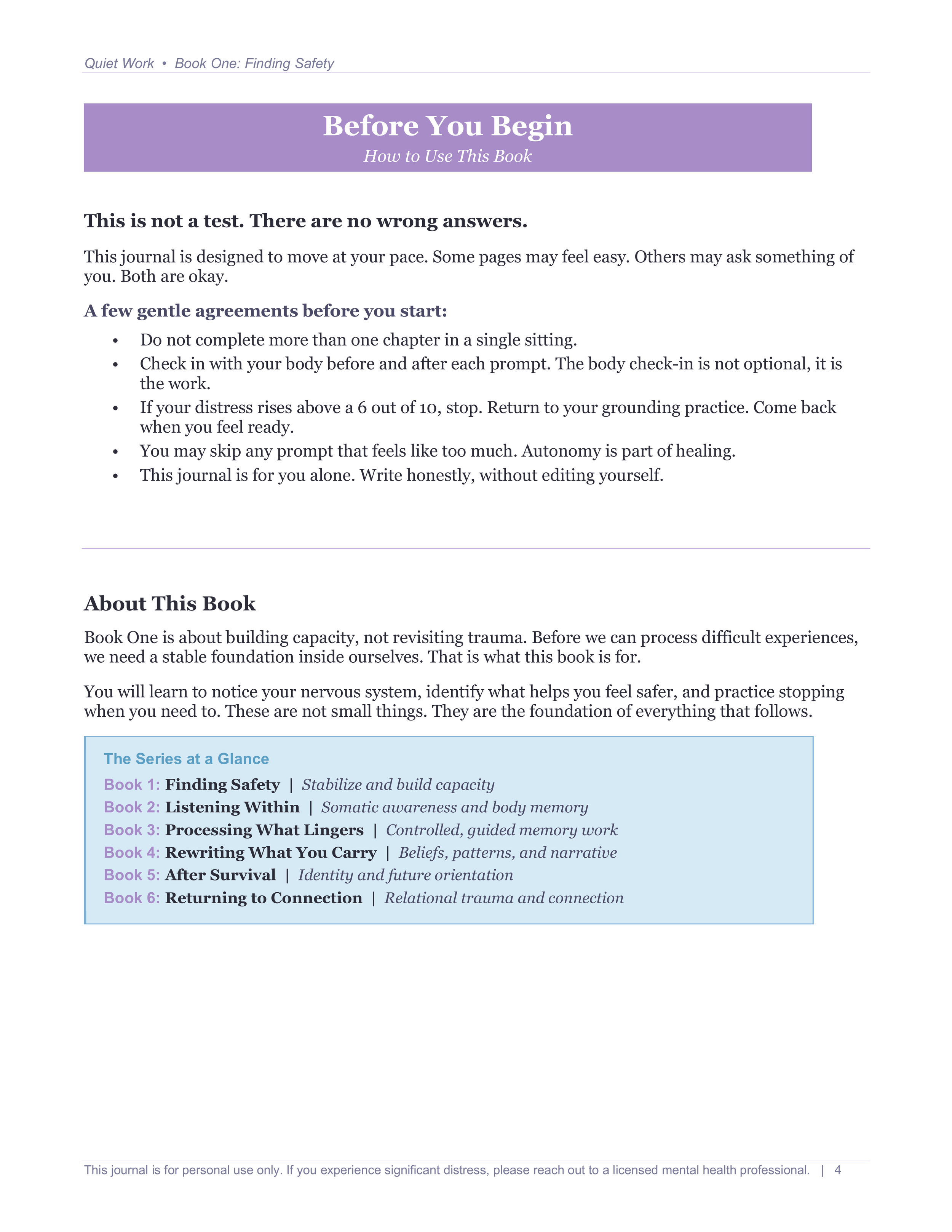
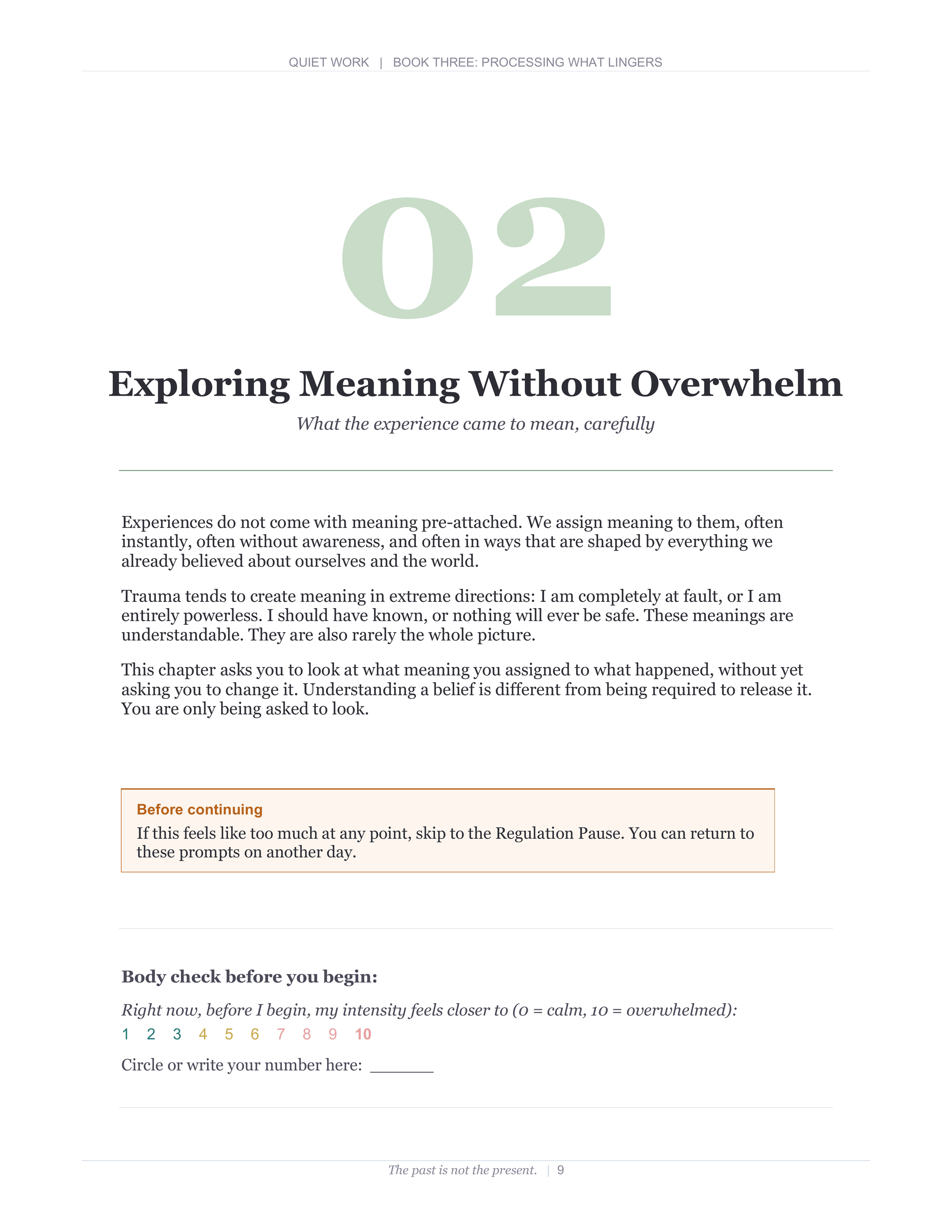
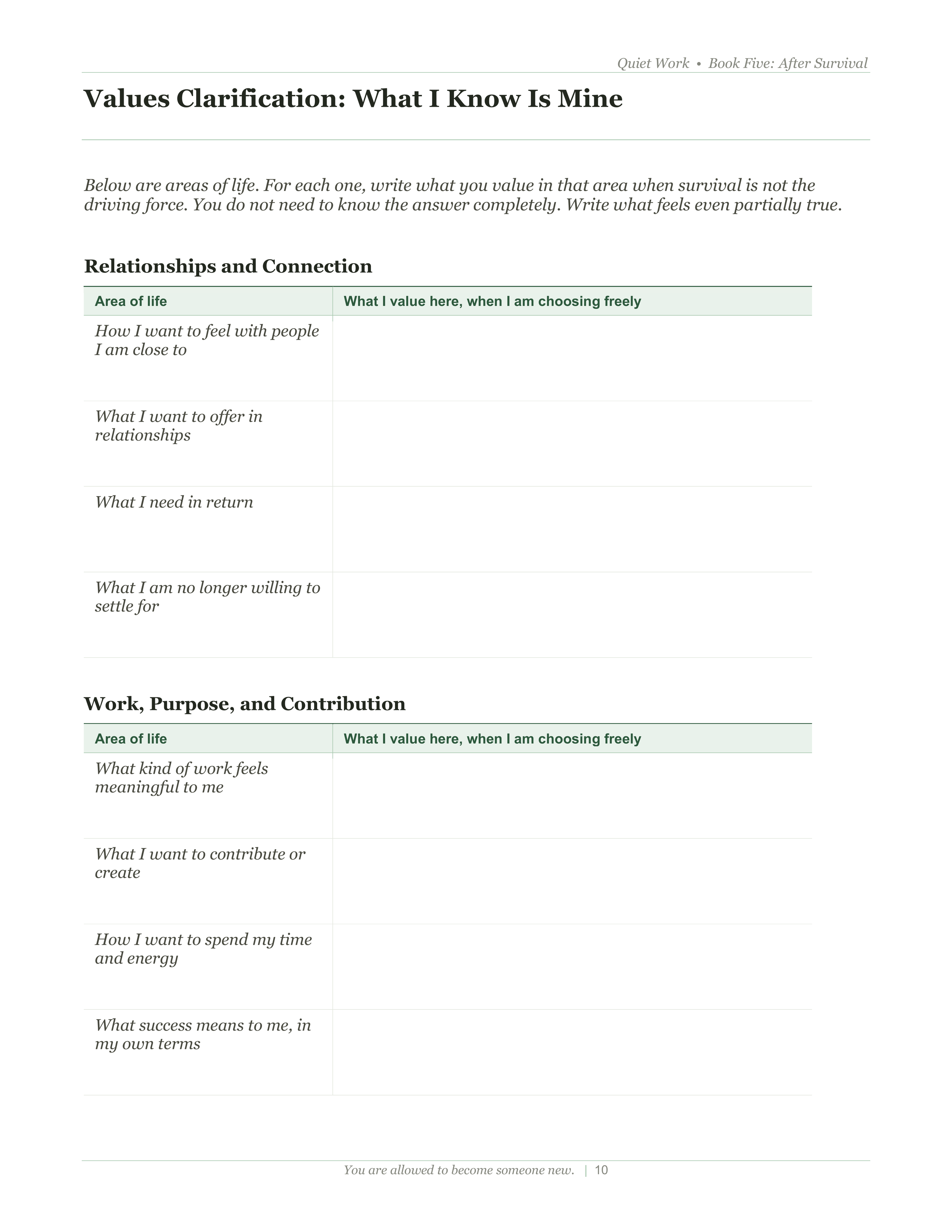
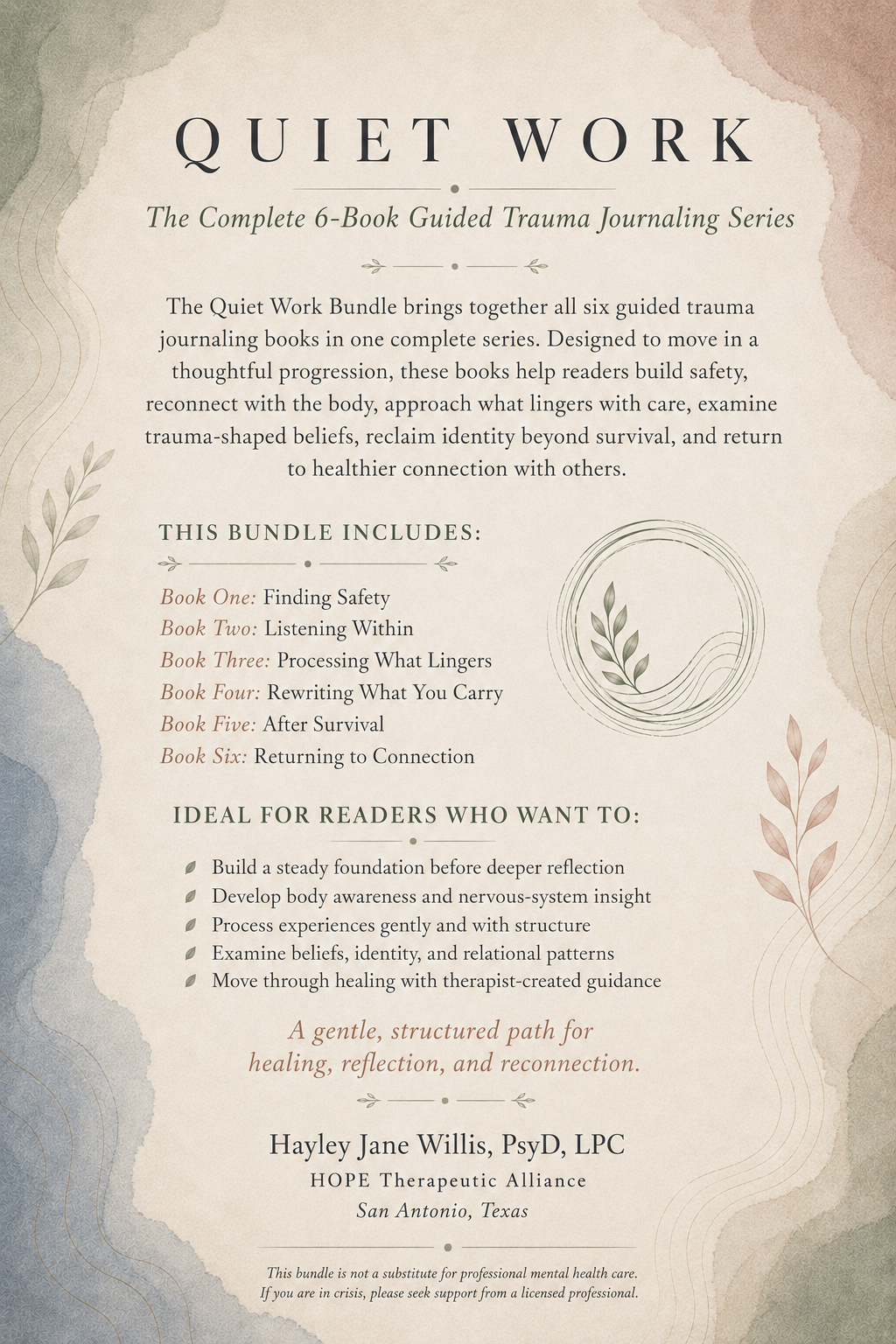
Healing does not usually happen in one breakthrough moment. More often, it happens quietly through small acts of honesty, reflection, regulation, and learning how to stay connected to yourself without shutting down. The Quiet Work is a six-book guided trauma-journaling series created for people seeking a deeper, more intentional approach to recovery. Across 118 pages, this collection helps you gradually build emotional safety, strengthen your awareness of your body and nervous system, process what you have carried for too long, and reconnect with parts of yourself that survival required you to silence. Each volume builds on the last, creating a paced and structured experience that prioritizes stability over emotional overwhelm. This series is not about forcing vulnerability or endlessly revisiting pain. It is about helping you develop the capacity to live beyond survival mode and move toward a life that feels more grounded, connected, and fully your own.
*This resource is an educational tool intended to support personal growth and emotional wellness and is not a substitute for therapy or mental health treatment.
DIGITAL DOWNLOAD
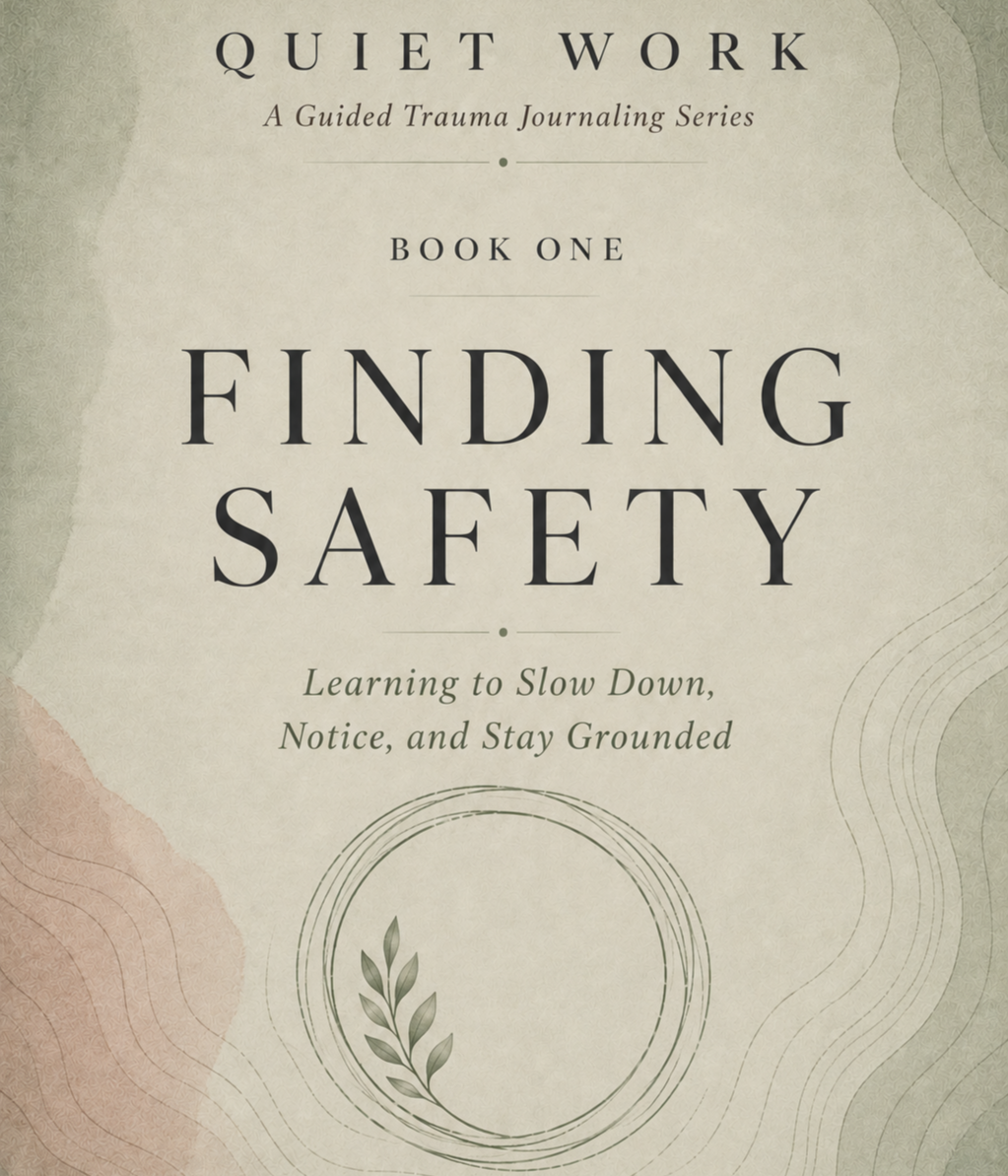
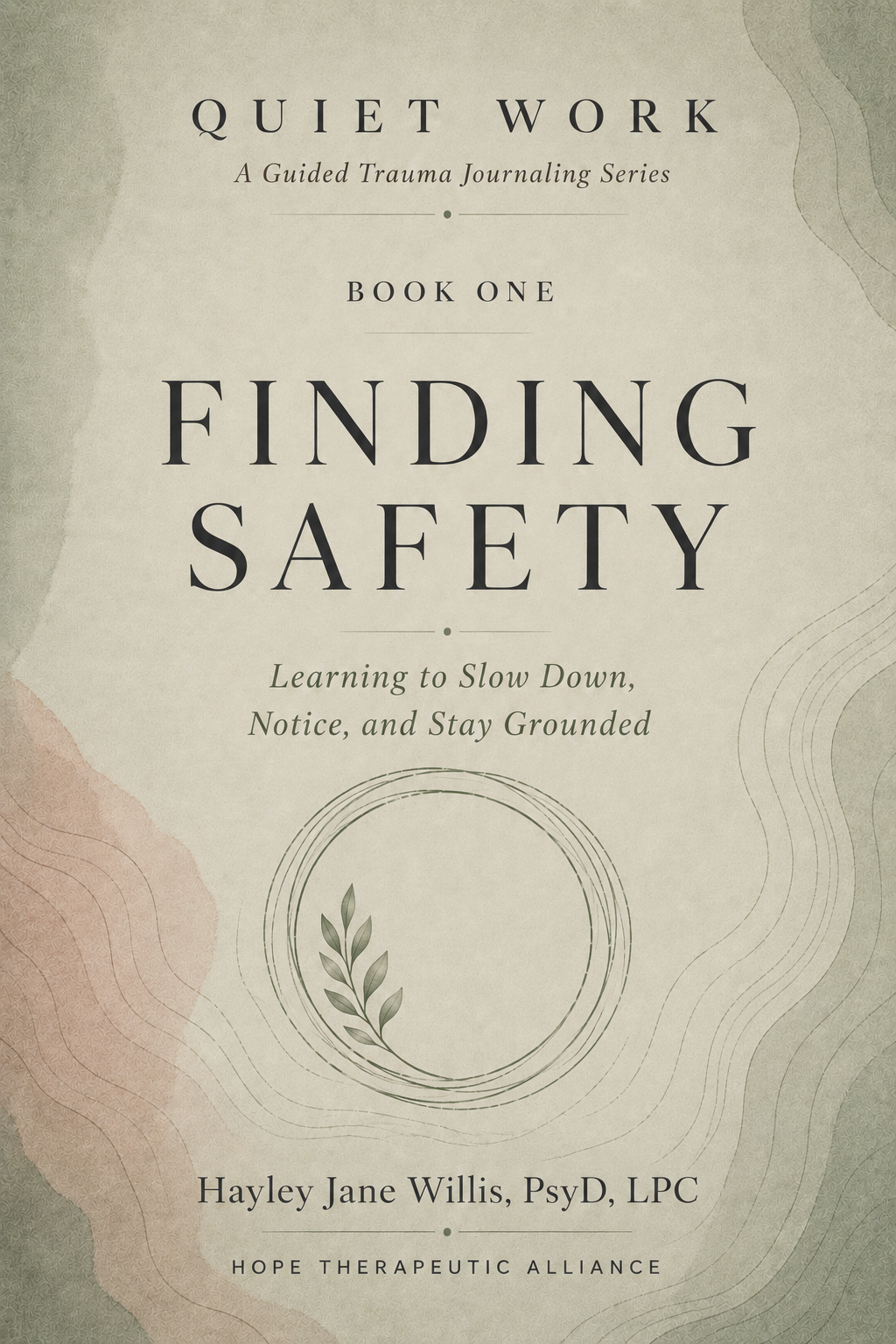
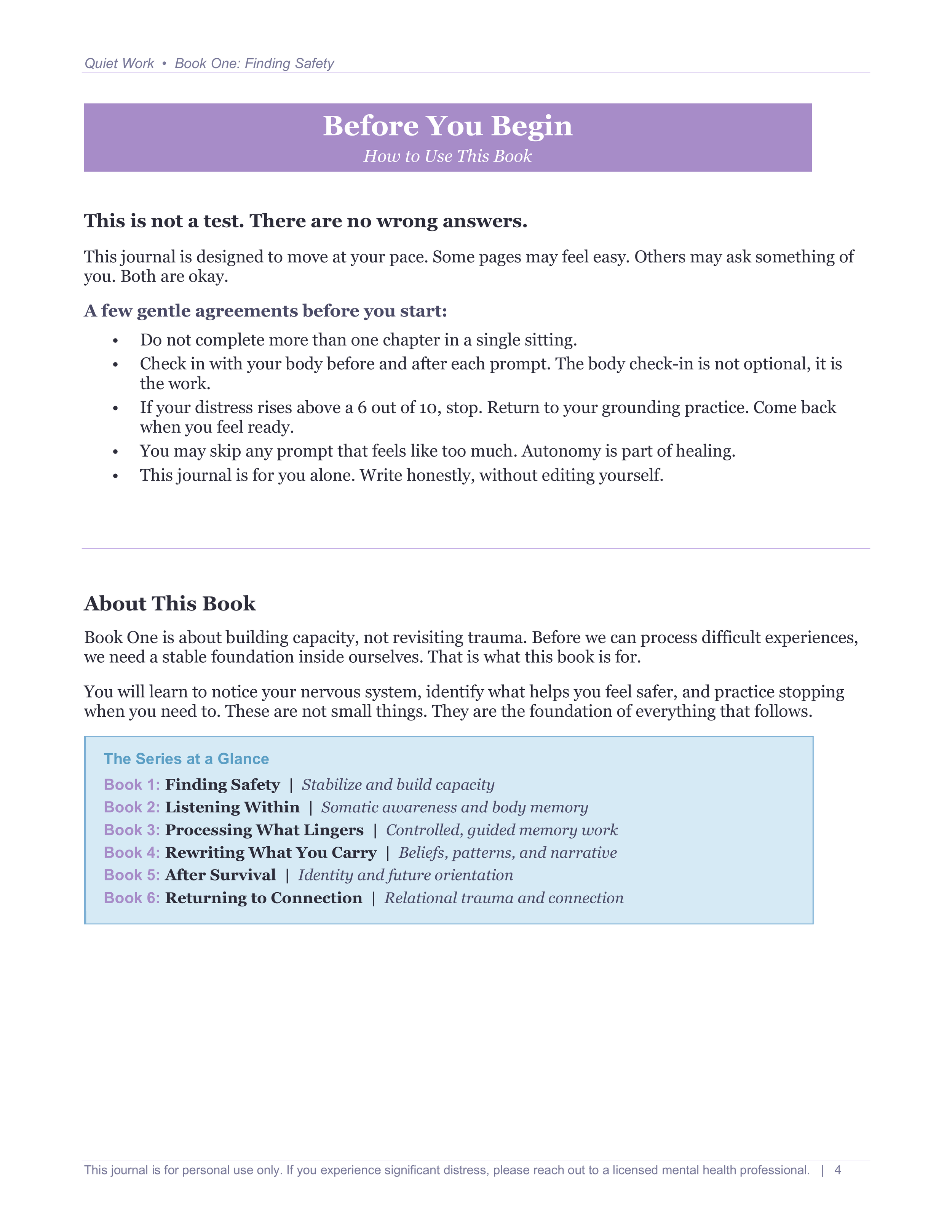
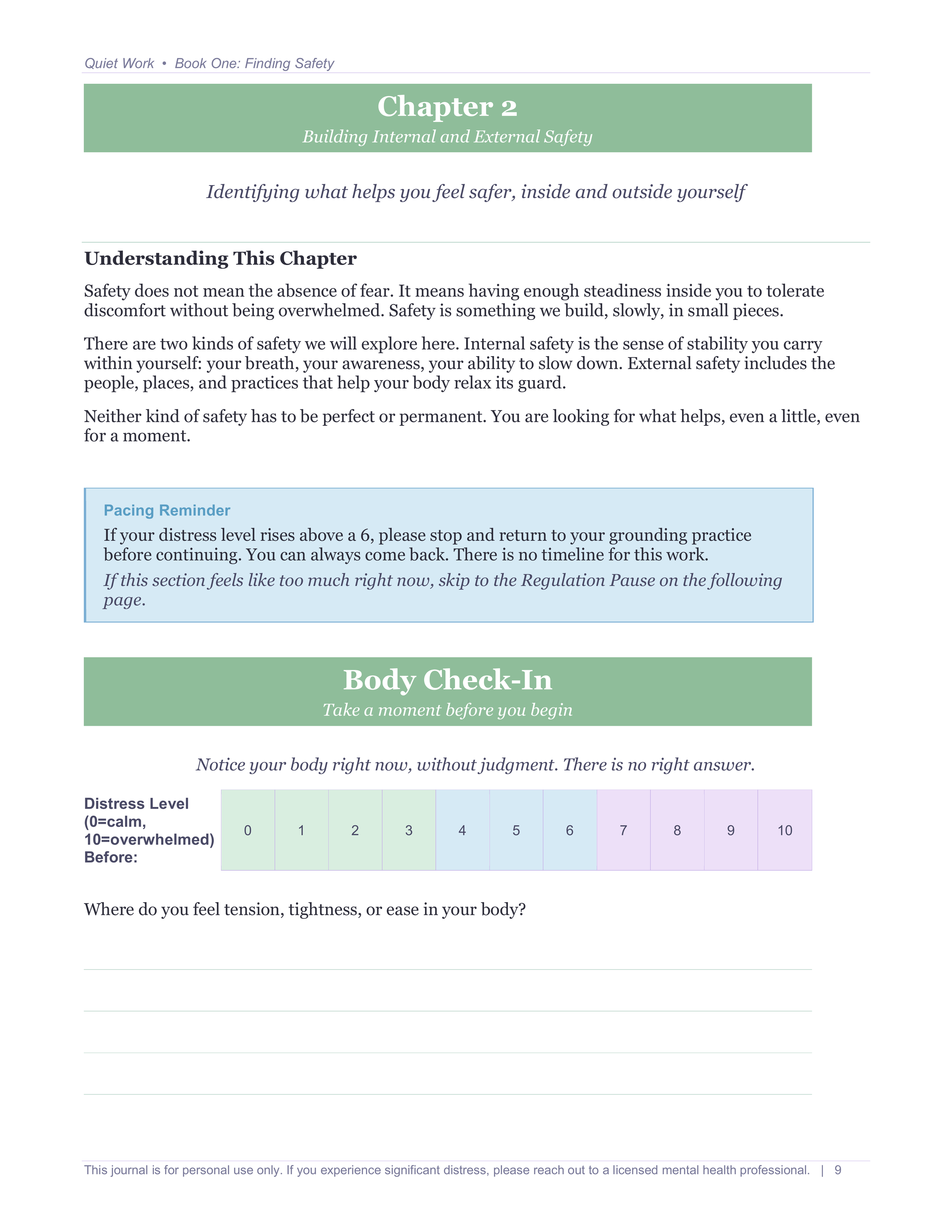
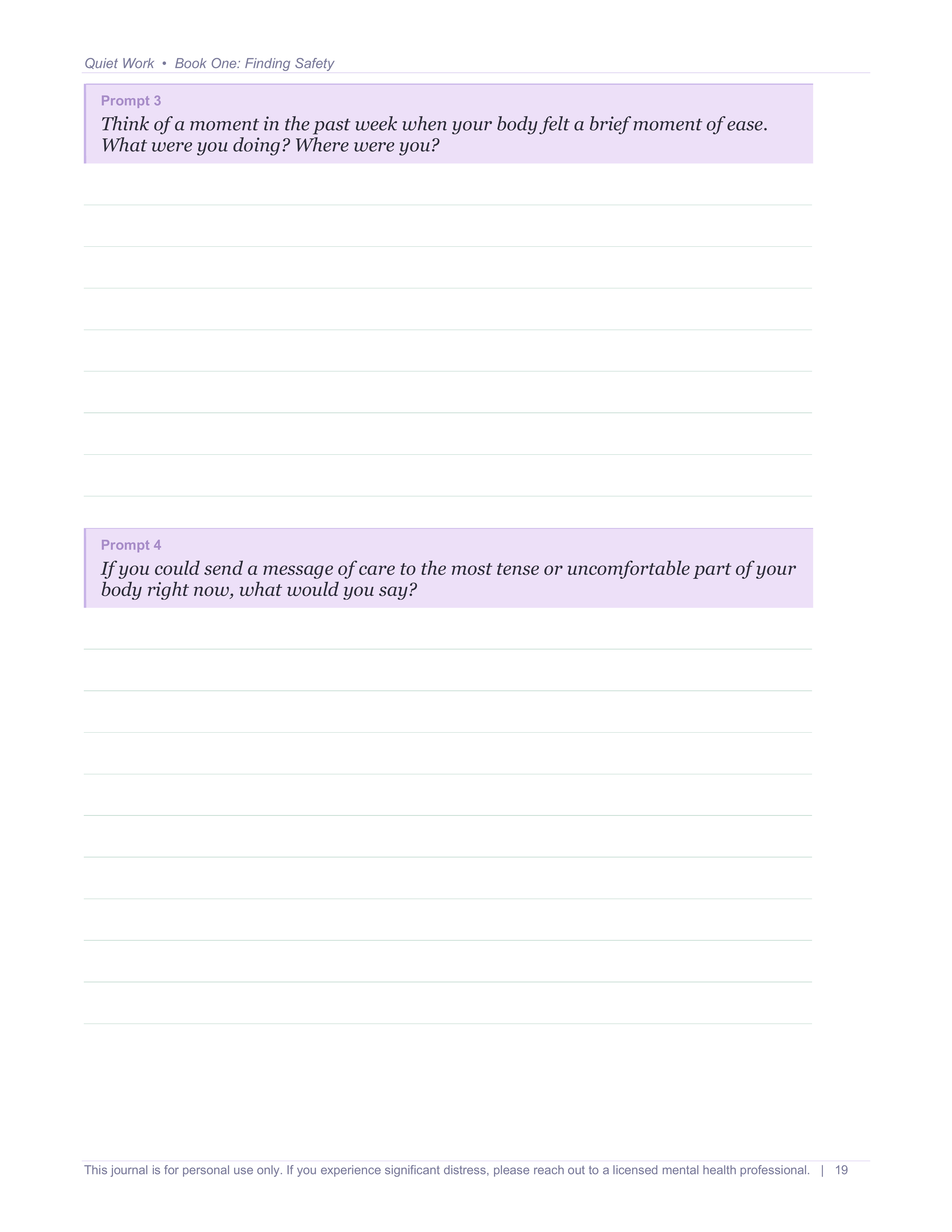
Before healing can feel safe, your mind and body often need proof that they no longer have to stay in constant survival mode. The first book in the Quiet Work Series is designed to help you create that foundation. Rather than asking you to immediately unpack painful experiences, this volume focuses on building emotional stability, nervous system awareness, and a stronger sense of personal safety. Through 21 pages of guided reflection, grounding exercises, and intentional pauses, you will begin learning how to recognize overwhelm before it fully takes over and how to respond to yourself with greater steadiness instead of pressure. This book is not about forcing progress. It is about helping you slow down enough to develop the internal support needed for deeper healing later on.
*This resource is an educational tool intended to support personal growth and emotional wellness and is not a substitute for therapy or mental health treatment.
DIGITAL DOWNLOAD
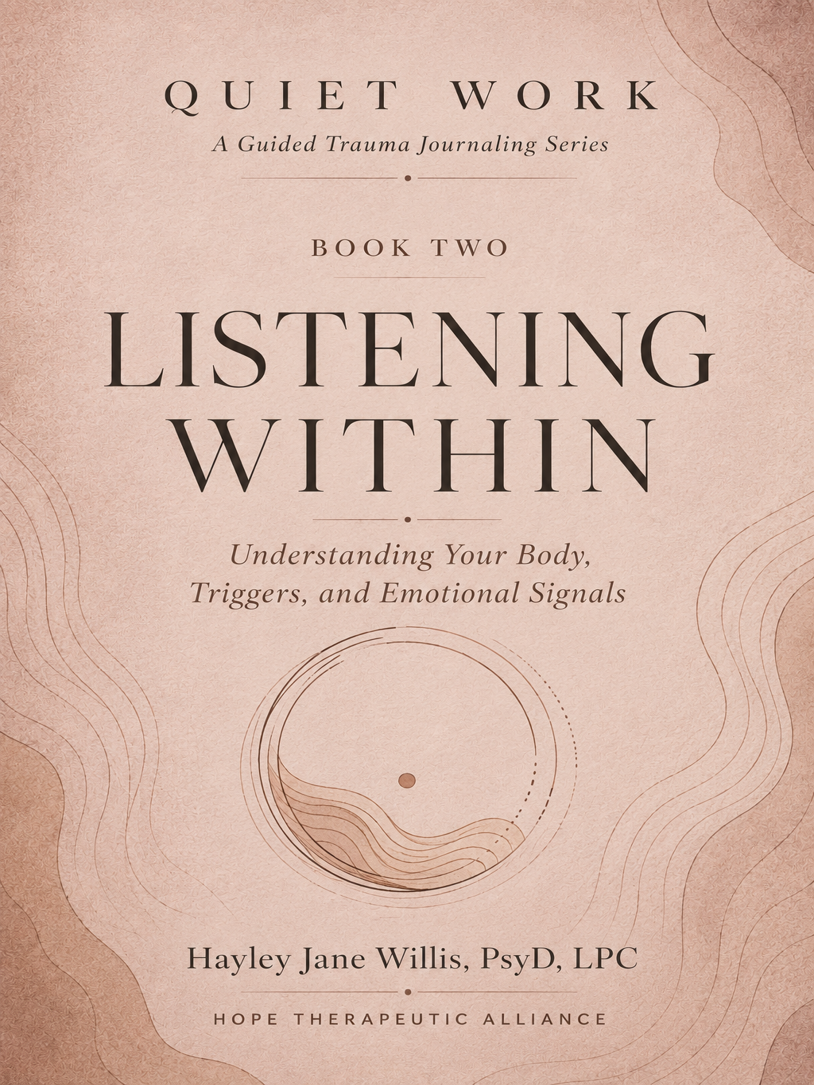
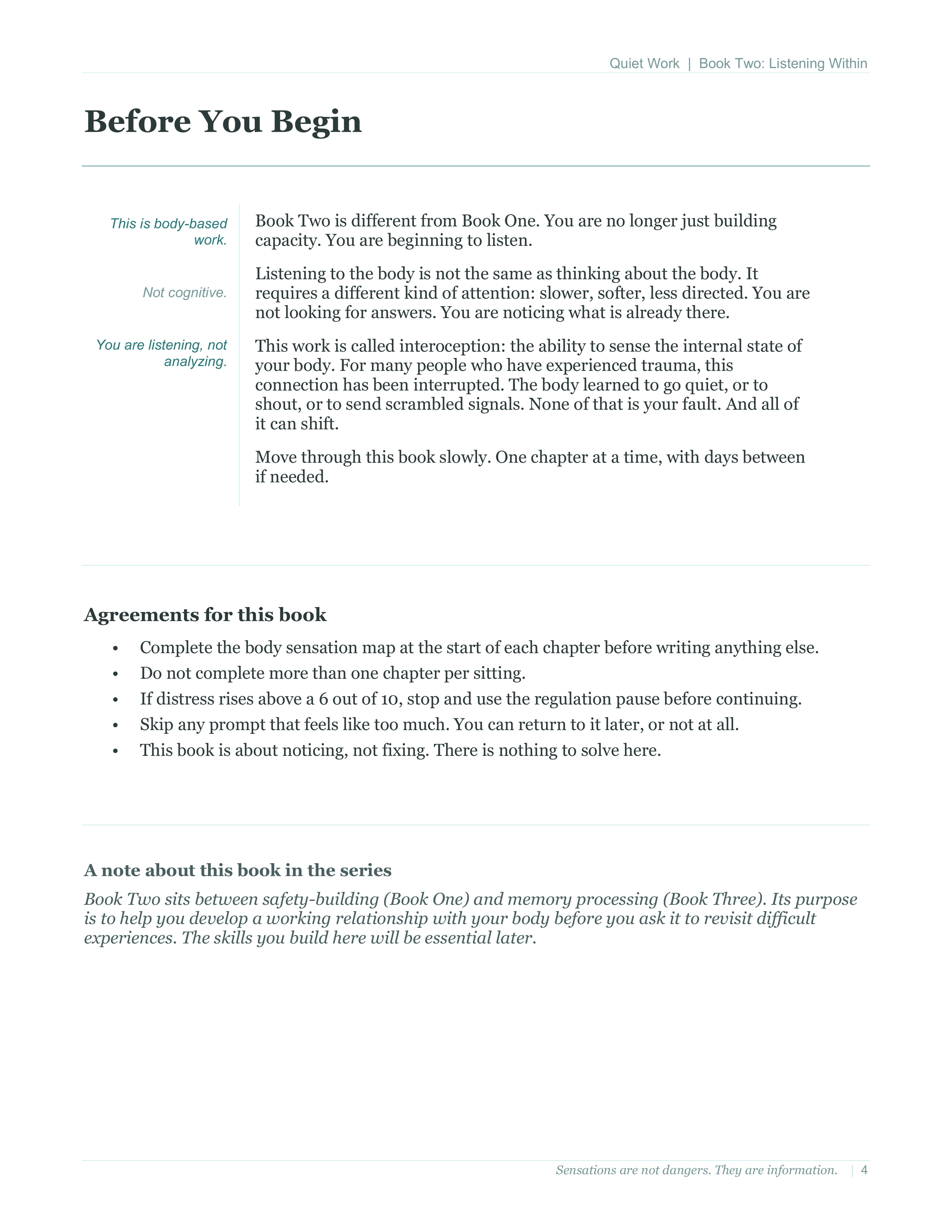
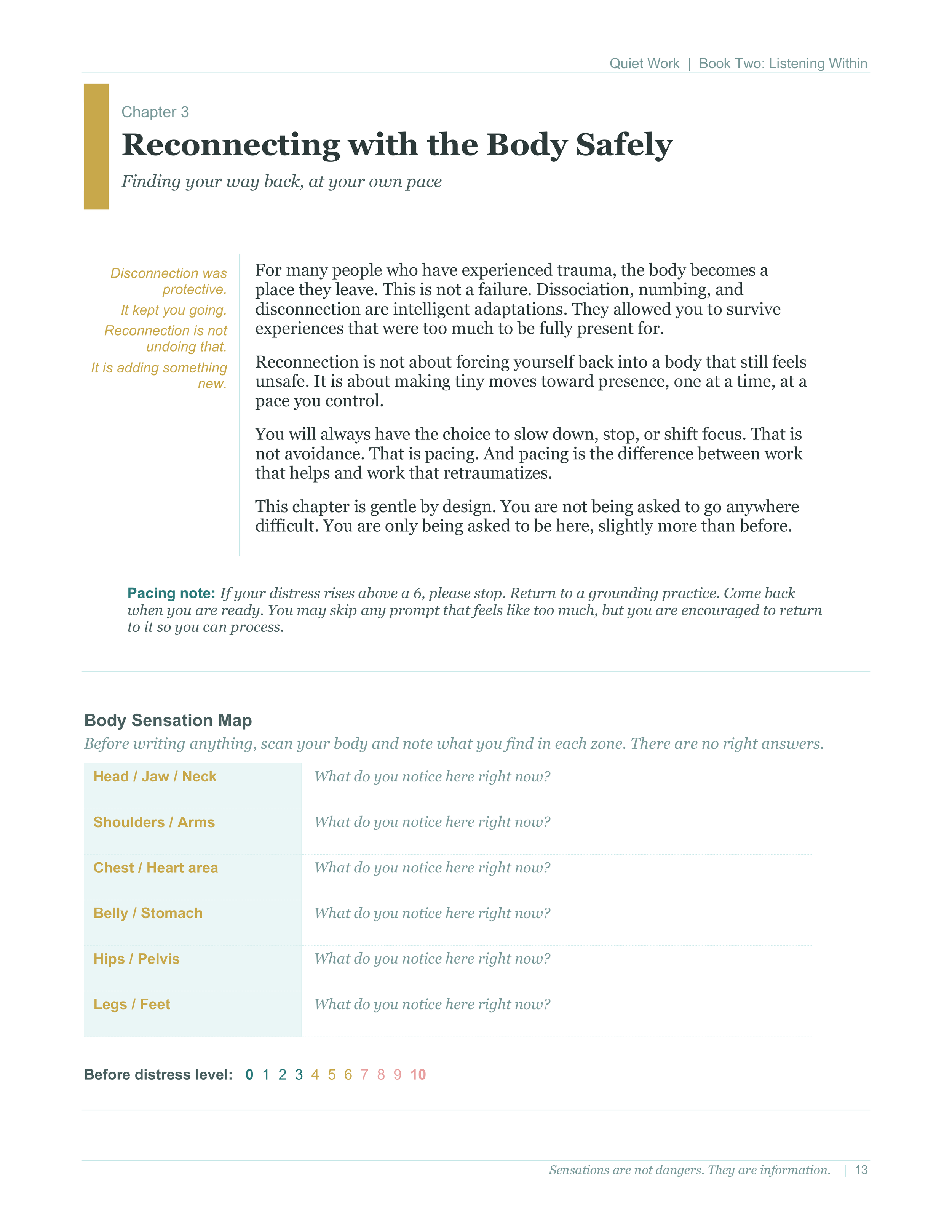
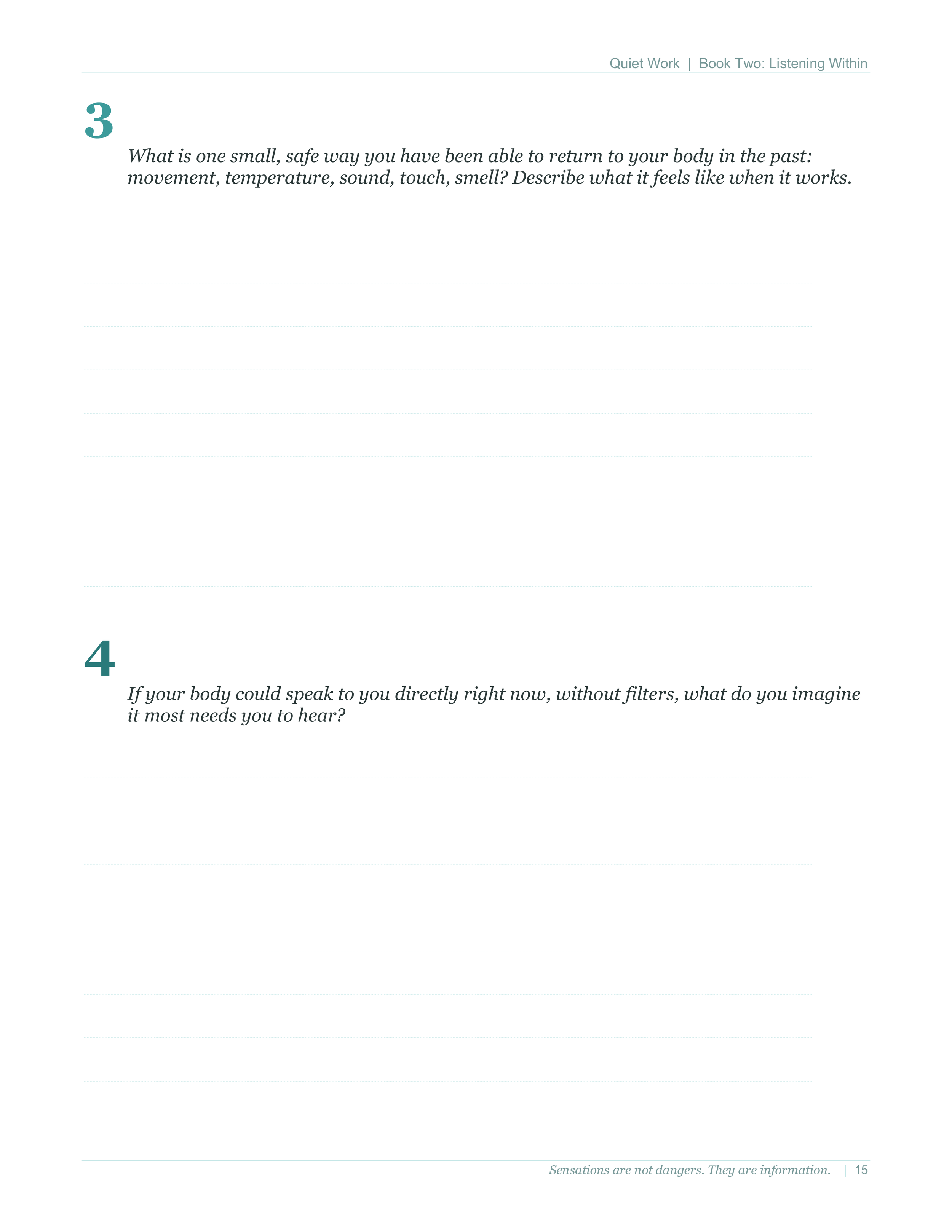
Your body often notices danger long before your mind has words for it. Book Two in the Quiet Work Series focuses on helping you reconnect with those internal signals in a way that feels manageable rather than overwhelming. Across 17 pages of guided journaling and somatic reflection, you will begin identifying how stress, fear, tension, and emotional activation show up physically within your body. Instead of treating triggers as dramatic or irrational reactions, this workbook helps you understand them as meaningful nervous system responses shaped by past experiences. The goal is not hypervigilance or overanalysis. It is learning how to listen to yourself with more curiosity, accuracy, and control so your body no longer feels like something happening against you.
*This resource is an educational tool intended to support personal growth and emotional wellness and is not a substitute for therapy or mental health treatment.
DIGITAL DOWNLOAD
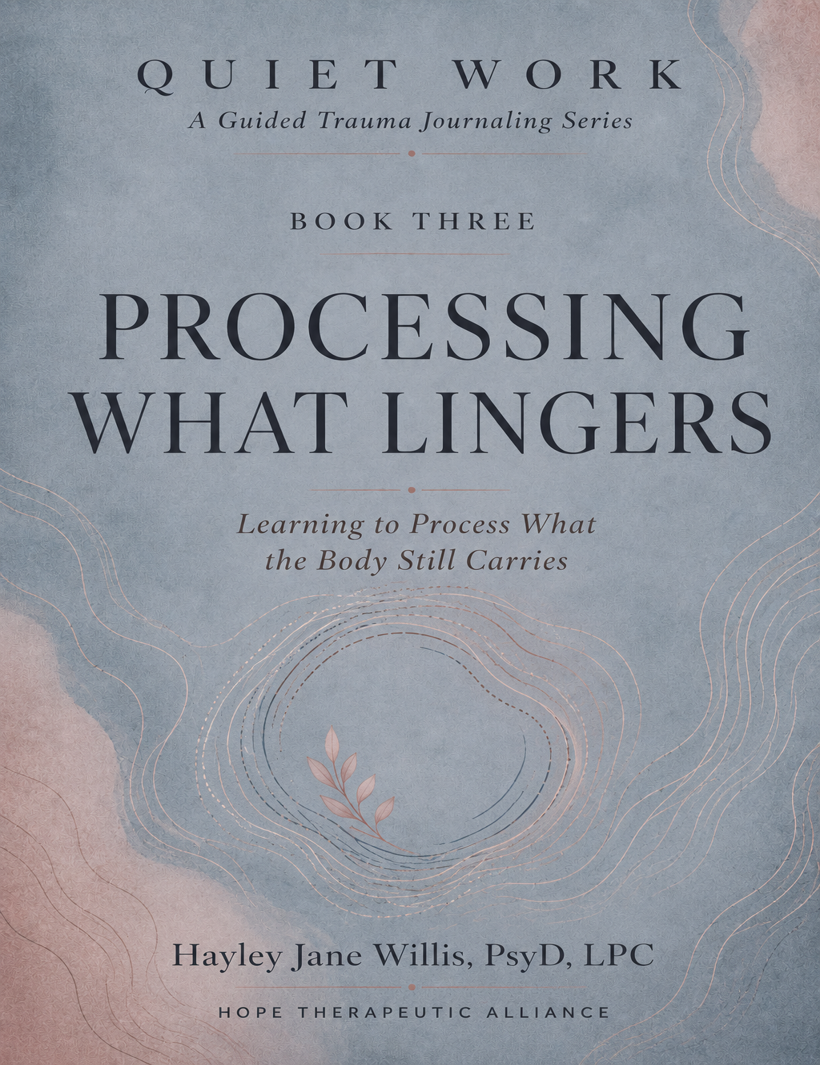
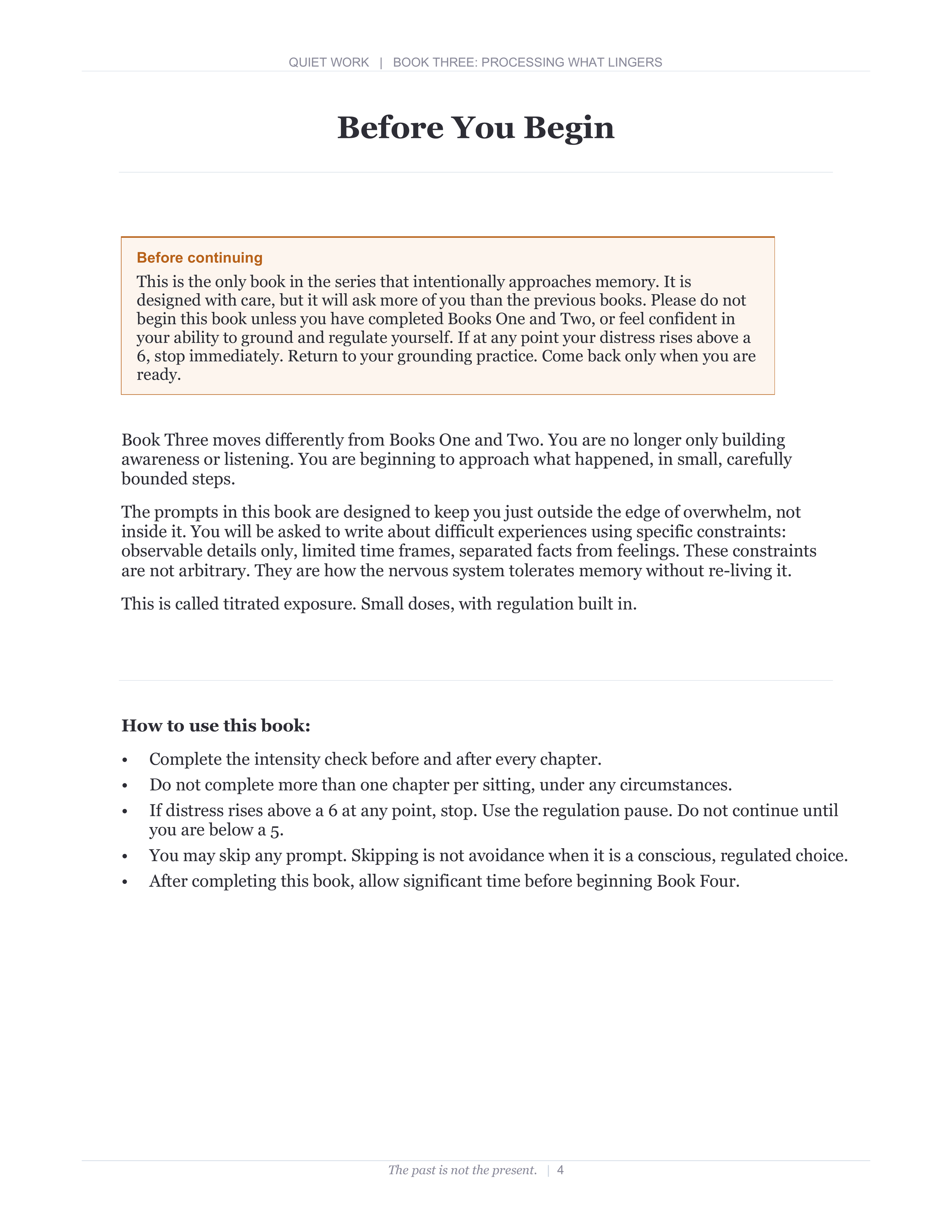
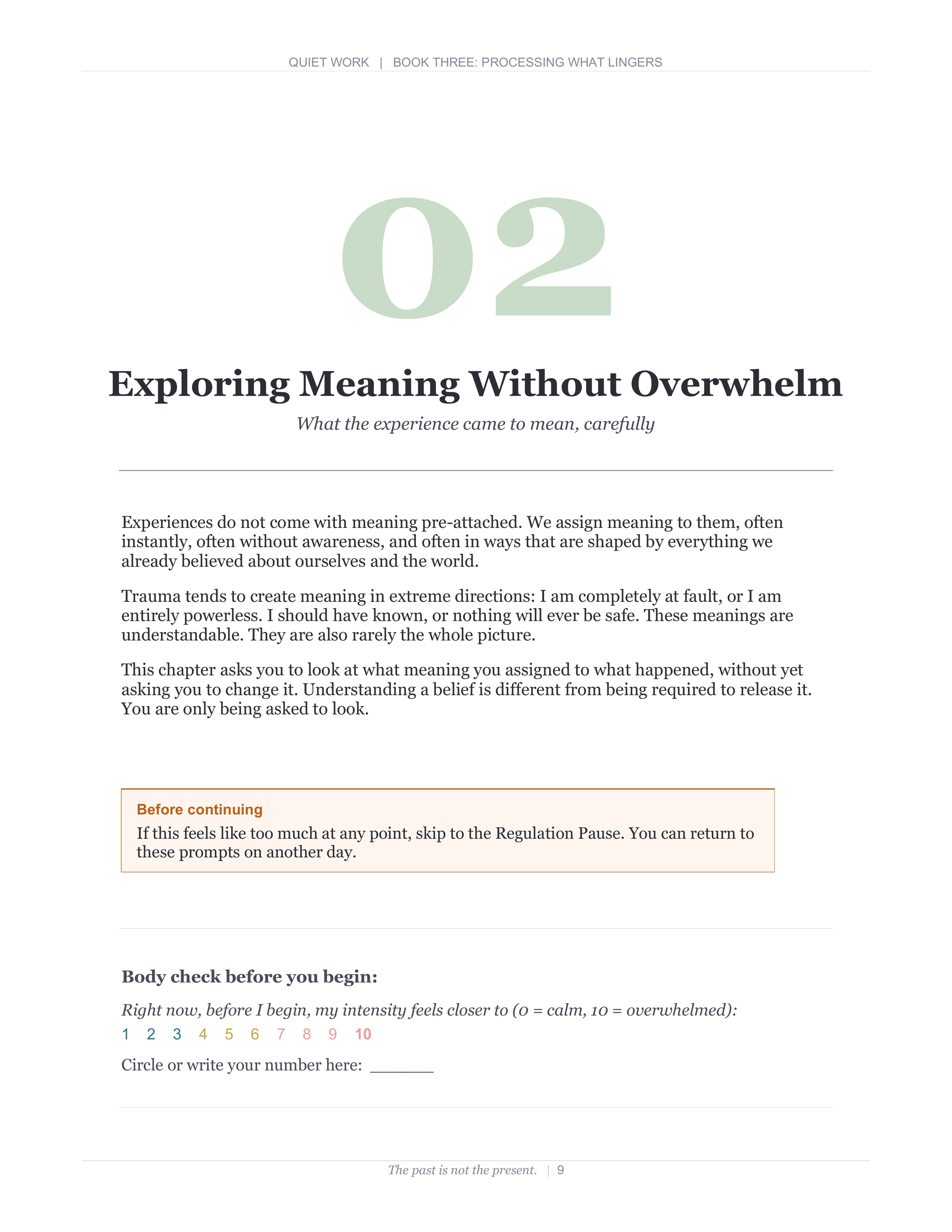
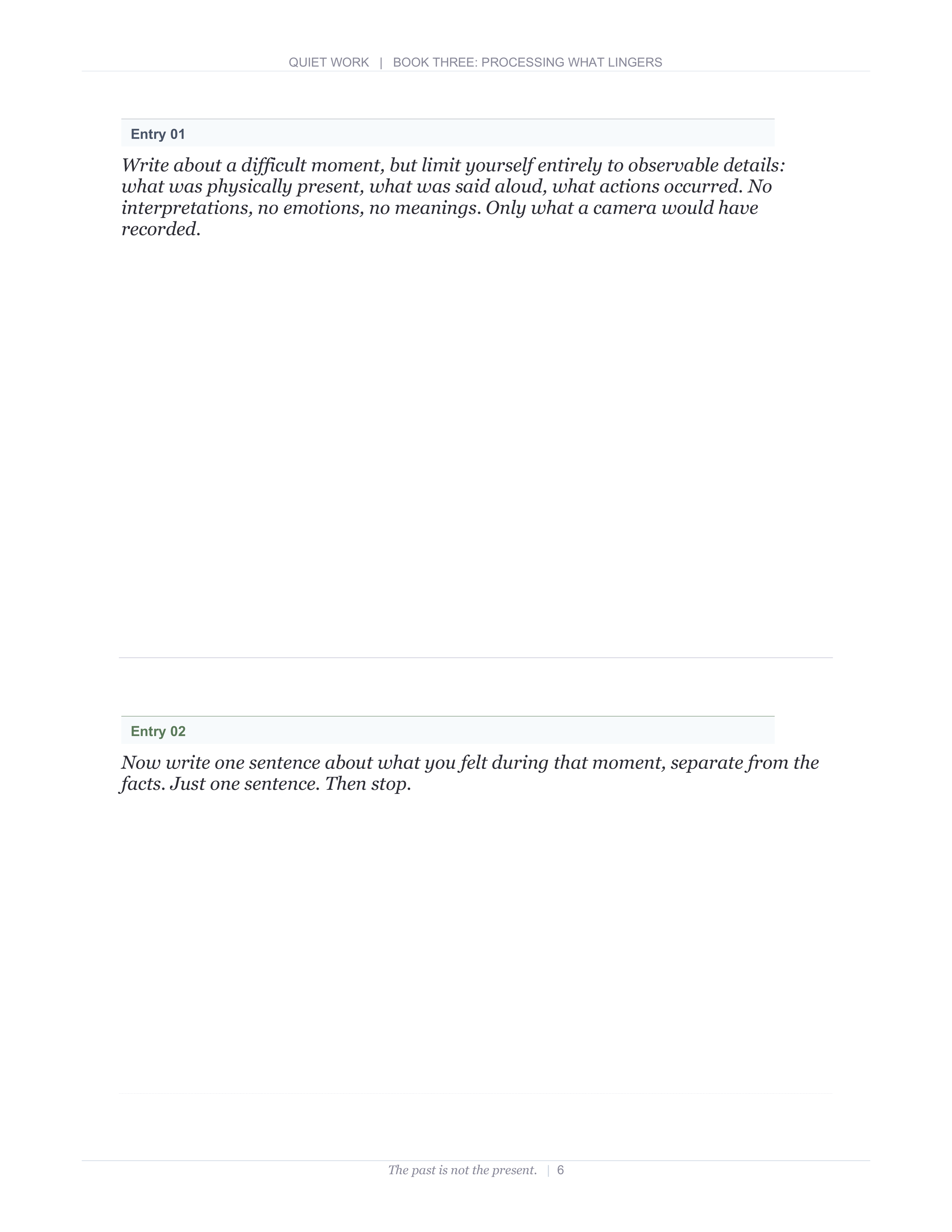
Some memories do not feel finished. They still carry the emotional intensity, physical tension, and sense of immediacy of the moment they were formed. Book Three in the Quiet Work Series carefully approaches those experiences without pushing you into emotional flooding or forced disclosure. Through 17 pages of structured journaling prompts, you will learn how to engage difficult memories in smaller, more manageable pieces while staying connected to the present. The exercises are designed to help you separate observation from overwhelm, allowing your nervous system to process information without feeling trapped inside it again. Rather than forcing you to relive the past, this workbook helps you recognize that the event may still affect you, but it is no longer actively happening. The goal is not emotional intensity. It is helping your mind and body finally recognize the difference between then and now.
*This resource is an educational tool intended to support personal growth and emotional wellness and is not a substitute for therapy or mental health treatment.
DIGITAL DOWNLOAD
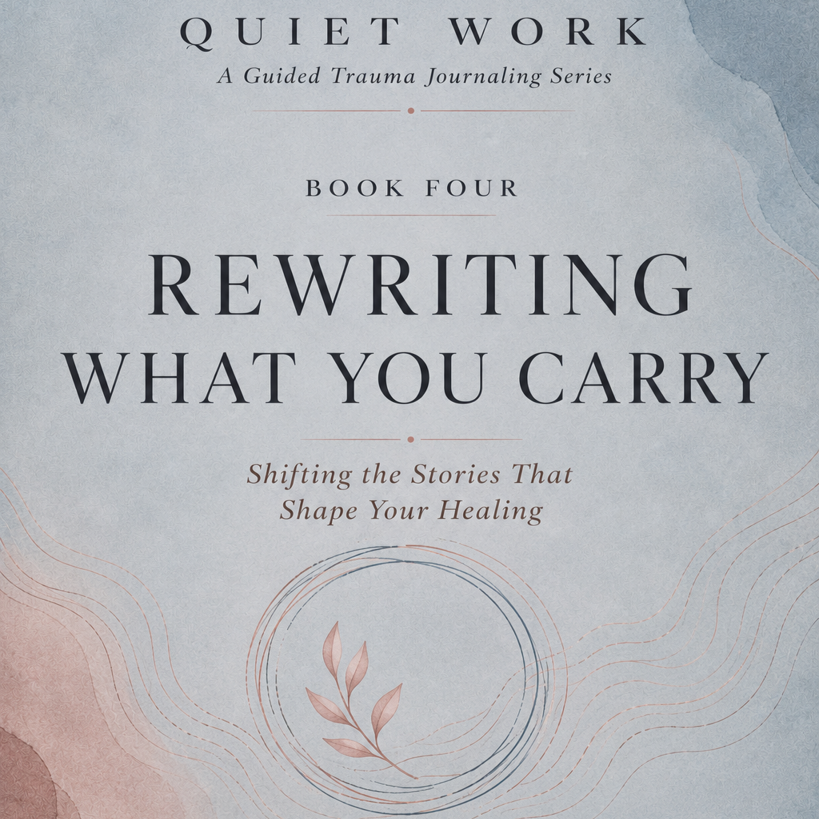
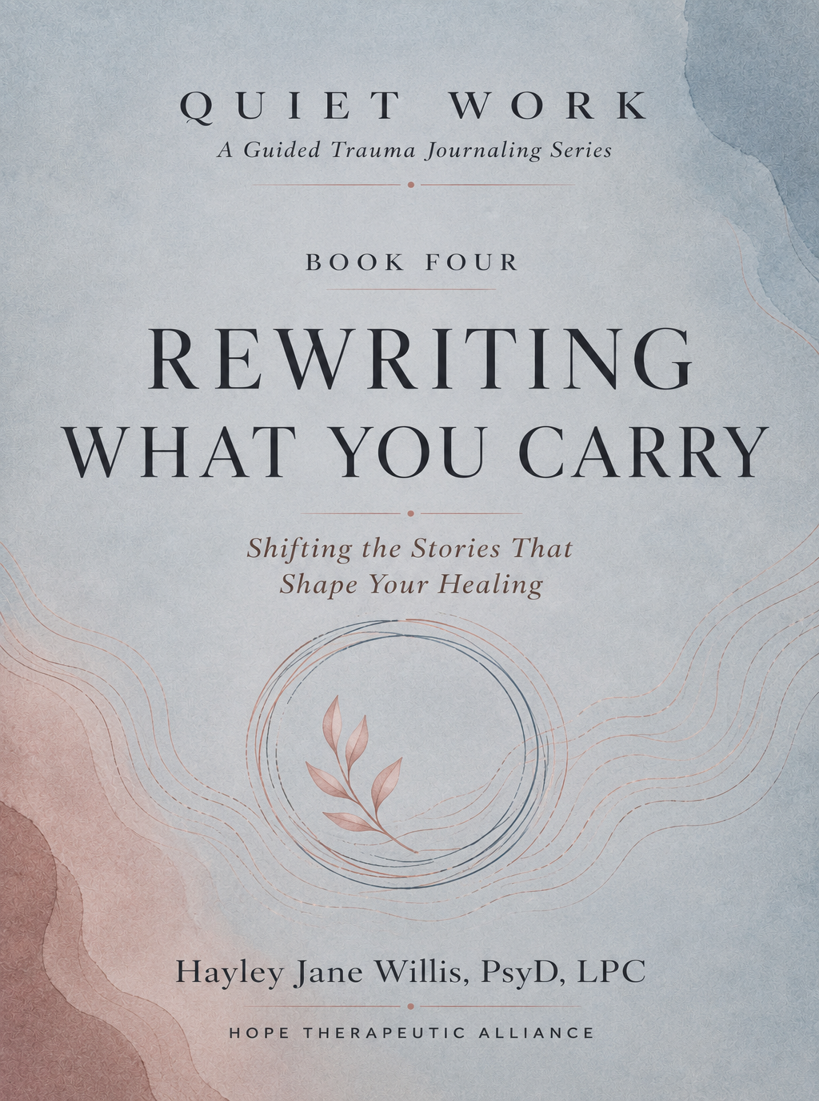
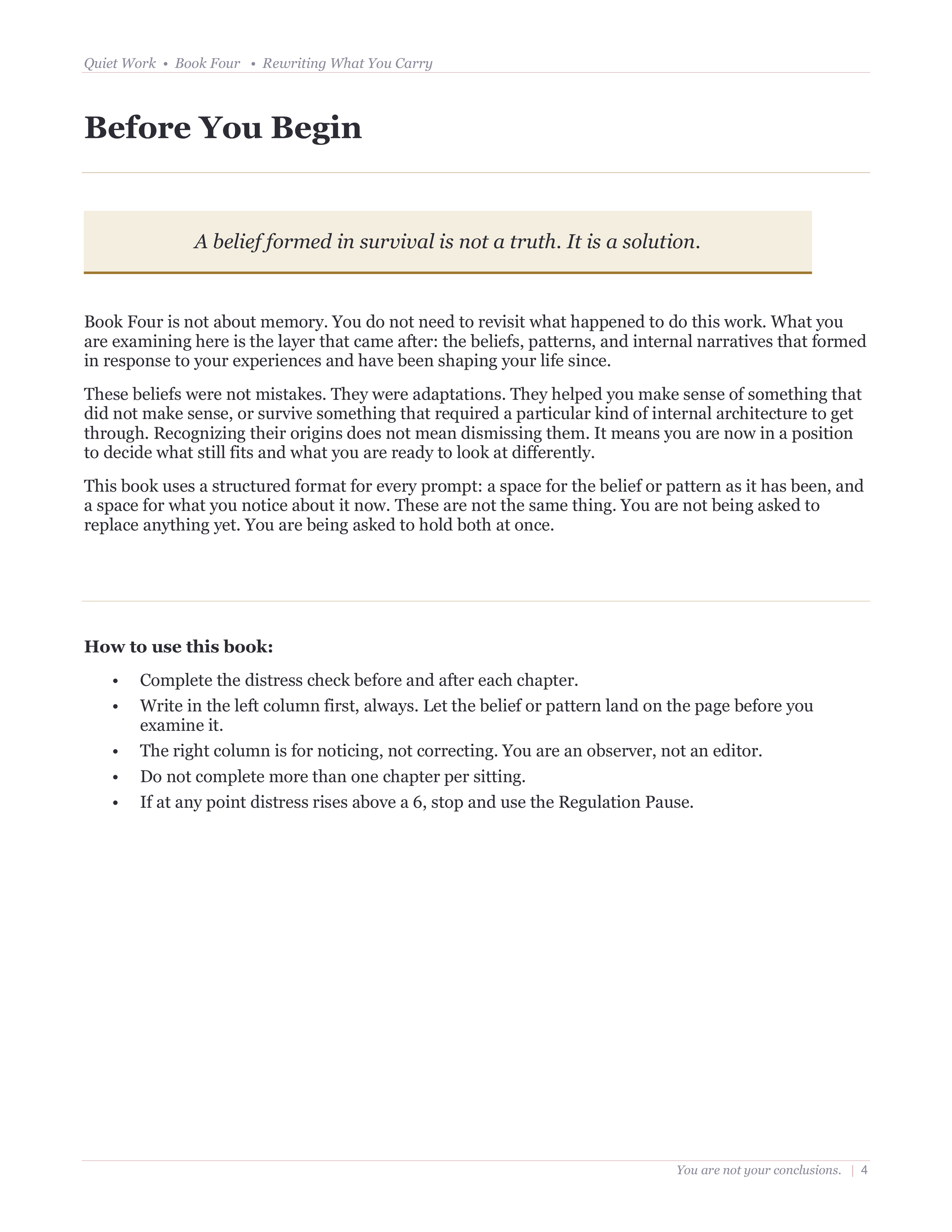
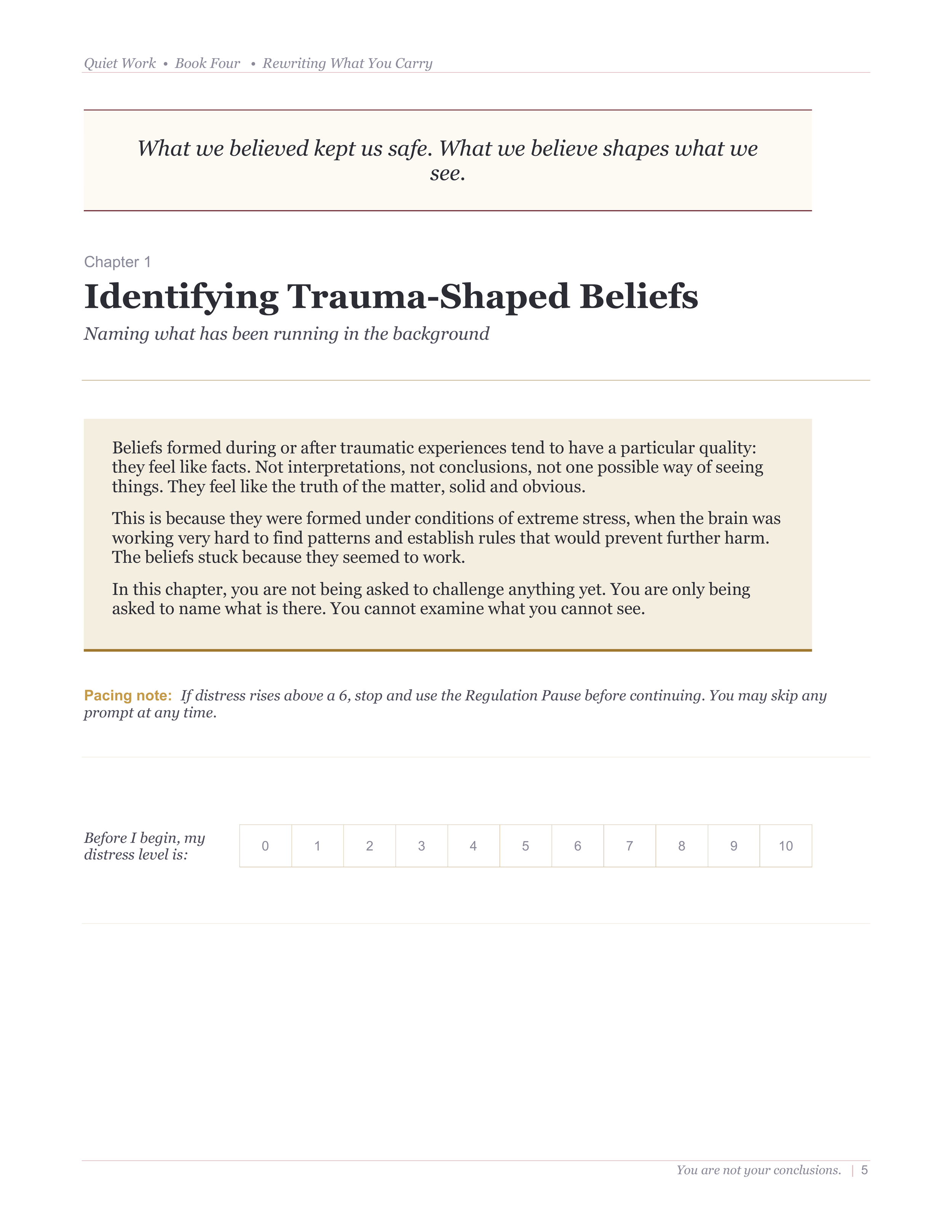
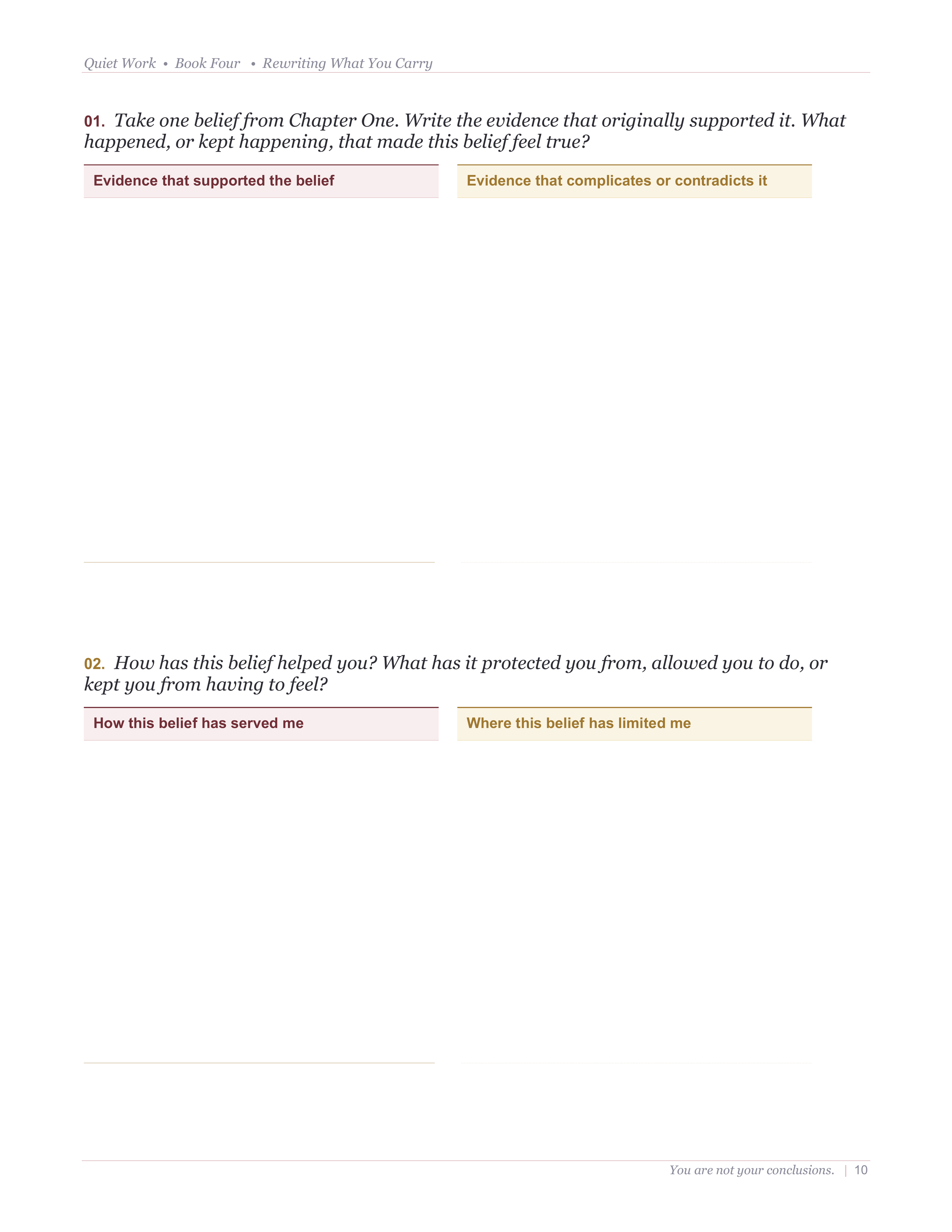
Trauma does not only affect memories. It changes the way people interpret themselves, relationships, safety, trust, and the world around them. Book Four in the Quiet Work Series focuses on the beliefs and survival rules that often develop after painful experiences and continue operating long after the original danger has passed. Through 17 pages of guided reflection, you will begin identifying the internal narratives that shaped your decisions, reactions, and sense of self over time. Rather than criticizing the ways you learned to survive, this workbook approaches those patterns with honesty and context, recognizing that many of them once had a purpose. The exercises help you evaluate whether those beliefs still fit your current life and create space for more flexible, balanced ways of understanding yourself without dismissing what you have been through.
*This resource is an educational tool intended to support personal growth and emotional wellness and is not a substitute for therapy or mental health treatment.
DIGITAL DOWNLOAD
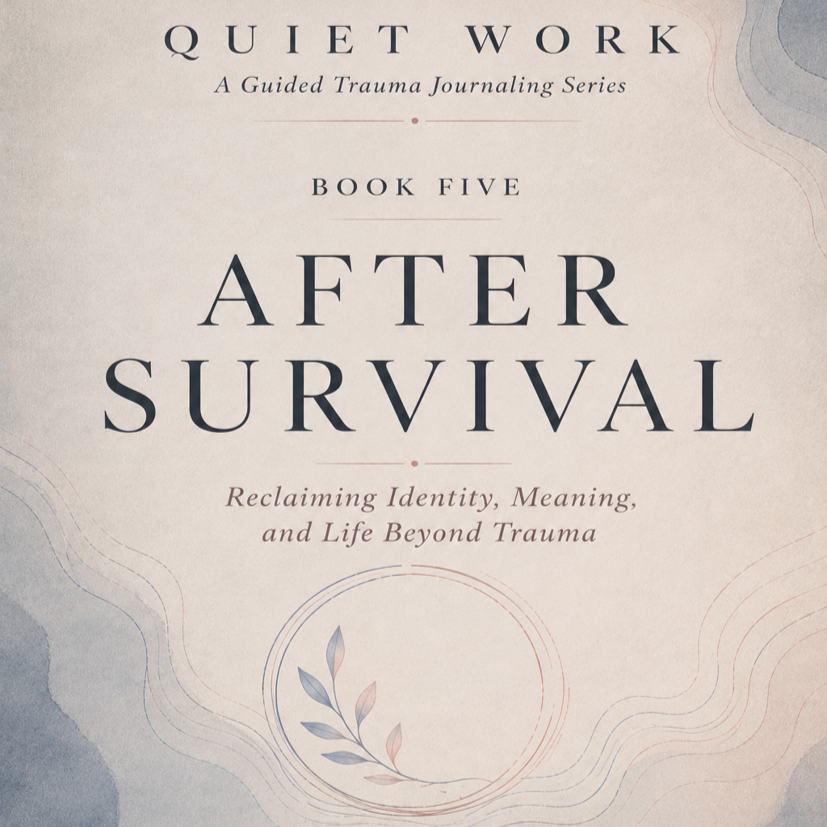
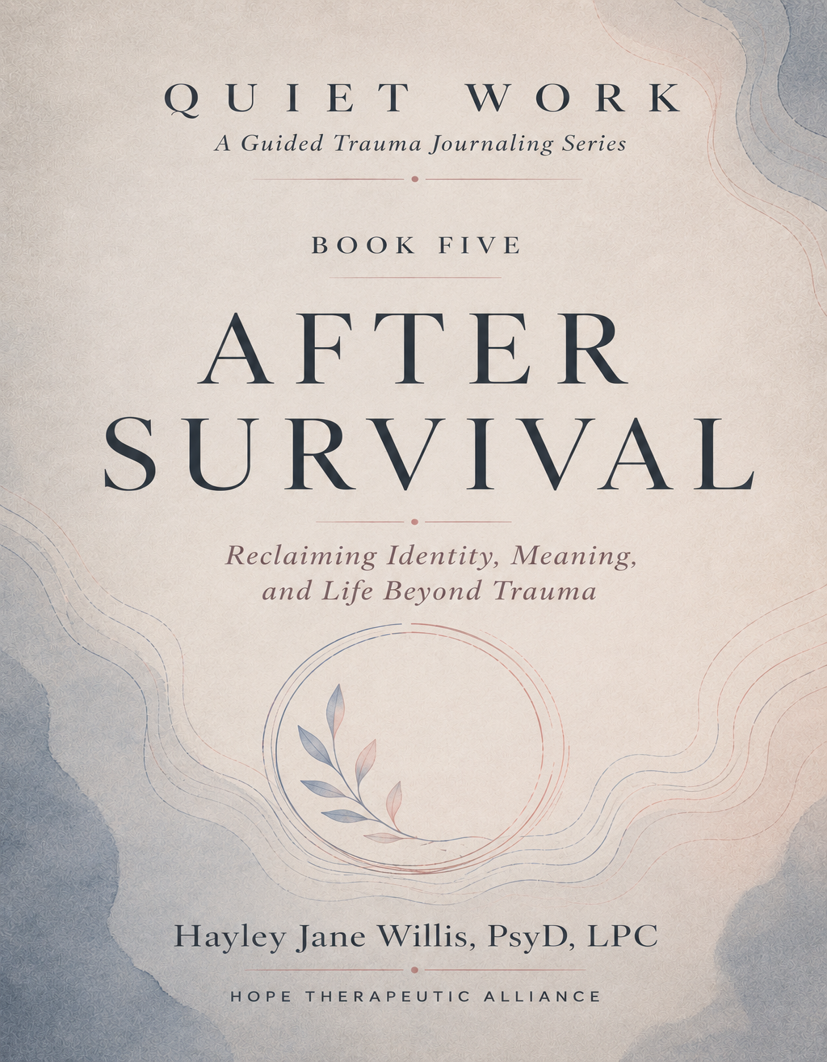
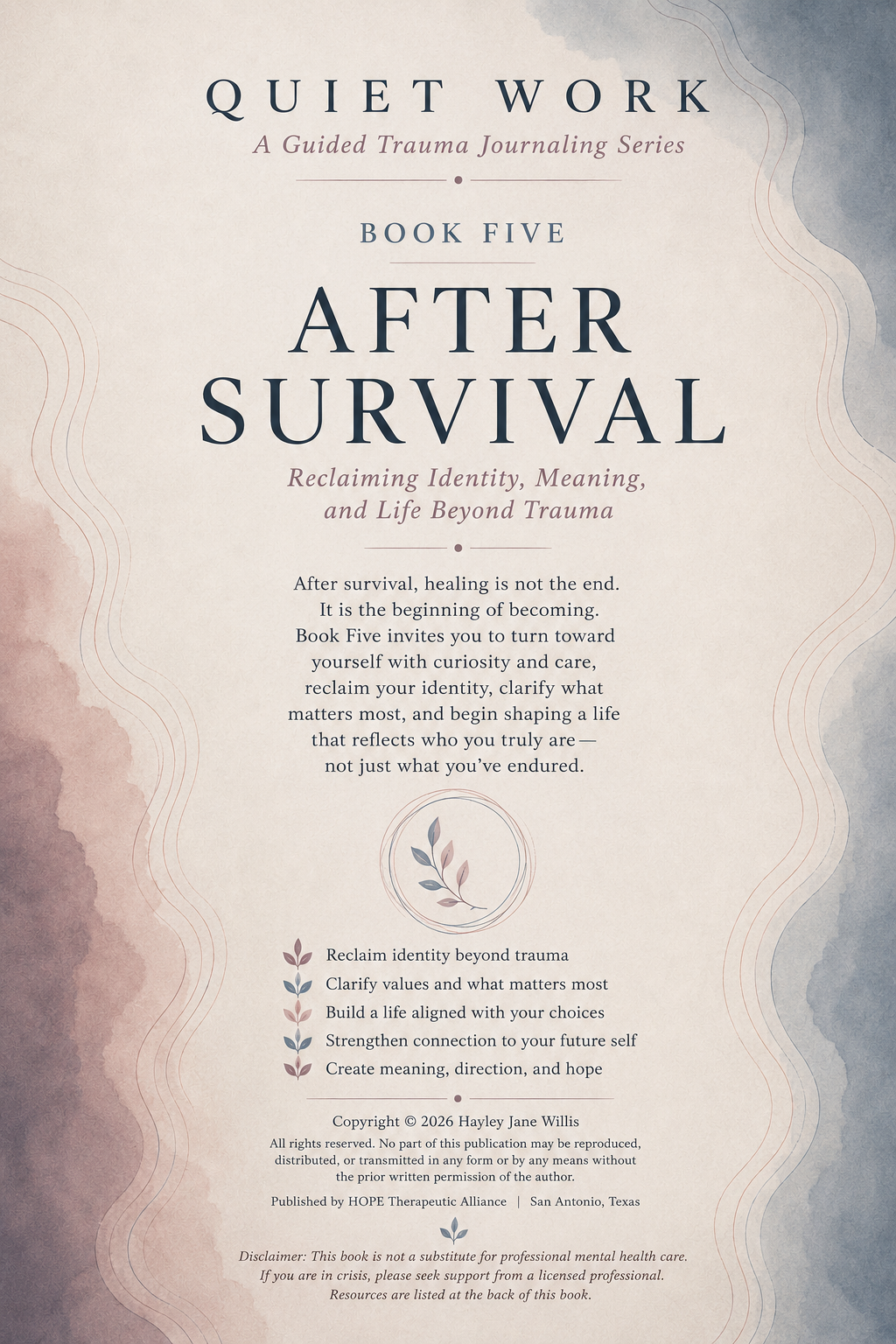
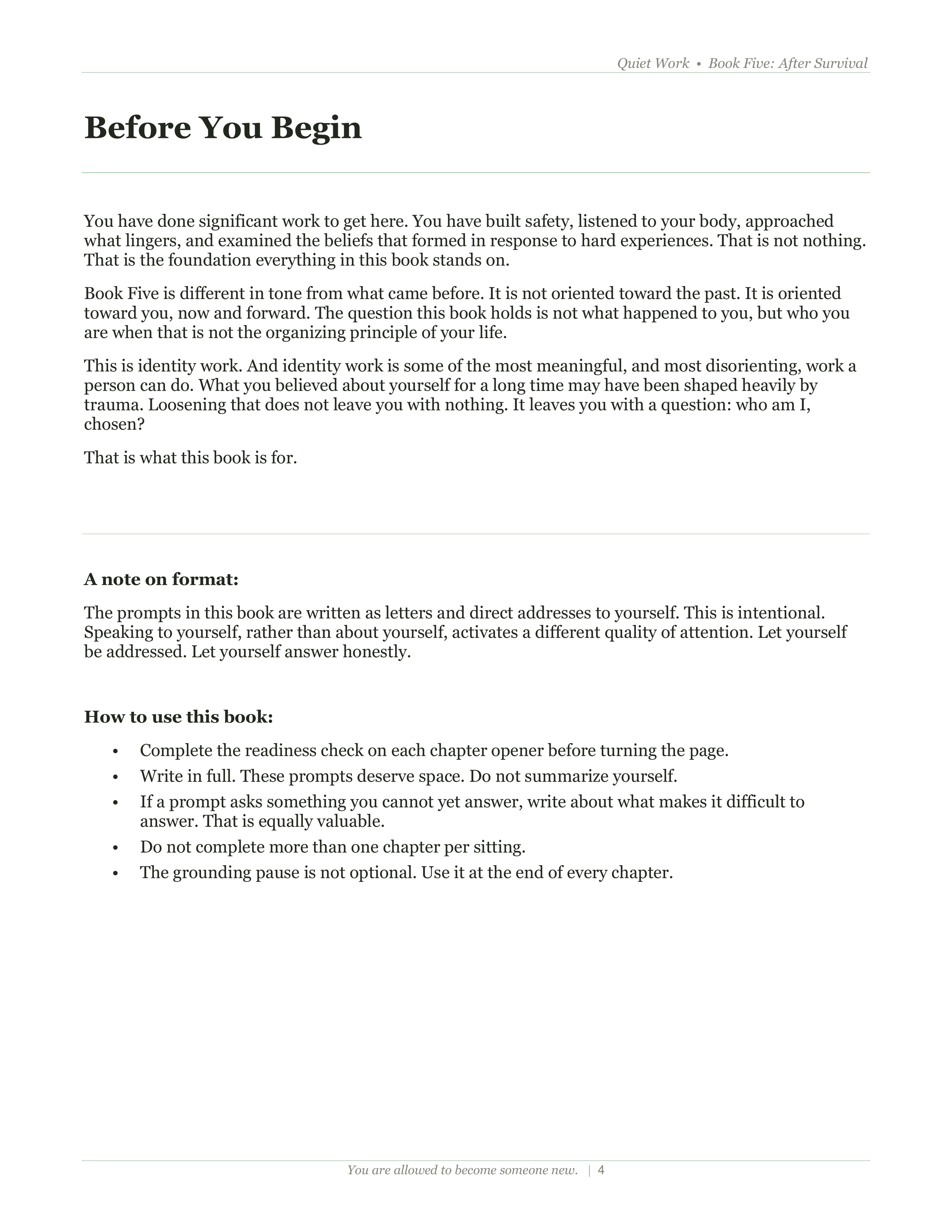
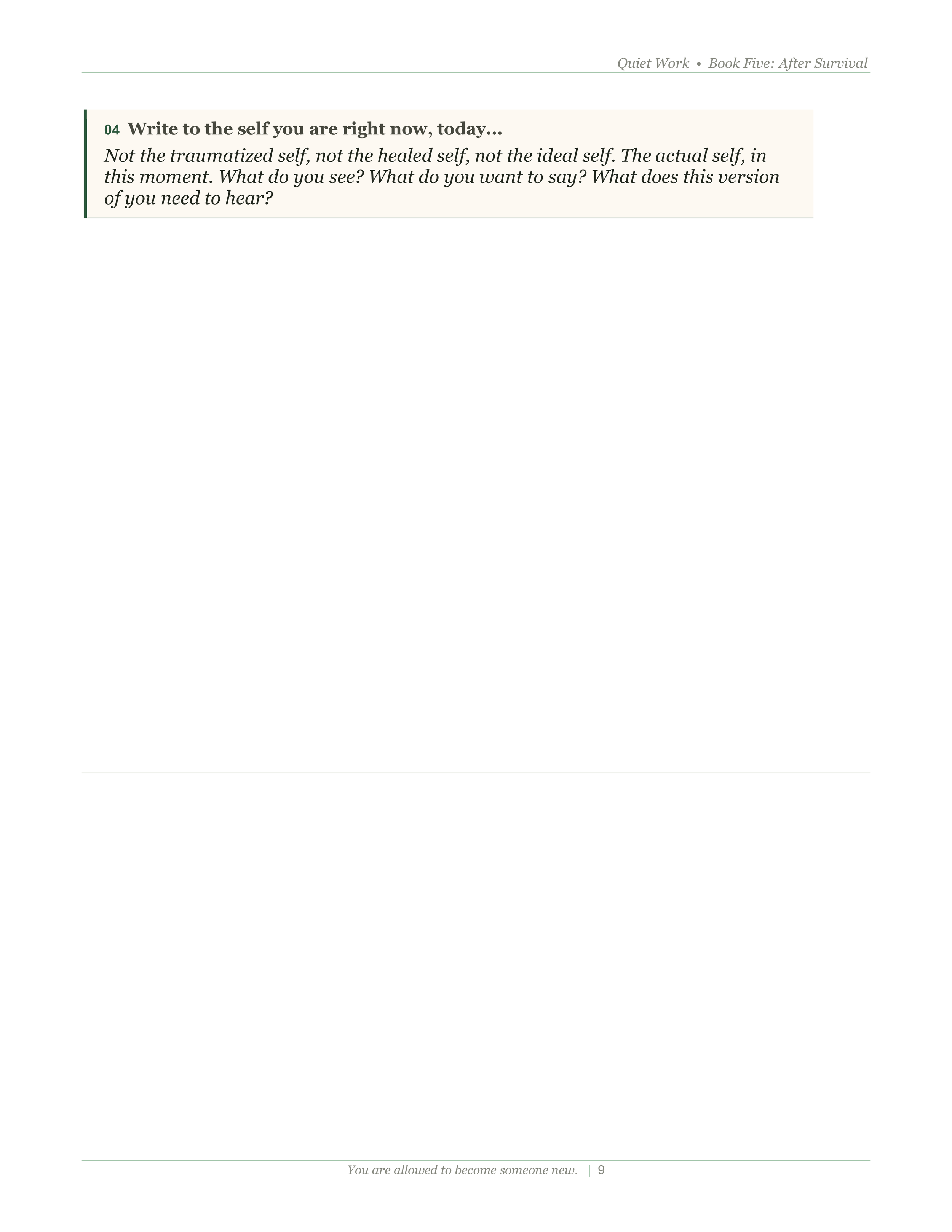
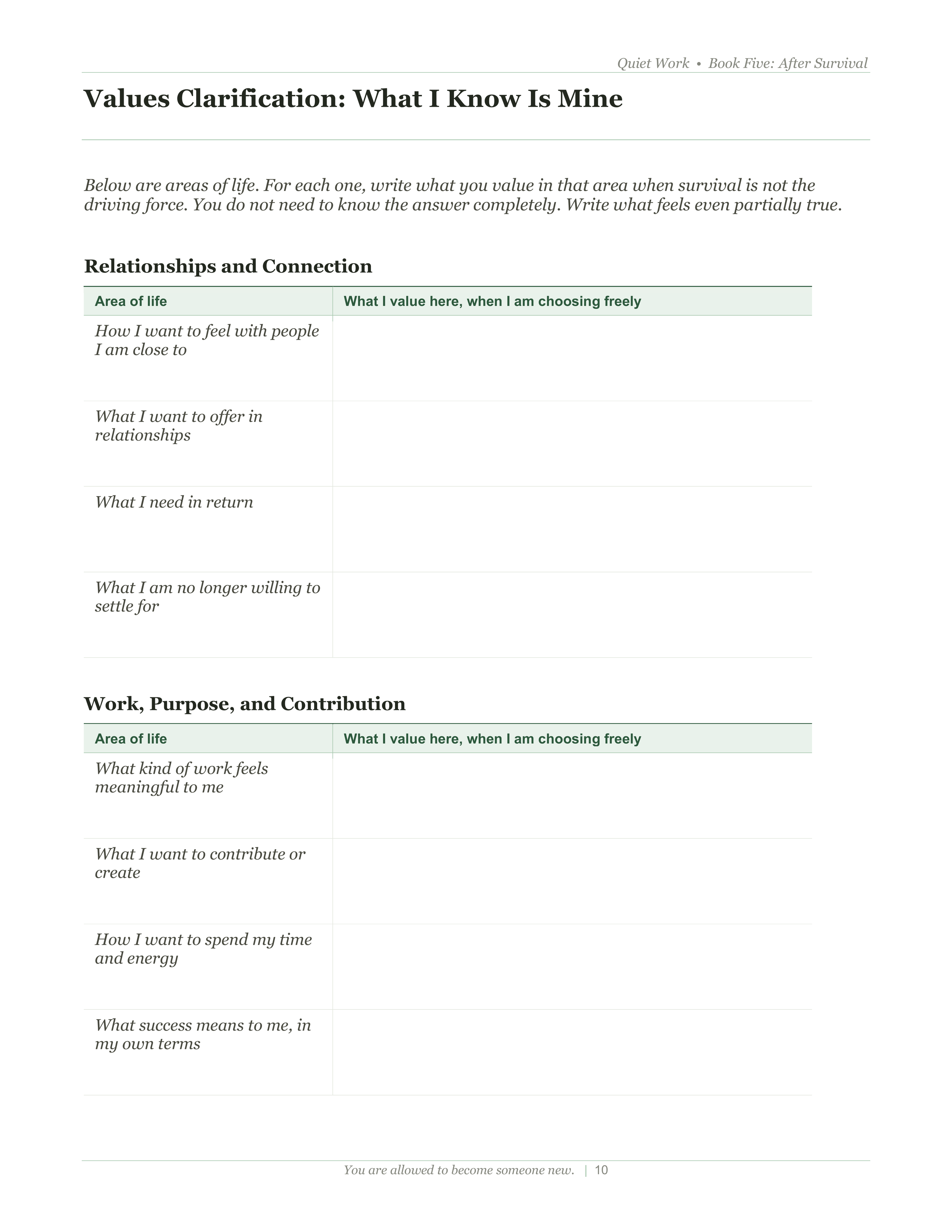
When survival takes over for long enough, people often lose sight of who they are outside of coping, protecting, enduring, or managing damage. Book Five in the Quiet Work Series shifts the focus away from what happened to you and toward the person you want to become moving forward. Across 26 pages of guided journaling, reflective letters, and value-based prompts, this workbook helps you explore the difference between the identity shaped by survival and the identity built through choice. You will begin identifying which parts of yourself were adaptations to pain and which parts still feel genuinely aligned with who you are. This book is less about reinventing yourself and more about reconnecting with the pieces that may have been buried underneath years of survival mode, self-protection, or emotional exhaustion.
*This resource is an educational tool intended to support personal growth and emotional wellness and is not a substitute for therapy or mental health treatment.
DIGITAL DOWNLOAD
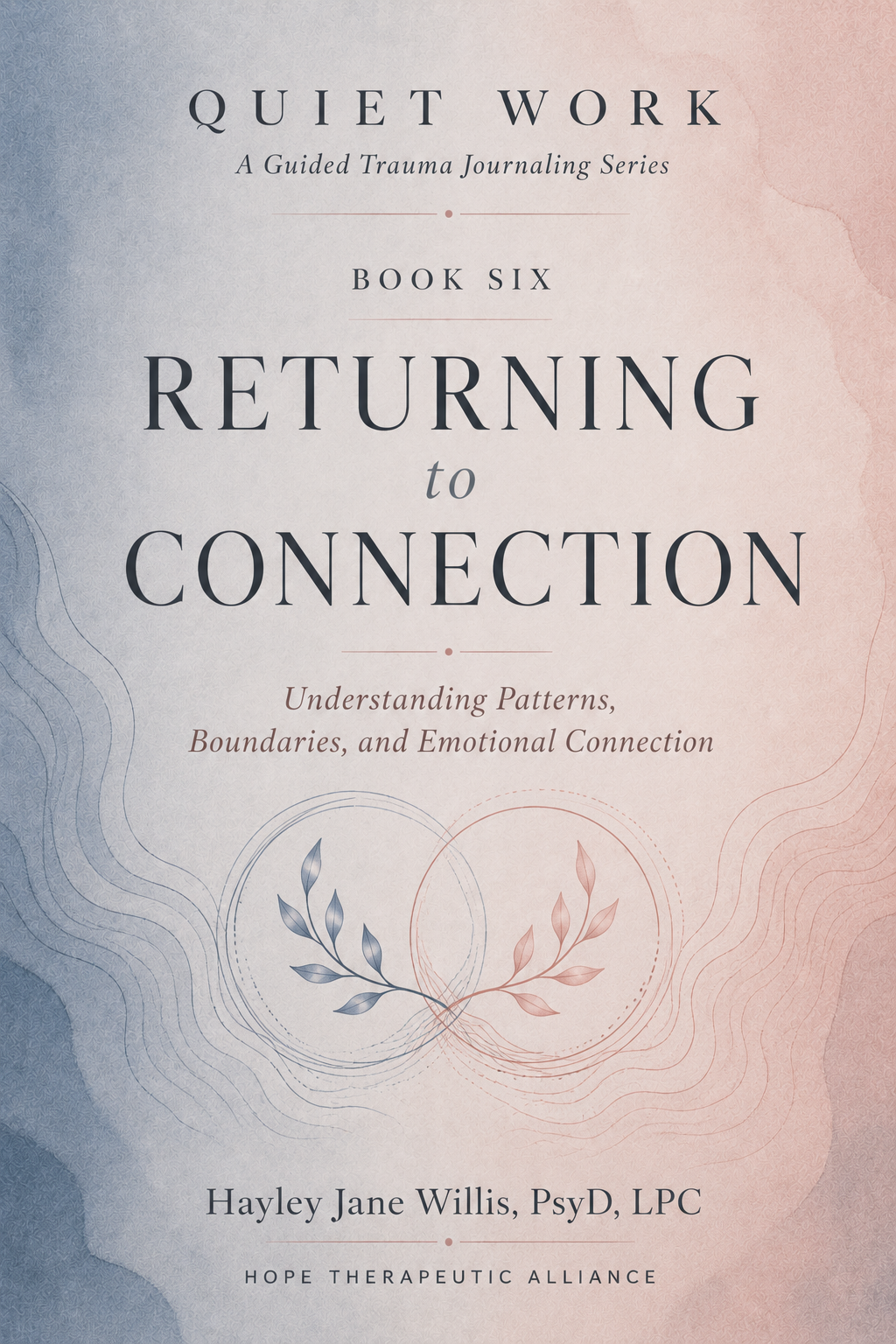
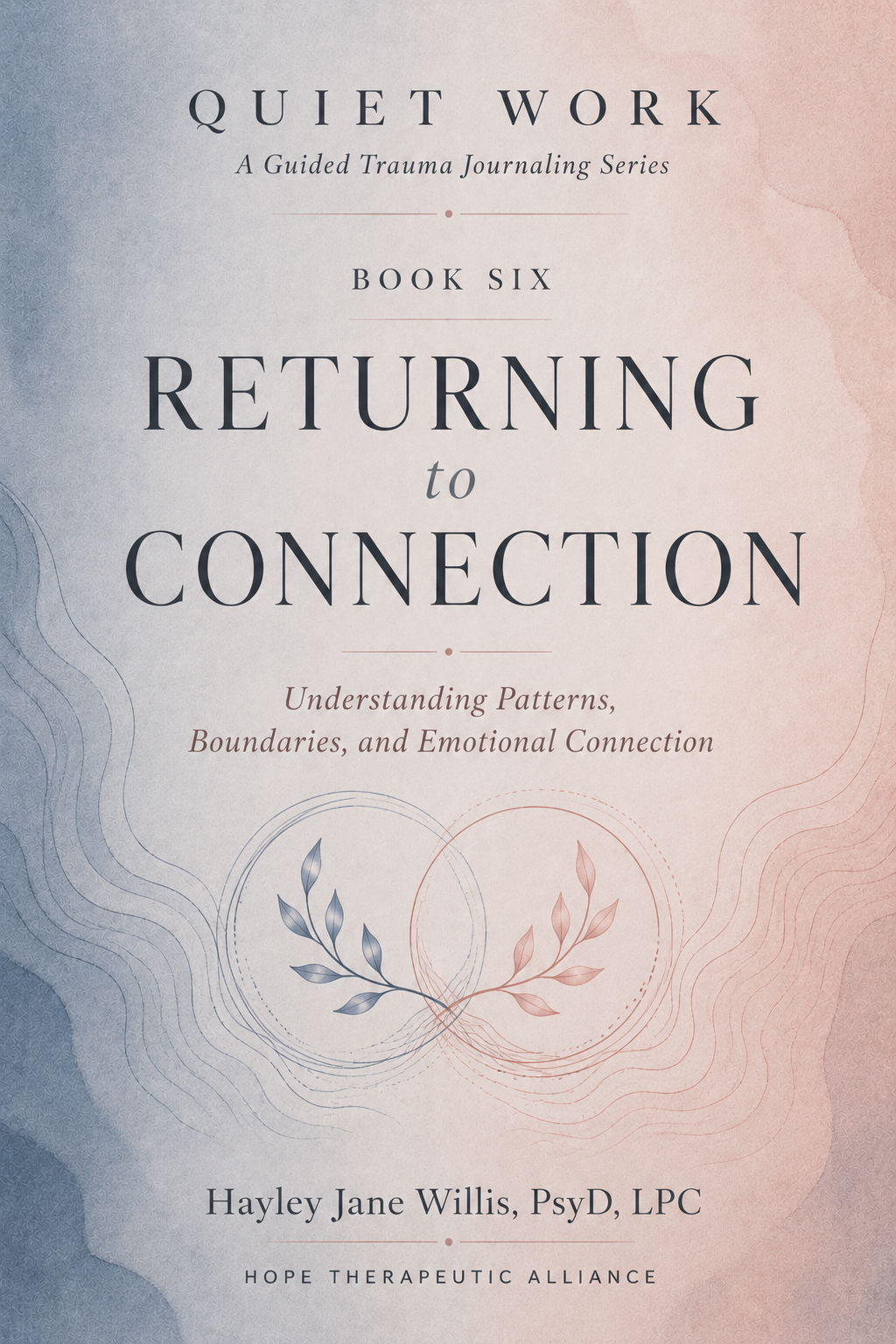
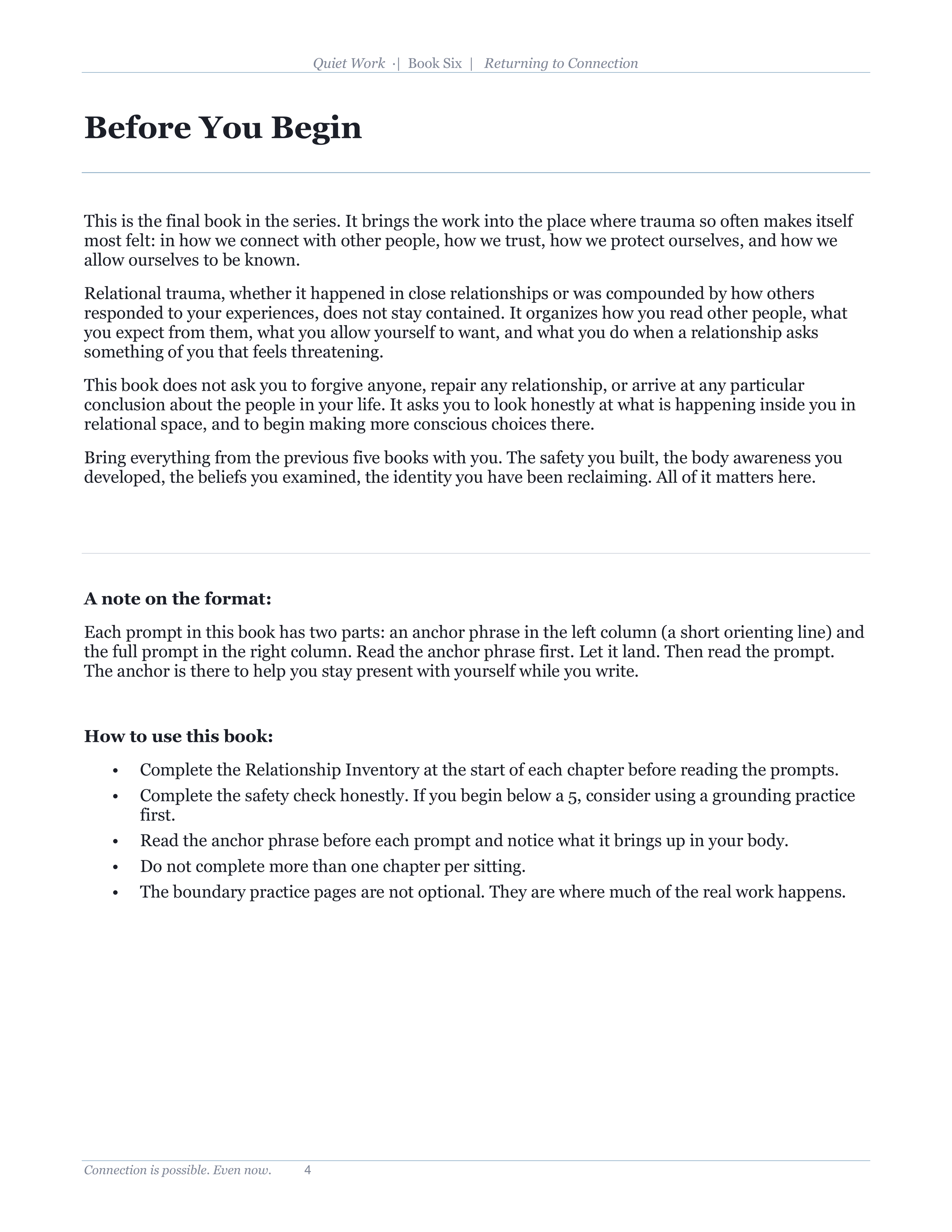
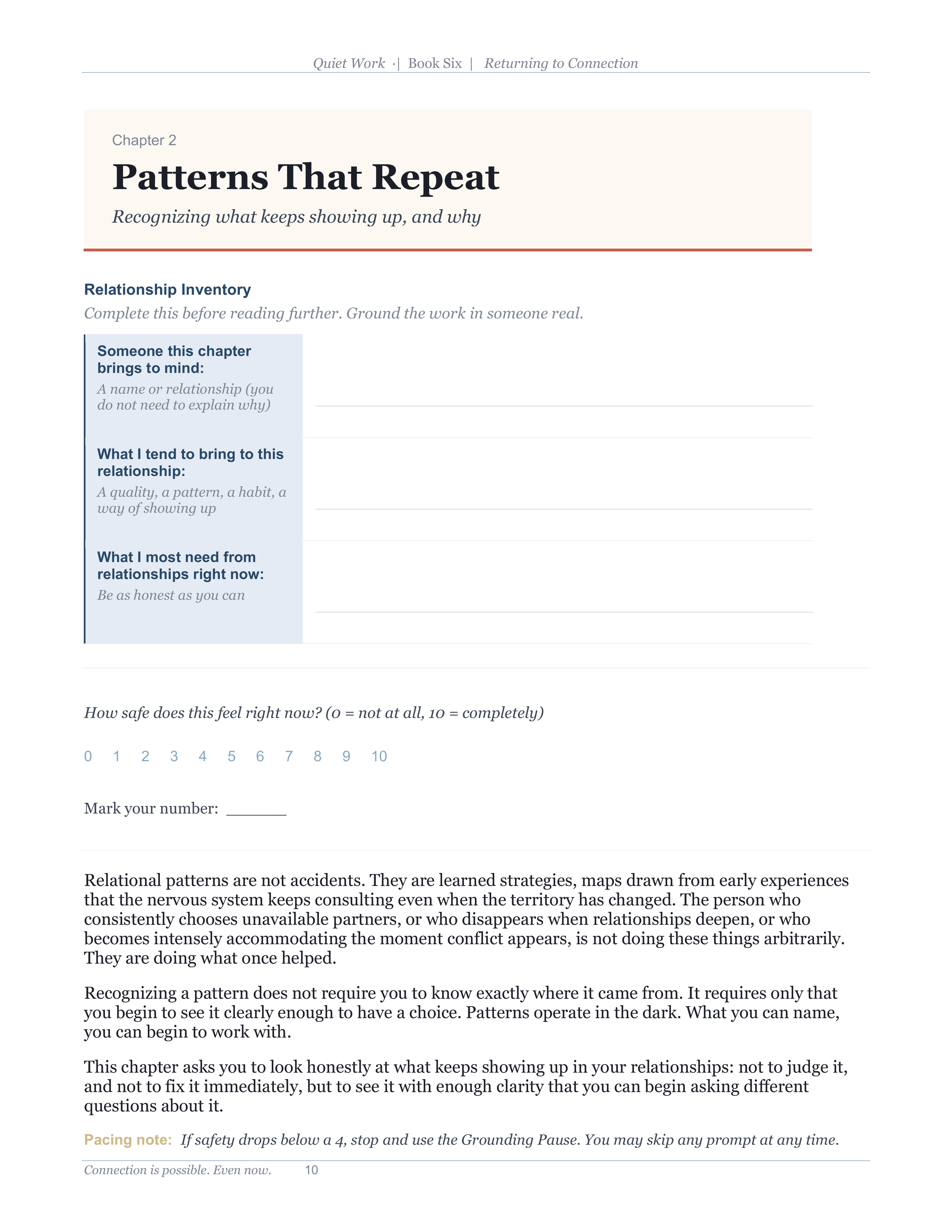
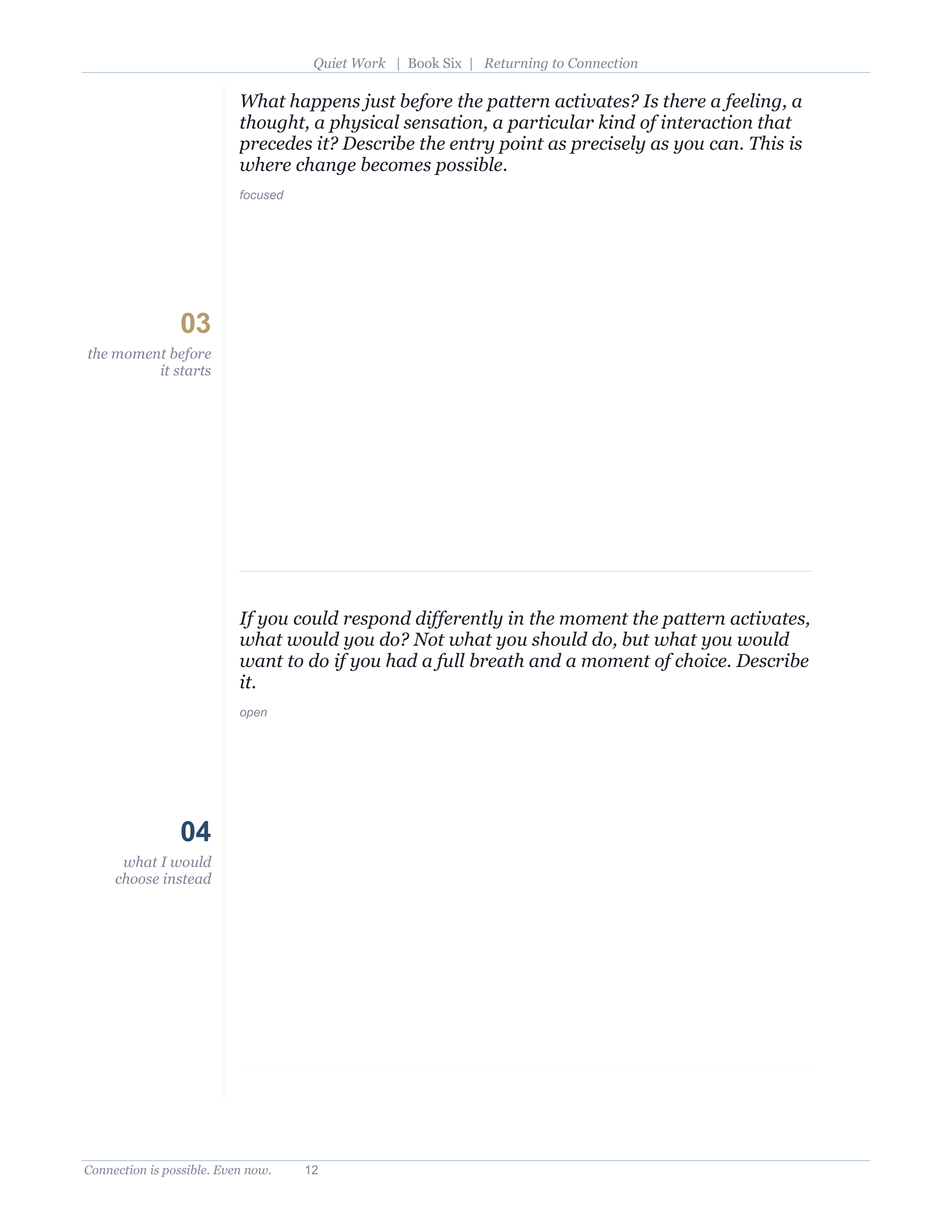
Healing becomes much more complicated once other people are involved. Book Six in the Quiet Work Series focuses on the relational patterns that trauma often leaves behind, including difficulty trusting, fear of vulnerability, emotional withdrawal, overprotection, people-pleasing, and uncertainty around boundaries. Through 20 pages of guided reflection and practical exercises, this workbook helps you examine how past experiences may still influence the way you connect, communicate, and protect yourself within relationships. You will begin identifying the patterns that keep repeating, the needs that often go unspoken, and the boundaries that create safety without forcing isolation. Rather than framing closeness and self-protection as opposites, this book helps you explore how connection can become more intentional, balanced, and emotionally sustainable over time.
*This resource is an educational tool intended to support personal growth and emotional wellness and is not a substitute for therapy or mental health treatment.
DIGITAL DOWNLOAD
No results match your search. Try removing a few filters.