HEALING OR HOLDING PATTERN?
How to Understand Trauma Treatment, Recognize Real Progress, & Know When You’re Stuck
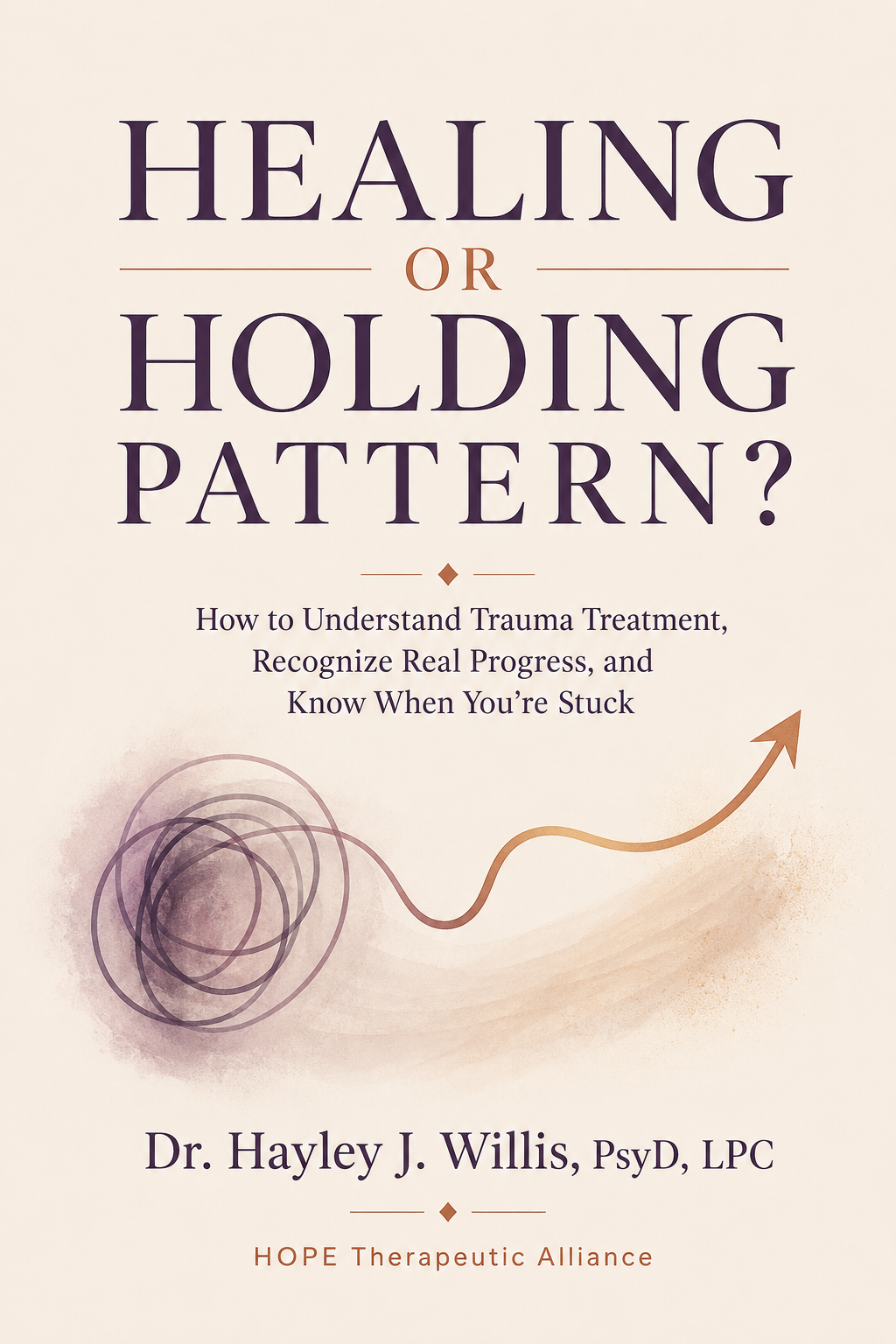
Healing or Holding Pattern? is for the person who has been showing up to therapy, learning the language, building insight, and still quietly wondering whether the work is actually helping.
Trauma therapy can be supportive, meaningful, and necessary, but it can also be difficult to evaluate from the inside. A plateau may be part of stabilization, or it may be a sign that treatment has quietly stopped moving. Discomfort may be part of healing, or it may mean the pace, fit, or approach needs to be revisited.
This field guide helps you better understand the trauma treatment process itself. Inside, you’ll learn how different trauma patterns call for different treatment targets, how stabilization, processing, and integration each serve a role in healing, and how to recognize signs of real progress, stagnation, poor pacing, and meaningful movement.
This is not a workbook, and it does not ask you to retell your trauma on the page. Instead, it gives you language for the questions that often stay vague: What are we doing here? Is this helping? Why this approach? How will we know if it is working?
Trauma therapy should not require blind faith. It should have enough structure, honesty, and direction so that you can become more informed participants in your own care.
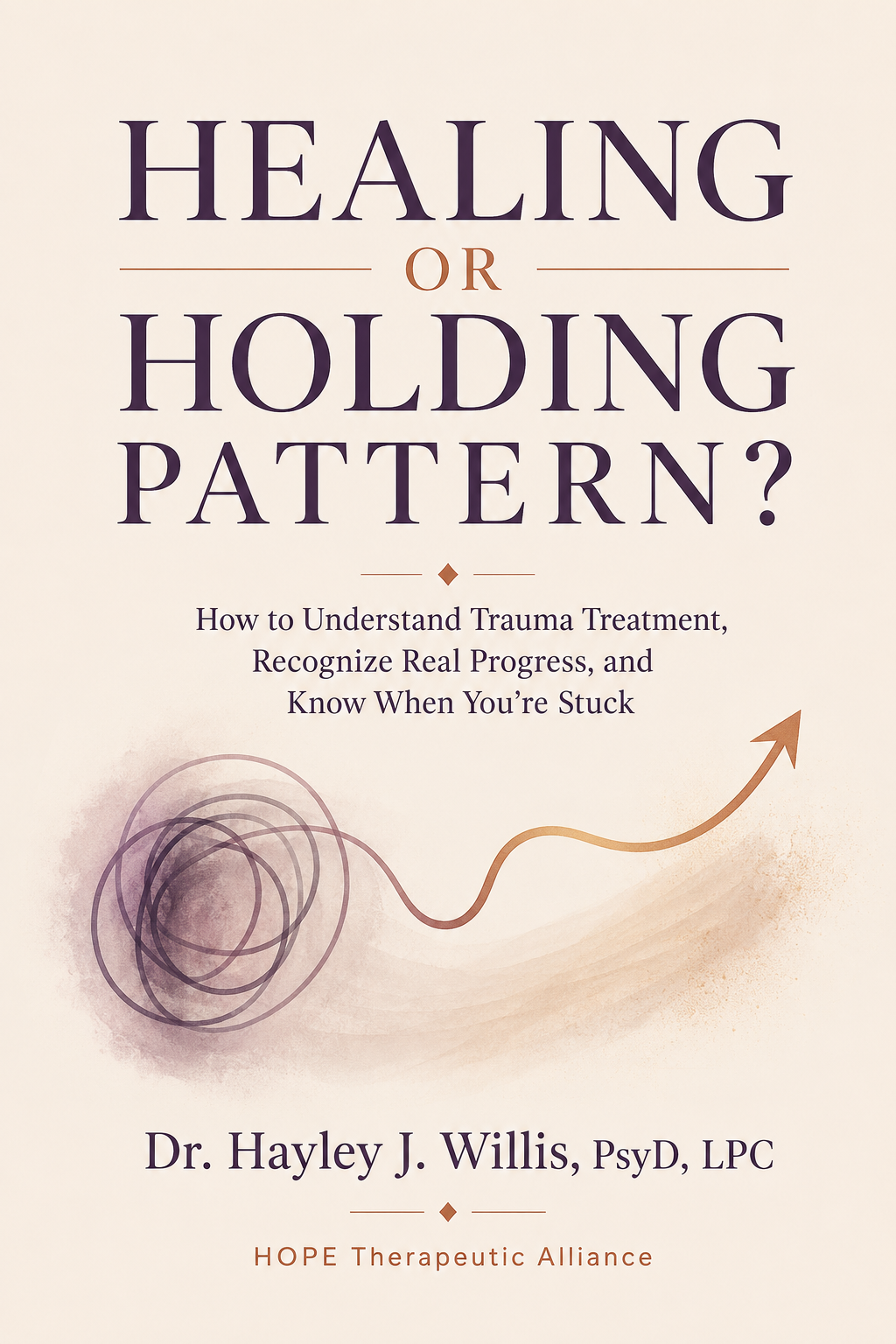
Healing or Holding Pattern? is for the person who has been showing up to therapy, learning the language, building insight, and still quietly wondering whether the work is actually helping.
Trauma therapy can be supportive, meaningful, and necessary, but it can also be difficult to evaluate from the inside. A plateau may be part of stabilization, or it may be a sign that treatment has quietly stopped moving. Discomfort may be part of healing, or it may mean the pace, fit, or approach needs to be revisited.
This field guide helps readers better understand the trauma treatment process itself. Inside, readers will learn how different trauma patterns call for different treatment targets, how stabilization, processing, and integration each serve a role in healing, and how to recognize signs of real progress, stagnation, poor pacing, and meaningful movement.
This is not a workbook and it does not ask readers to retell their trauma on the page. Instead, it gives them language for the questions that often stay vague: What are we doing here? Is this helping? Why this approach? How will we know if it is working?
Trauma therapy should not require blind faith. It should have enough structure, honesty, and direction that readers can become more informed participants in their own care.
*This resource is an educational tool intended to support personal growth and emotional wellness and is not a substitute for therapy or mental health treatment.
DIGITAL DOWNLOAD
Browse Other Categories






Continue your healing with confidence.
Understanding the therapy process is an important step, but healing doesn't have to happen alone. Whether you're beginning trauma therapy, returning after time away, or looking for a therapist whose approach aligns with your needs, we're here to help.
At HOPE Therapeutic Alliance, we believe trauma therapy should be collaborative, intentional, and grounded in evidence-based care. Together, we'll create a treatment plan that supports meaningful progress while honoring your pace, your goals, and your nervous system.