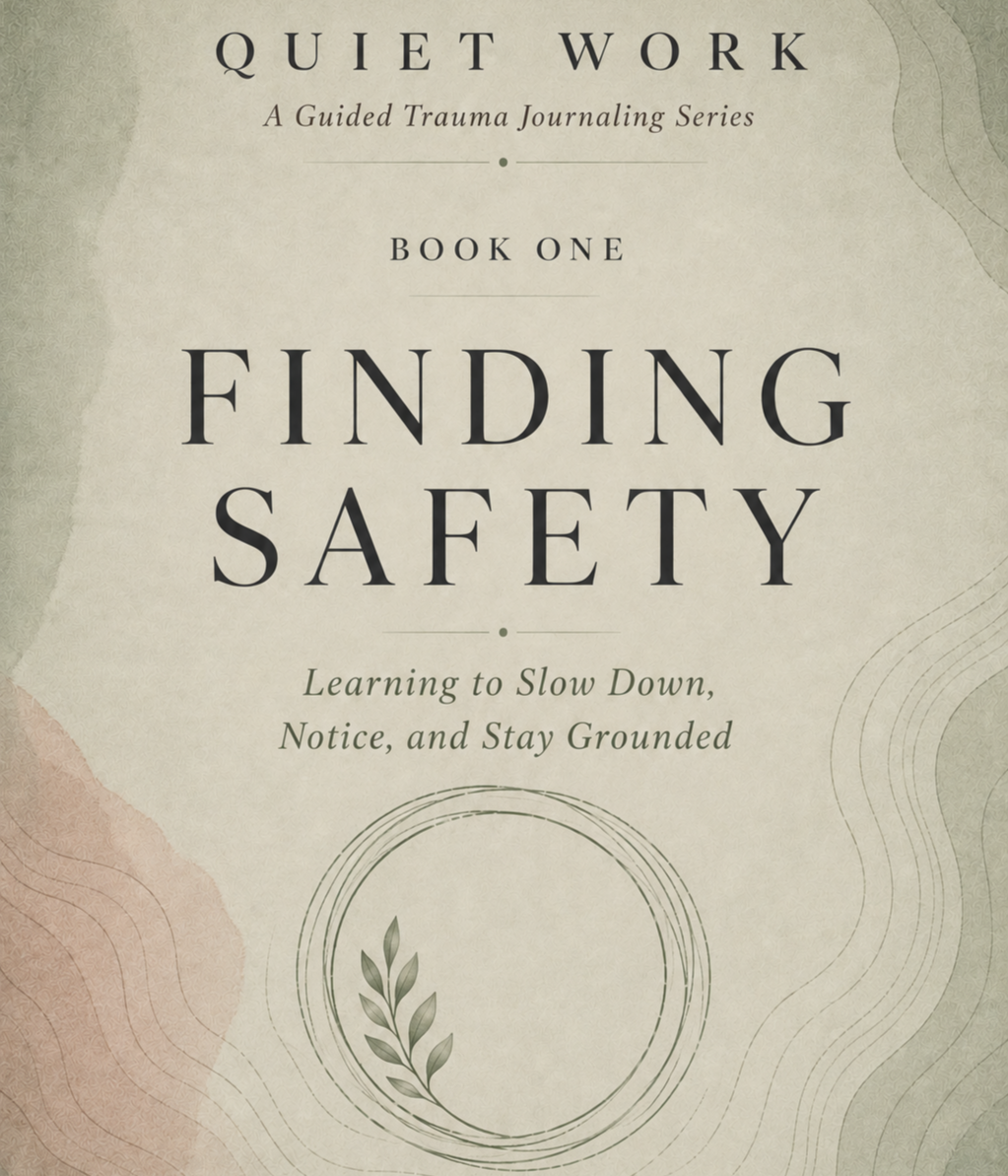
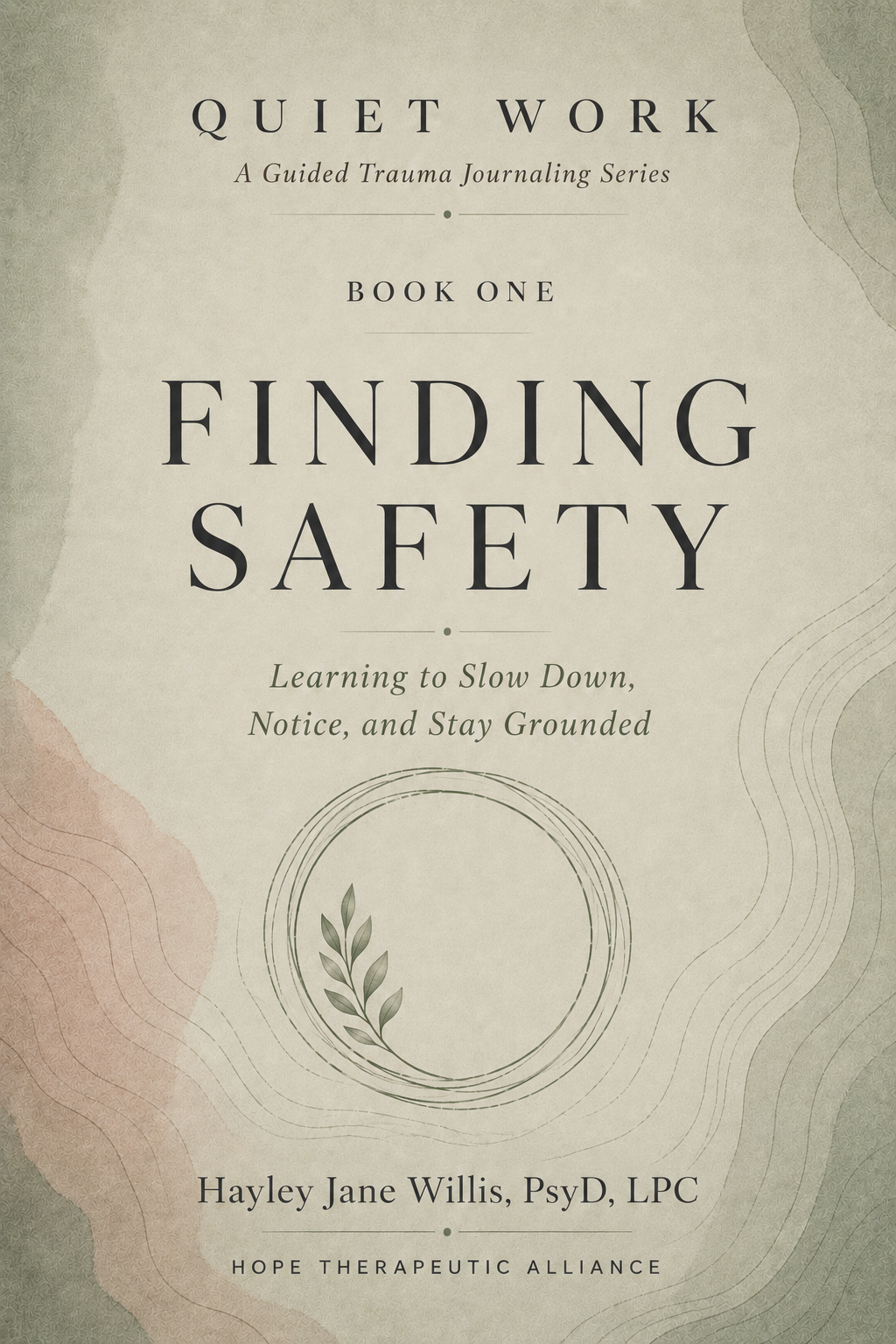
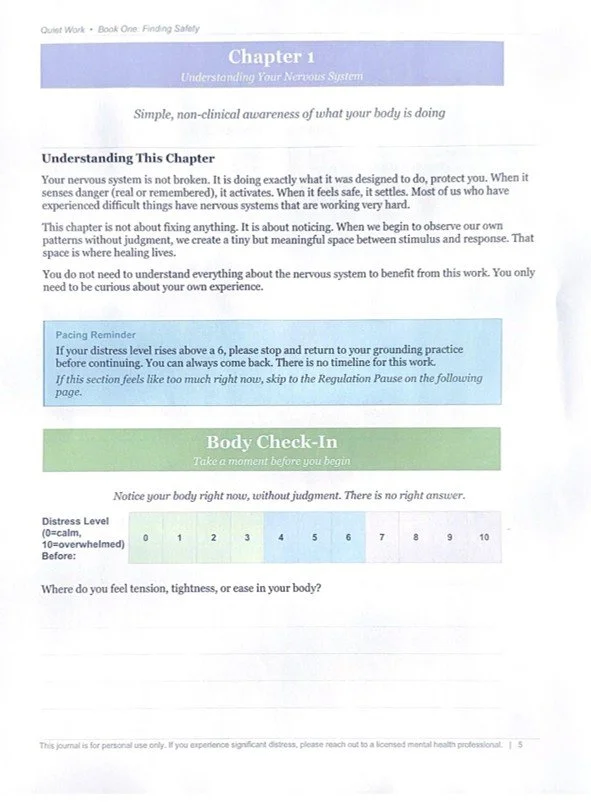
Before healing can feel safe, your mind and body often need proof that they no longer have to stay in constant survival mode. The first book in the Quiet Work Series is designed to help you create that foundation. Rather than asking you to immediately unpack painful experiences, this volume focuses on building emotional stability, nervous system awareness, and a stronger sense of personal safety. Through 21 pages of guided reflection, grounding exercises, and intentional pauses, you will begin learning how to recognize overwhelm before it fully takes over and how to respond to yourself with greater steadiness instead of pressure. This book is not about forcing progress. It is about helping you slow down enough to develop the internal support needed for deeper healing later on.
*This resource is an educational tool intended to support personal growth and emotional wellness and is not a substitute for therapy or mental health treatment.
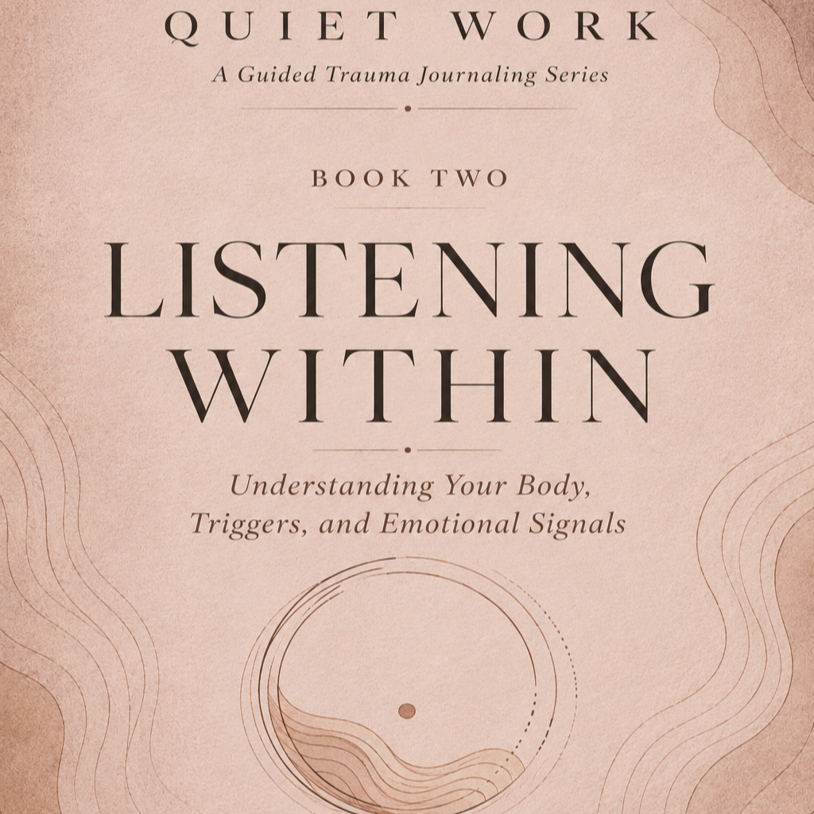
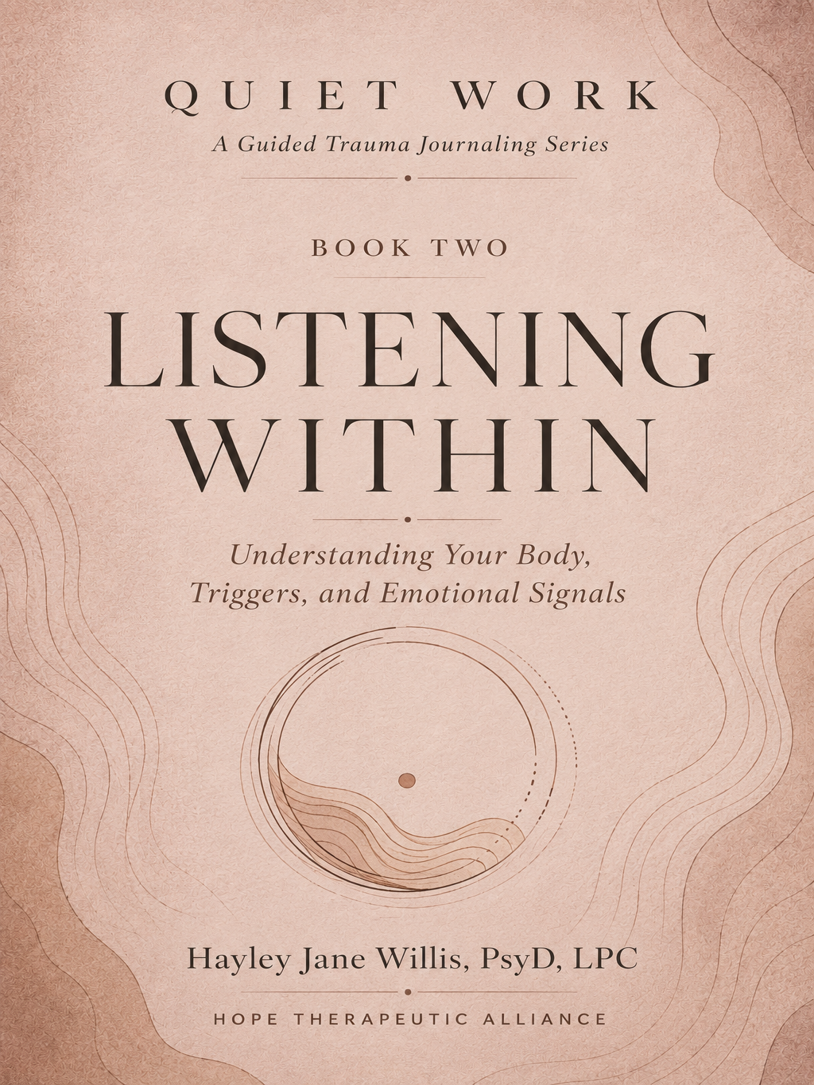
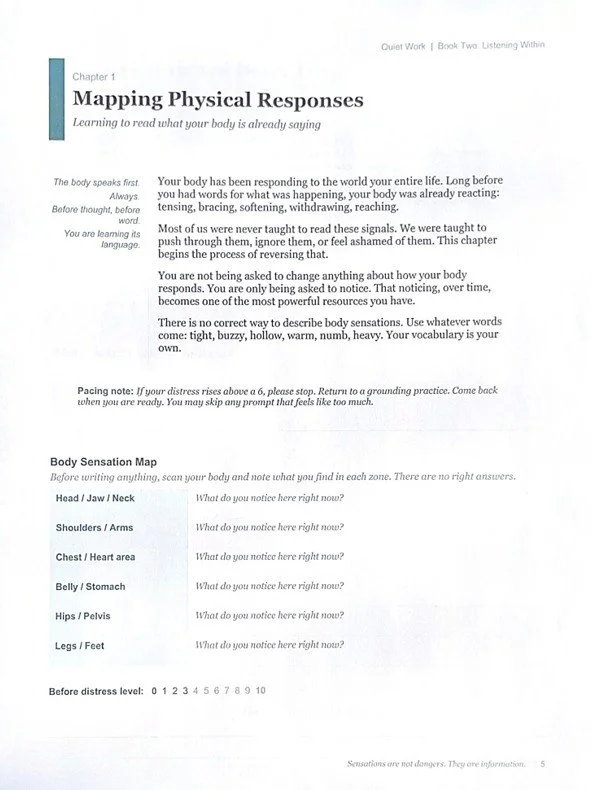
Your body often notices danger long before your mind has words for it. Book Two in the Quiet Work Series focuses on helping you reconnect with those internal signals in a way that feels manageable rather than overwhelming. Across 17 pages of guided journaling and somatic reflection, you will begin identifying how stress, fear, tension, and emotional activation show up physically within your body. Instead of treating triggers as dramatic or irrational reactions, this workbook helps you understand them as meaningful nervous system responses shaped by past experiences. The goal is not hypervigilance or overanalysis. It is learning how to listen to yourself with more curiosity, accuracy, and control so your body no longer feels like something happening against you.
*This resource is an educational tool intended to support personal growth and emotional wellness and is not a substitute for therapy or mental health treatment.
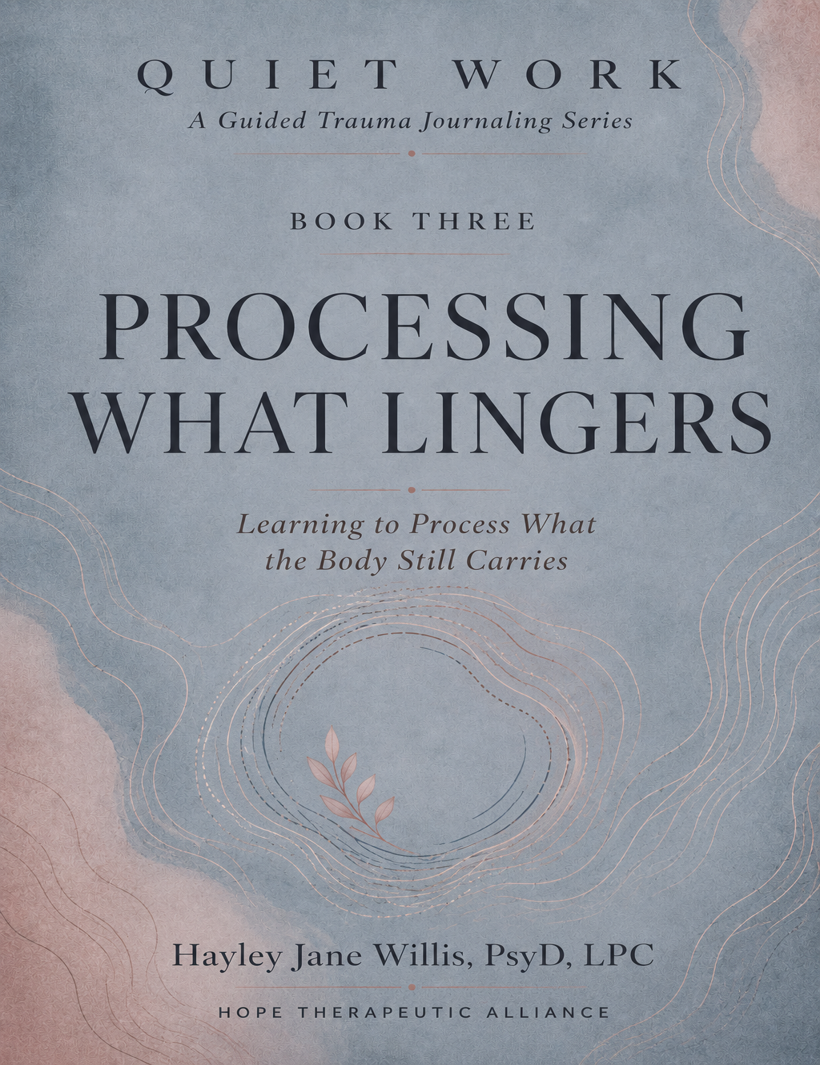
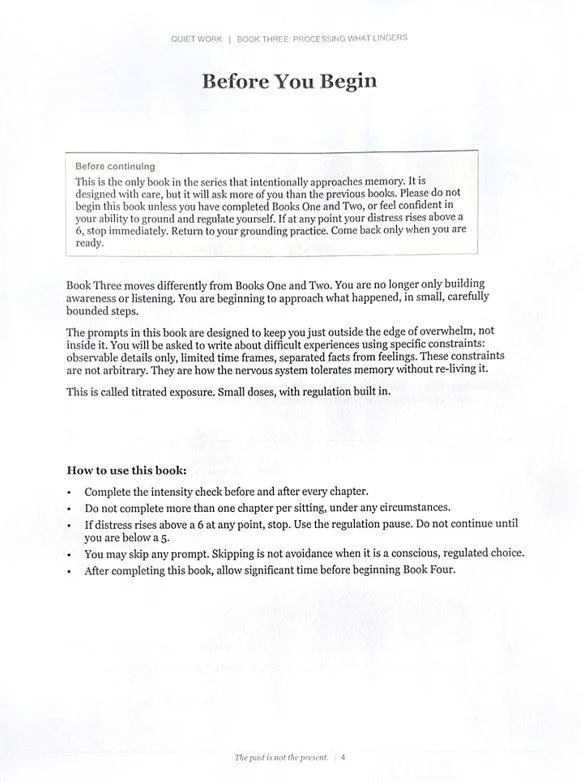
Some memories do not feel finished. They still carry the emotional intensity, physical tension, and sense of immediacy of the moment they were formed. Book Three in the Quiet Work Series carefully approaches those experiences without pushing you into emotional flooding or forced disclosure. Through 17 pages of structured journaling prompts, you will learn how to engage difficult memories in smaller, more manageable pieces while staying connected to the present. The exercises are designed to help you separate observation from overwhelm, allowing your nervous system to process information without feeling trapped inside it again. Rather than forcing you to relive the past, this workbook helps you recognize that the event may still affect you, but it is no longer actively happening. The goal is not emotional intensity. It is helping your mind and body finally recognize the difference between then and now.
*This resource is an educational tool intended to support personal growth and emotional wellness and is not a substitute for therapy or mental health treatment.
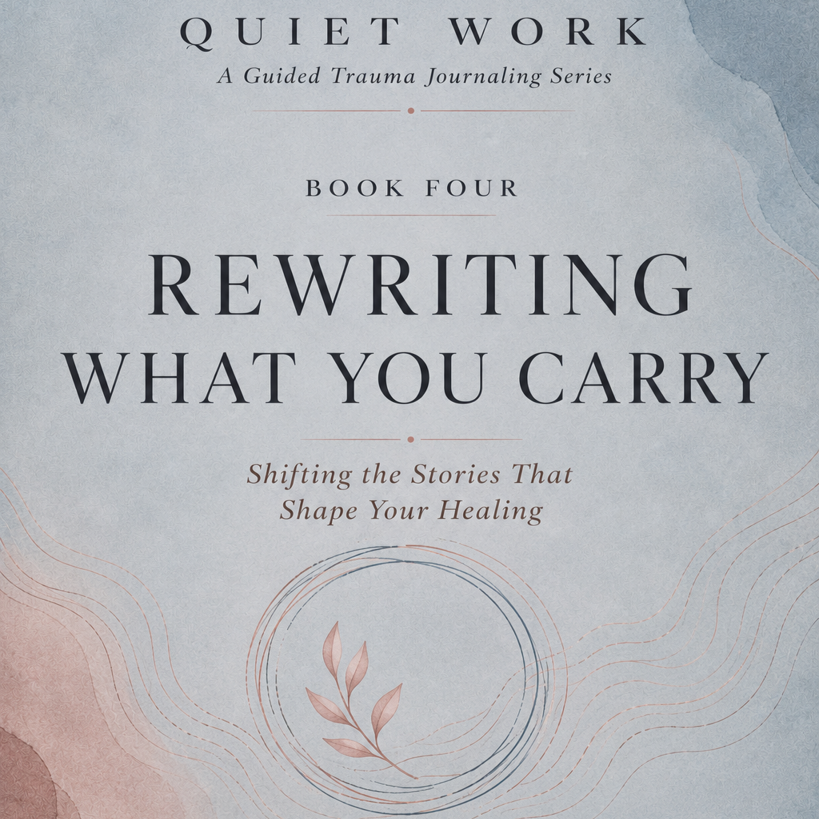
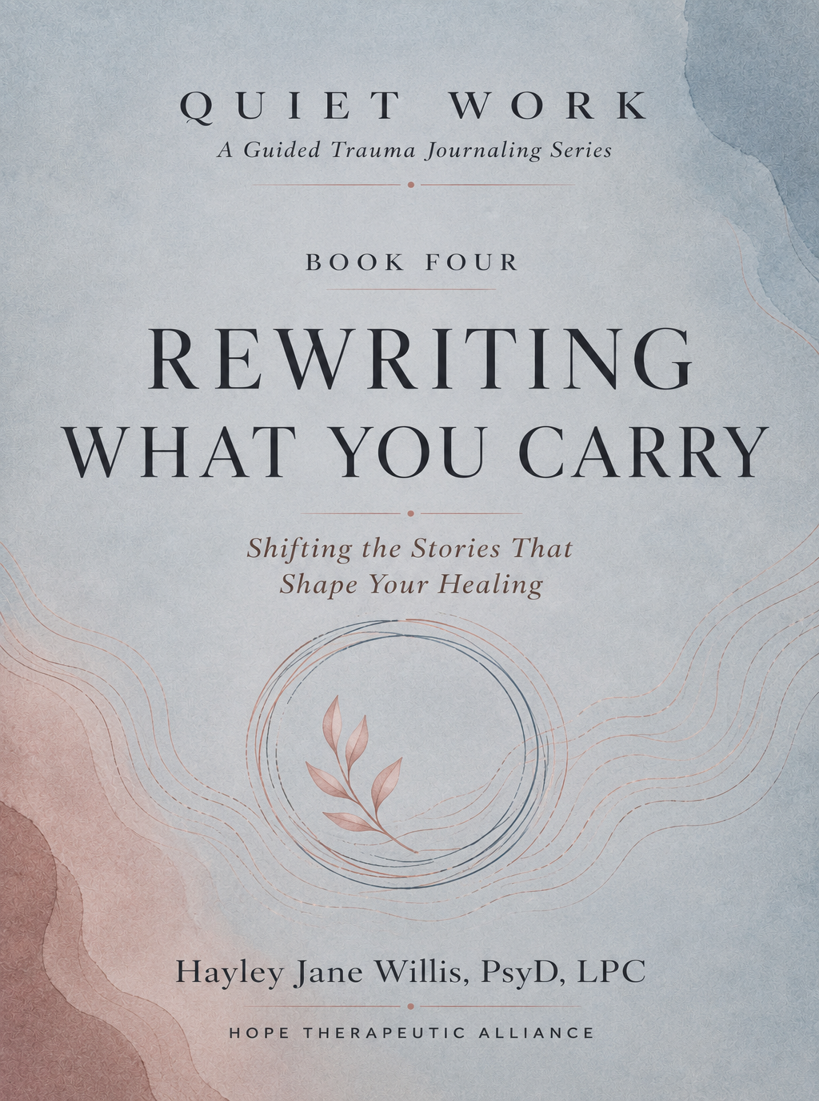
Trauma does not only affect memories. It changes the way people interpret themselves, relationships, safety, trust, and the world around them. Book Four in the Quiet Work Series focuses on the beliefs and survival rules that often develop after painful experiences and continue operating long after the original danger has passed. Through 17 pages of guided reflection, you will begin identifying the internal narratives that shaped your decisions, reactions, and sense of self over time. Rather than criticizing the ways you learned to survive, this workbook approaches those patterns with honesty and context, recognizing that many of them once had a purpose. The exercises help you evaluate whether those beliefs still fit your current life and create space for more flexible, balanced ways of understanding yourself without dismissing what you have been through.
*This resource is an educational tool intended to support personal growth and emotional wellness and is not a substitute for therapy or mental health treatment.
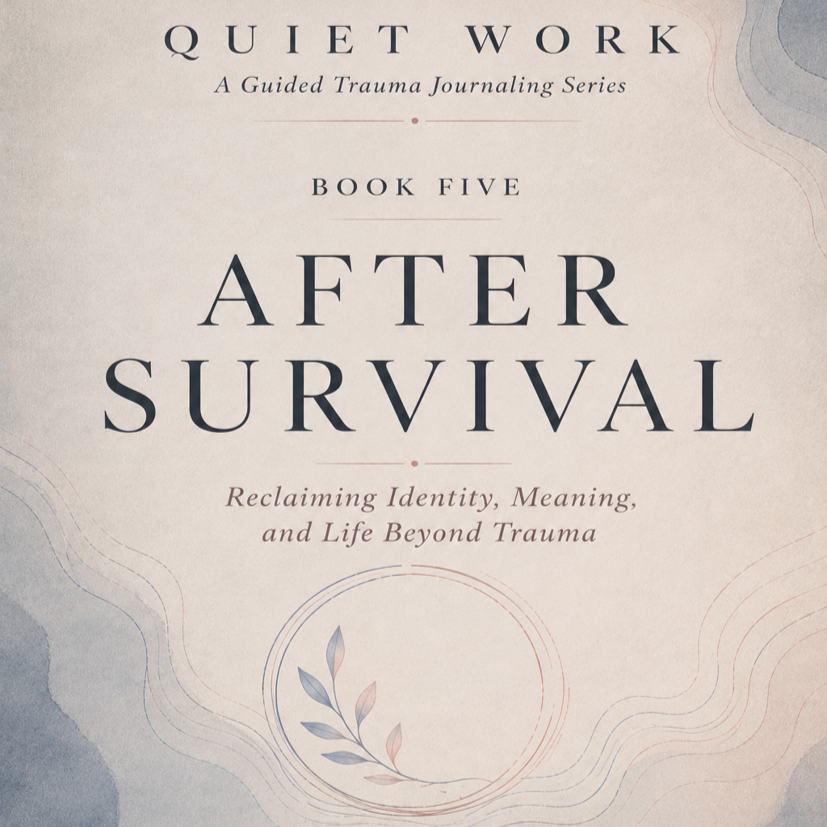
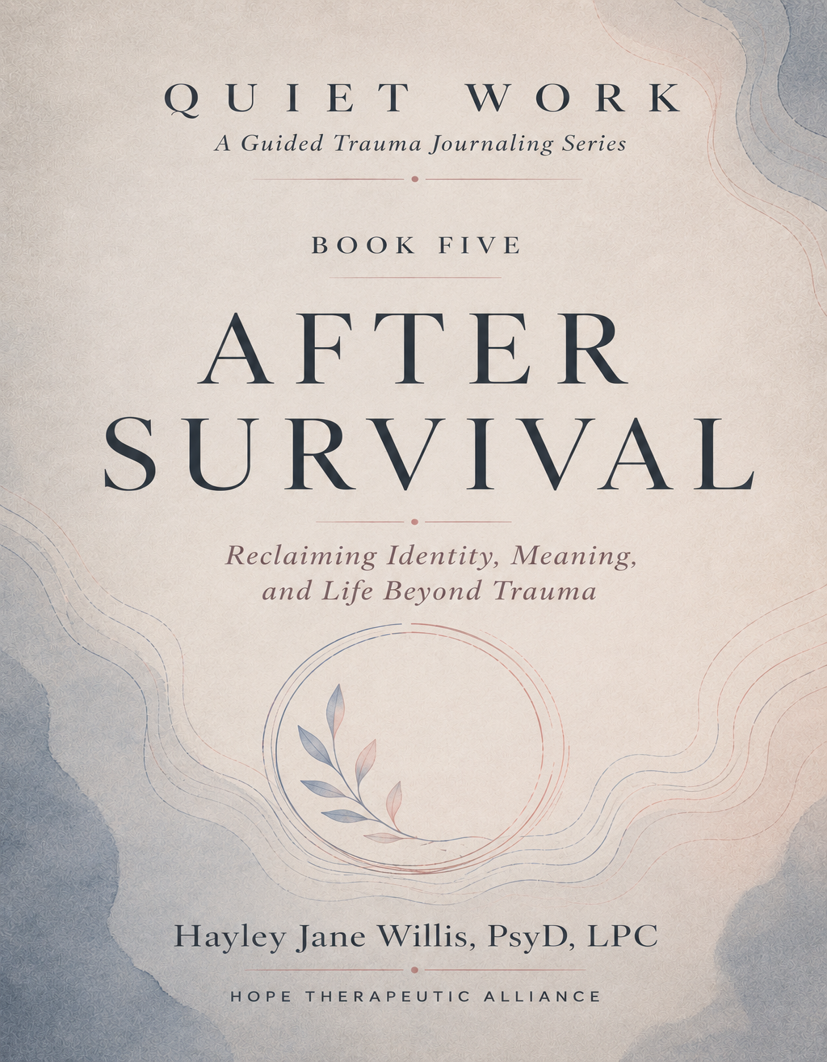
When survival takes over for long enough, people often lose sight of who they are outside of coping, protecting, enduring, or managing damage. Book Five in the Quiet Work Series shifts the focus away from what happened to you and toward the person you want to become moving forward. Across 26 pages of guided journaling, reflective letters, and value-based prompts, this workbook helps you explore the difference between the identity shaped by survival and the identity built through choice. You will begin identifying which parts of yourself were adaptations to pain and which parts still feel genuinely aligned with who you are. This book is less about reinventing yourself and more about reconnecting with the pieces that may have been buried underneath years of survival mode, self-protection, or emotional exhaustion.
*This resource is an educational tool intended to support personal growth and emotional wellness and is not a substitute for therapy or mental health treatment.
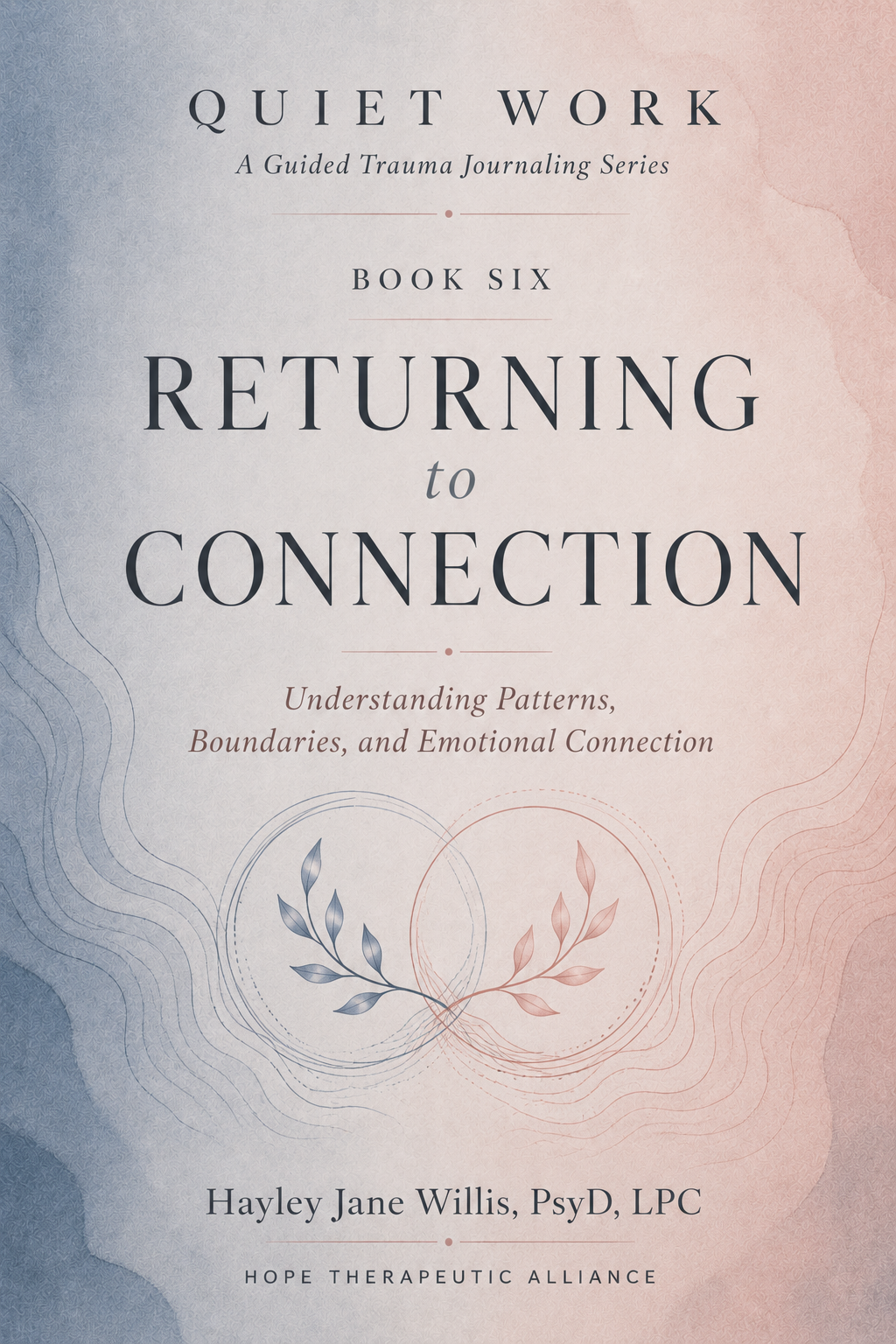
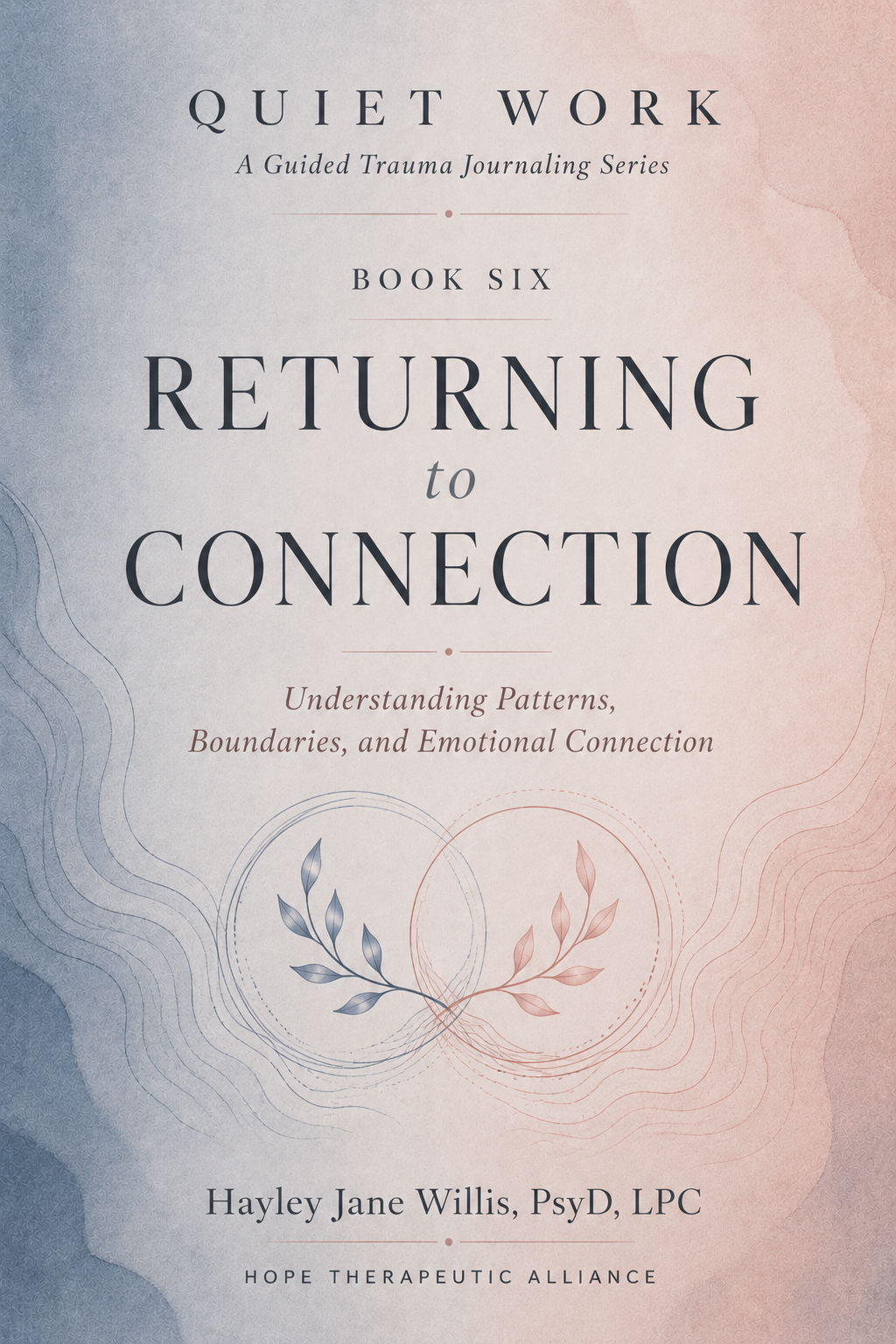
Healing becomes much more complicated once other people are involved. Book Six in the Quiet Work Series focuses on the relational patterns that trauma often leaves behind, including difficulty trusting, fear of vulnerability, emotional withdrawal, overprotection, people-pleasing, and uncertainty around boundaries. Through 20 pages of guided reflection and practical exercises, this workbook helps you examine how past experiences may still influence the way you connect, communicate, and protect yourself within relationships. You will begin identifying the patterns that keep repeating, the needs that often go unspoken, and the boundaries that create safety without forcing isolation. Rather than framing closeness and self-protection as opposites, this book helps you explore how connection can become more intentional, balanced, and emotionally sustainable over time.
*This resource is an educational tool intended to support personal growth and emotional wellness and is not a substitute for therapy or mental health treatment.
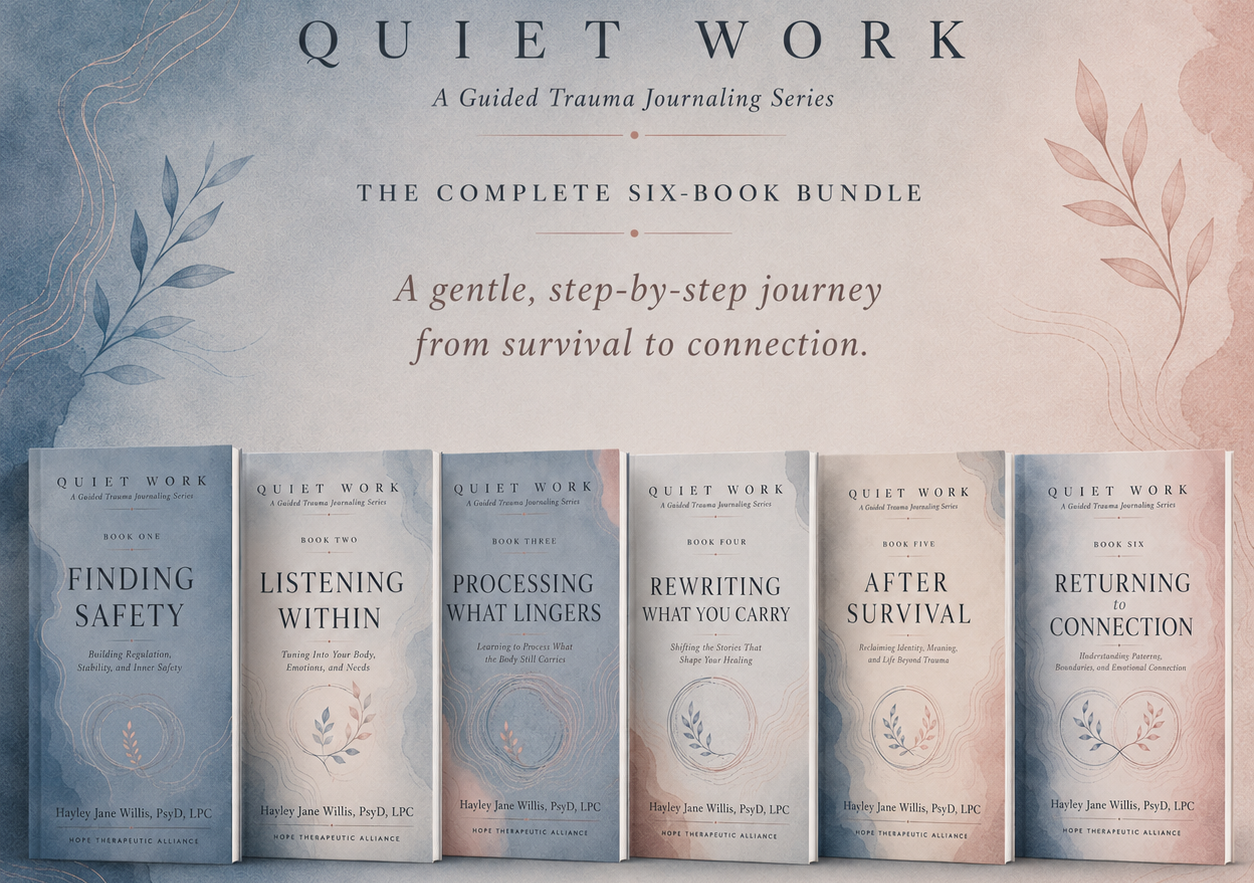
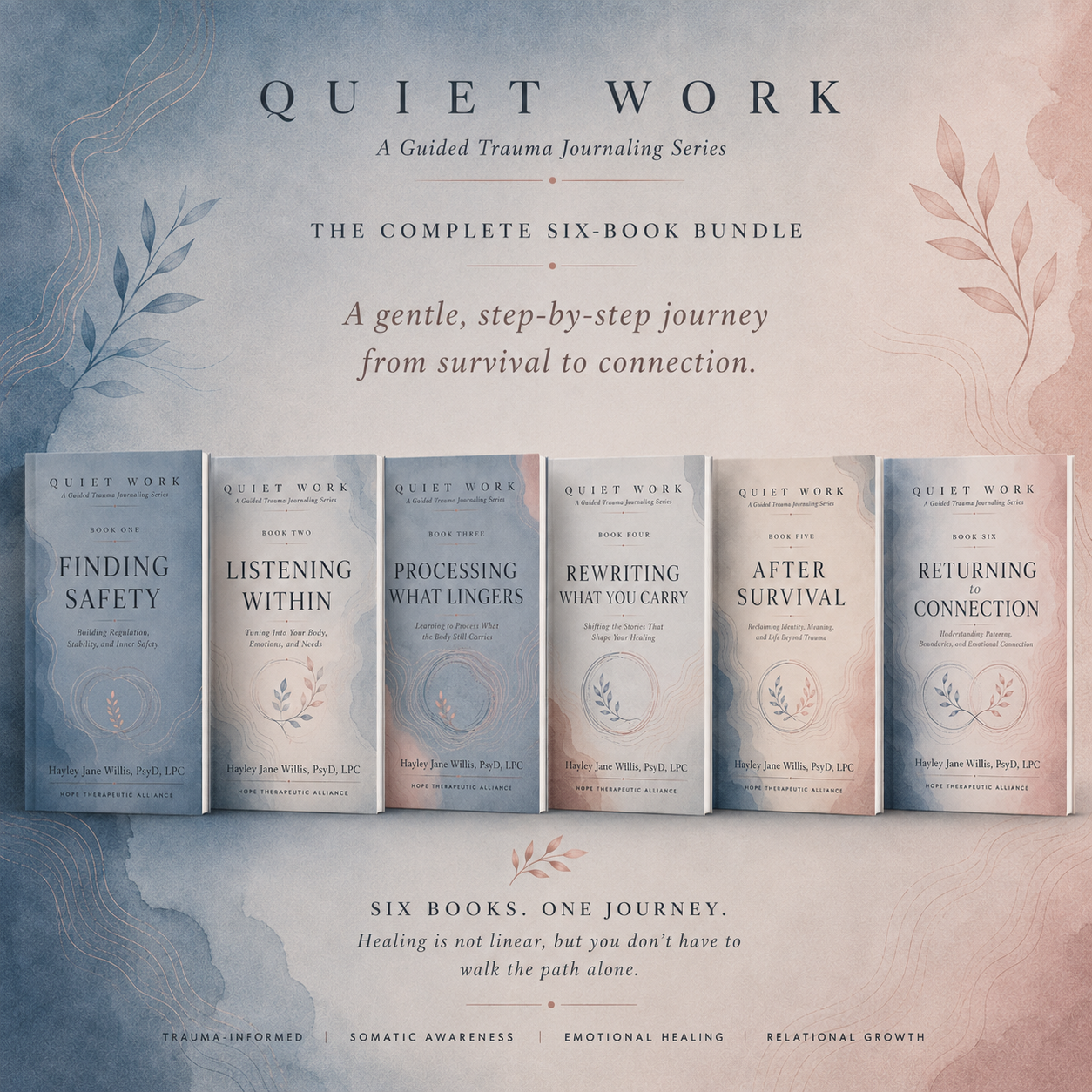
Healing does not usually happen in one breakthrough moment. More often, it happens quietly through small acts of honesty, reflection, regulation, and learning how to stay connected to yourself without shutting down. The Quiet Work is a six-part guided trauma journaling series created for people who want a deeper, more intentional approach to recovery. Across 118 pages, this collection helps you gradually build emotional safety, strengthen awareness of your body and nervous system, process what has been carried for too long, and reconnect with parts of yourself that survival required you to silence. Each volume builds on the last, creating a paced and structured experience that prioritizes stability over emotional overwhelm. This series is not about forcing vulnerability or endlessly revisiting pain. It is about helping you develop the capacity to live beyond survival mode and move toward a life that feels more grounded, connected, and fully your own.
*This resource is an educational tool intended to support personal growth and emotional wellness and is not a substitute for therapy or mental health treatment.
No results match your search. Try removing a few filters.