
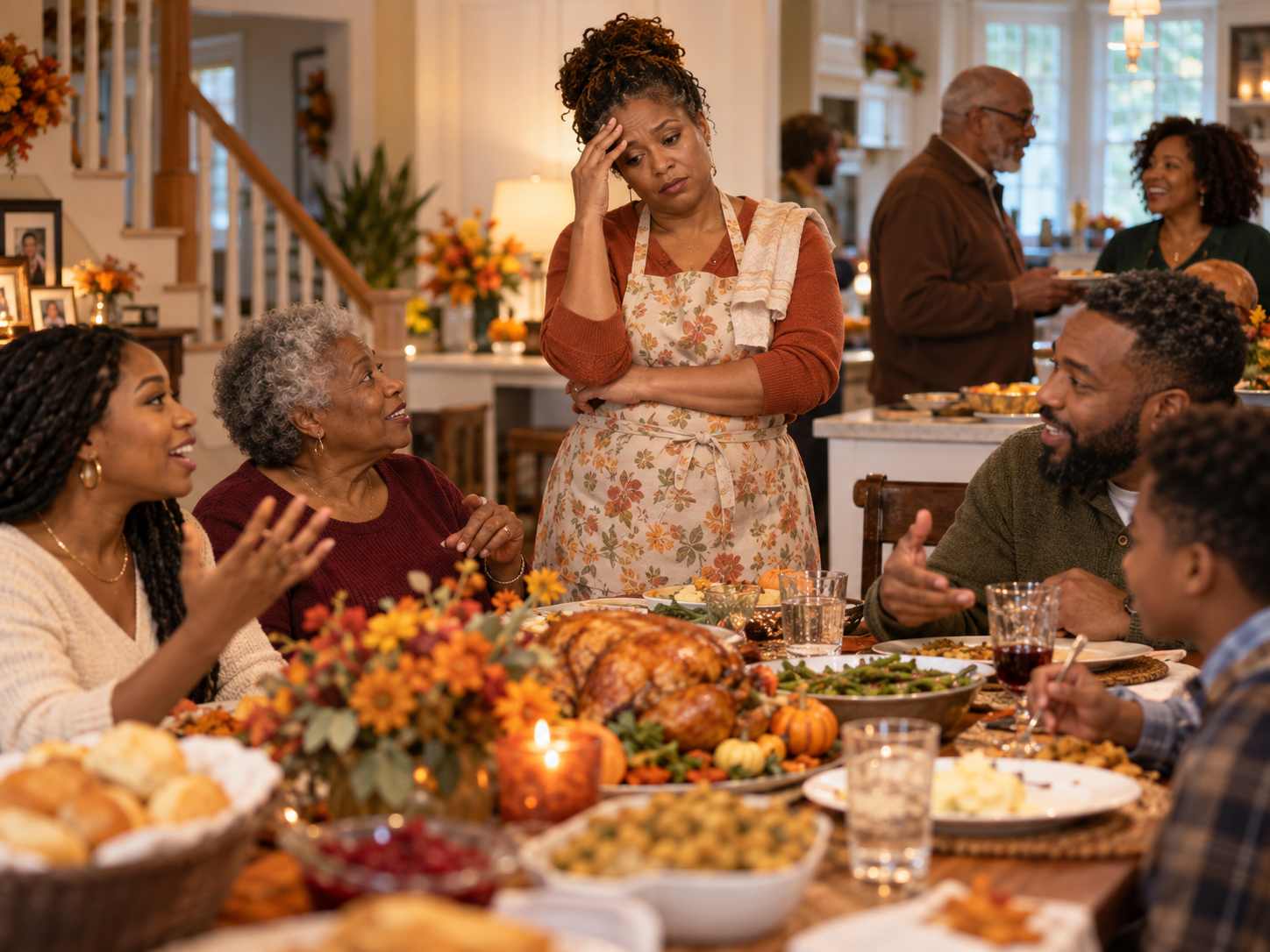
Every November, families across the country begin making plans for a holiday that is supposedly about gratitude and togetherness. Then the group texts begin, the travel negotiations start, and someone becomes offended because dinner may happen at 2:00 instead of 1:00.
Thanksgiving has a remarkable ability to turn mashed potatoes into a loyalty test.
The conflict is rarely about the potatoes, the time, or who is bringing dessert. It is usually about what those details represent. A change in plans can feel like rejection. Choosing to spend the holiday somewhere else can be interpreted as choosing one side of the family over another. Ending a tradition may feel like erasing the person who started it. Adult children may be expected to reproduce the holidays of their childhood even though they now have partners, children, careers, travel limitations, and in-laws with expectations of their own.
Families change. Thanksgiving plans often act as though they do not.
Tradition Can Become an Obligation No One Is Allowed to Question
Traditions can be deeply grounding. They stitch generations together through continuity and shared memory: the handwritten recipe passed down, the ritual card game around the cleared table, or the well-worn stories everyone knows by heart. At their best, these rituals help a family recognize itself.
The trouble begins when tradition is treated as more sacred than the actual humans expected to carry it.
When the family dynamic itself is no longer working, family counseling can help address communication, boundaries, grief, changing roles, and conflict.
Check out Family Counseling Here At HOPE!
Old traditions fall apart simply because life moves forward. As family trees branch through divorce, remarriage, loss, and growing kids, the old expectations become impossible to sustain. Whether it is an empty seat at the table, a relative protecting their hard-won sobriety, an infant turning a long drive into chaos, or someone finally deciding they will no longer stomach disrespect just to avoid rocking the boat, the holiday naturally has to change to fit the people living it.
Even so, families often grip the old script with white knuckles, treating any deviation as a betrayal or a personal failure. But an evolving tradition does not mean something has broken down. It just means the family is alive, dynamic, and learning to meet one another where they are today.
“But We Have Always Done It This Way” Is Not a Complete Reason
When someone questions a family plan, the response is often immediate: “But we have always done it this way.”
That sentence explains the history. It does not explain why the arrangement still makes sense.
Maybe everyone has always gathered at one person’s house because that person had the largest dining room. Twenty years later, she may still be cooking for thirty people because nobody has asked whether she wants to. Perhaps the same adult daughter organizes every detail because she did it well once and the family quietly made it her permanent assignment. Maybe younger relatives travel every year because older relatives assume their time is more flexible. The tradition continues partly because the burden has become so familiar that no one sees it anymore.
Why does changing an old pattern feel so uncomfortable, even when you know it no longer works?
Explore Why Is Change So Hard?
If preserving a holiday requires one person to become exhausted, resentful, or invisible, the family is not protecting connection. It is protecting a routine.
There is nothing sacred about an arrangement that nobody is allowed to revisit.
Guilt Is Often Used to Keep the Old System Running
Holiday guilt rarely announces itself plainly. People do not usually say, “I want you to ignore your own needs so I do not have to adjust.” They say, “Your grandmother may not have many Thanksgivings left.” They ask whether a new partner’s family matters more now. They point out how hard they worked to make the meal or remind everyone that family should come first.

Some of those feelings may be sincere. A parent can genuinely miss an adult child. A grandparent’s health may make the year feel especially significant. A host may have invested real effort. Those emotions deserve consideration, but they do not automatically give one person control over everyone else’s decision.
Guilt becomes a problem when it is used as a substitute for negotiation. It turns a practical conversation about time, money, travel, and competing relationships into a judgment about who loves the family enough.
Adults are allowed to make holiday choices that disappoint people. Disappointment is not always evidence that the choice was wrong.
Adult Children Eventually Become Adults at Thanksgiving Too
Some families adjust easily when children grow up. Others continue to treat their adult children’s holiday plans as requests that require parental approval.
An adult child may now have a spouse whose family also wants time. They may have young children who do poorly with multiple houses in one day. They may work in health care, public safety, retail, the military, or another field that does not shut down for the holiday. They may live several states away and not have the money or energy to travel every November. None of that means they love their family less.
Work through communication, expectations, emotional clarity, connection patterns, and intentional conversations with your partner.
Connected Couple Workbook
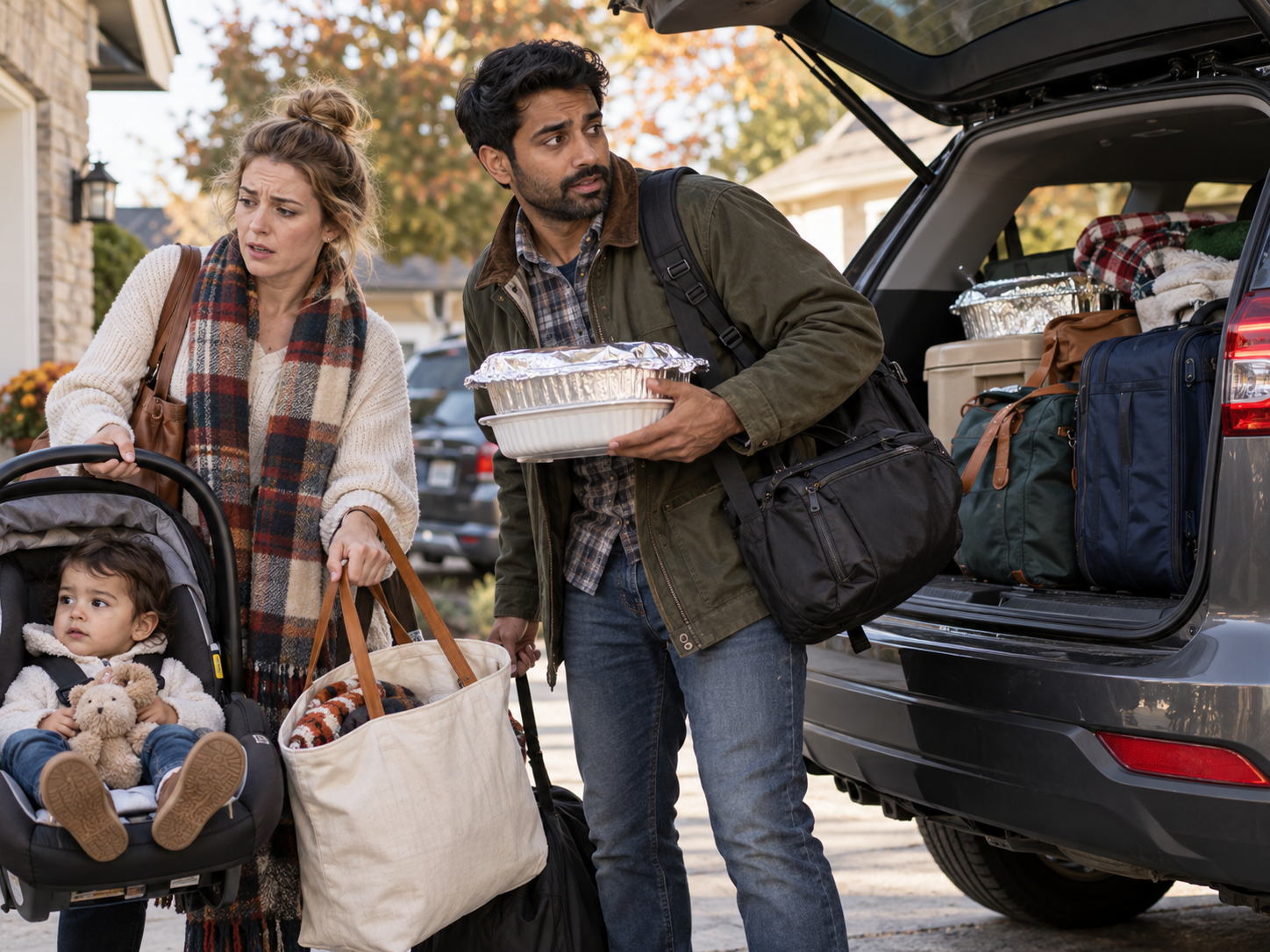
It does mean the old expectation may no longer fit. A couple cannot be in two homes at the same time, although many try by spending the day driving between meals and arriving late to both. They end Thanksgiving exhausted, overfed, and worried that somebody still felt slighted.
At some point, new households need room to make their own decisions. They may alternate years, host their own meal, combine families, celebrate on another day, or opt out of travel. Parents do not have to love every choice, but respecting an adult relationship means accepting that the decision no longer belongs to the family of origin alone.
Grief Changes the Room, Even When Everyone Avoids Saying It
The first Thanksgiving after a death is not the same holiday with one fewer chair. The entire emotional structure of the gathering can change.
The person who died may have cooked the meal, kept the conversation moving, softened family tension, or insisted that everyone gather. Their absence can make familiar traditions feel comforting to one person and unbearable to another. Someone may want to prepare every recipe exactly as before. Someone else may never want to taste that pie again.
Grief can affect the entire family differently. Counseling can provide room to process loss without requiring everyone to grieve the same way.
Take a look at our Counseling Options to help navigate this transition!
Families often create conflict by assuming there is one correct way to honor the person. Continuing the tradition may feel like love. Changing it may also feel like love. Neither choice proves who is grieving properly.
The kindest plan may be the one that leaves room for mixed reactions. People can laugh and miss someone at the same table. They can enjoy part of the day and still need a break. The holiday does not have to become a memorial service, but pretending nothing is different usually makes the difference feel even larger.
Sometimes a family needs to say the obvious: “This year is going to feel strange, and we do not have to force it to feel normal.”
Chosen Family Is Still Family
Thanksgiving conversations often assume that biological relatives have the strongest claim on a person’s time. That assumption does not reflect everyone’s life.
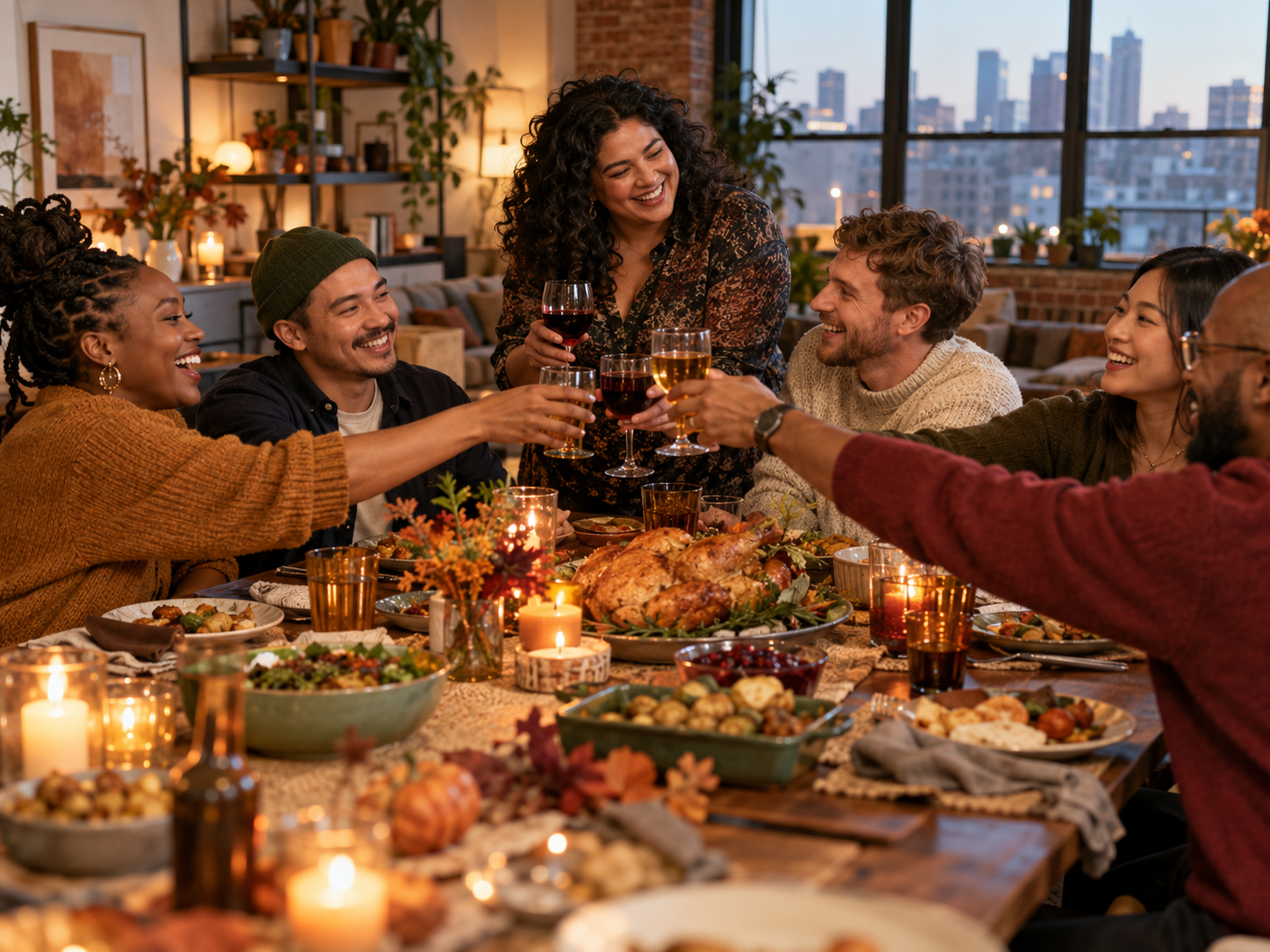
For some people, family gatherings are places where they are criticized, misgendered, interrogated about their body, pressured to drink, mocked for their beliefs, or expected to tolerate behavior that would be unacceptable anywhere else. Others are estranged from relatives, live far away, or simply have deeper and healthier relationships with friends.
Choosing to spend Thanksgiving with people who provide safety, respect, and mutual care is not a lesser version of the holiday. A table of friends, neighbors, coworkers, fellow service members, or people who did not have somewhere else to go can hold as much meaning as any traditional family gathering.
Blood connection can be important. It is not the only form of belonging.
This can be difficult for relatives to accept, especially when they view attendance as proof of loyalty. Still, being related to someone does not guarantee unlimited access to them, and a holiday invitation is not a summons.
A New Tradition Does Not Have to Be Impressive
When families decide to change a holiday, they sometimes create unnecessary pressure to replace the old tradition with something equally elaborate. That misses the point.
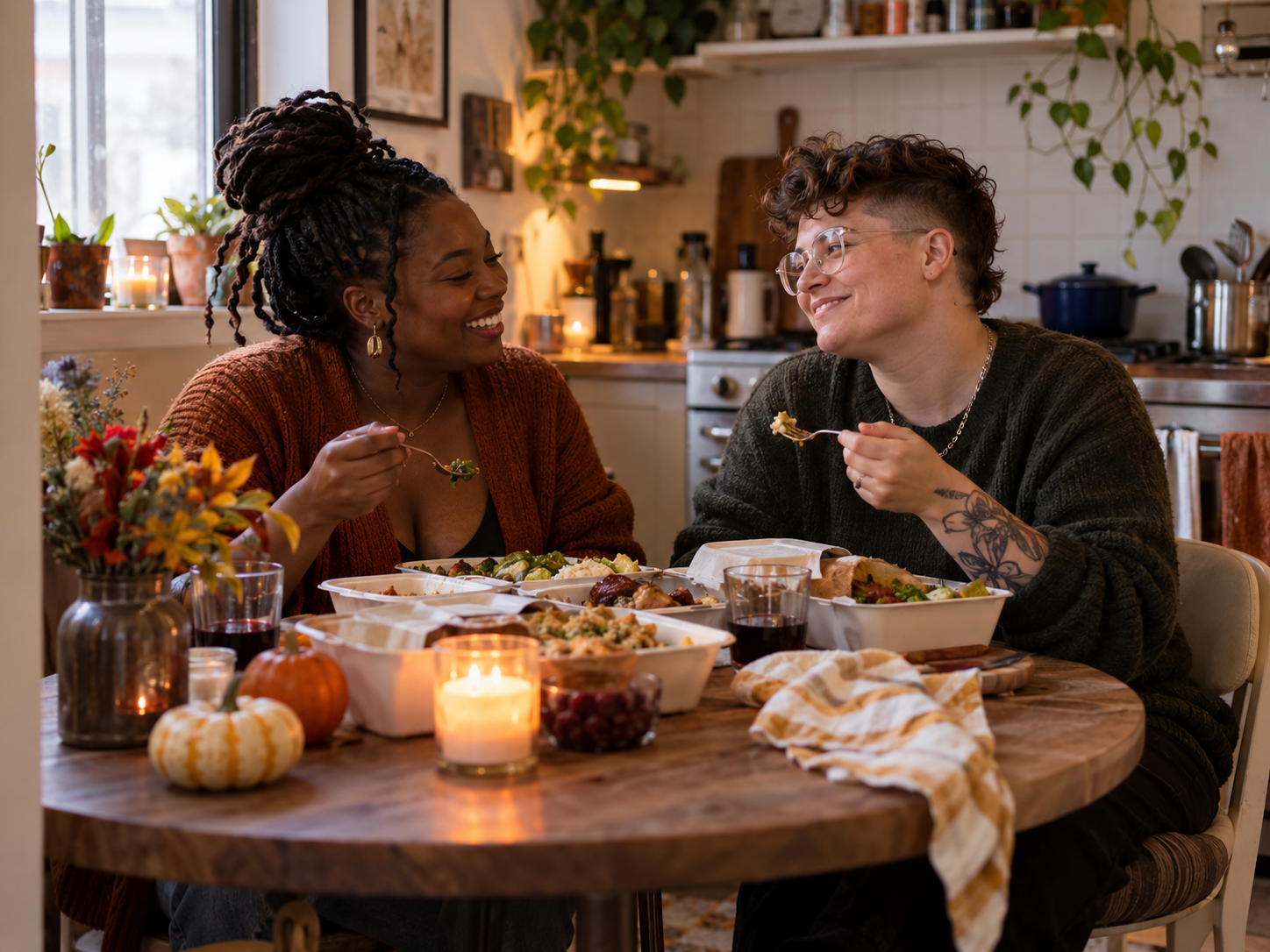
A new tradition can be ordering food instead of cooking. It can be eating breakfast together because someone works that evening. It can be taking a walk, watching a terrible movie, volunteering, playing cards, or allowing each household to celebrate separately and meeting for dessert on Friday.
The value of a tradition does not come from how photogenic it is. It comes from what it gives the people participating in it.
If an activity creates connection, reflects the family’s current reality, and can be carried without resentment, it may be worth keeping. If it repeatedly creates pressure and conflict, its age does not make it untouchable.
Not Every Family Difference Needs to Become a Debate
Families sometimes approach Thanksgiving as though one meal must resolve every political, religious, and generational disagreement that has accumulated all year. Someone raises a charged topic. Another person takes the bait. Soon the table is no longer a place to eat but a courtroom where everyone is trying to establish who is ignorant, selfish, immoral, or ruining the country.
There is a popular idea that healthy families should be able to discuss anything. In reality, healthy families also recognize when a conversation is unlikely to be respectful or useful. Choosing not to debate at dinner is not intellectual weakness. Sometimes it is basic judgment.
People can decide ahead of time that certain subjects are not part of the gathering. They can redirect a conversation without delivering a lecture about why it is inappropriate. A host can say, “We are not doing this today,” and move on.
The objective does not have to be perfect agreement. It can simply be getting through one meal without turning a relative into an opponent.
Gratitude Should Not Require Pretending
Thanksgiving comes with an expectation of gratitude, which can be meaningful until gratitude becomes another performance. People may feel pressured to act happy about relationships that are strained, a year that has been brutal, or circumstances they did not choose.
Looking for Free Support?
Alongside our Bookstore and Growth Library, HOPE offers a curated collection of free starting points, guides, and practical tools to support your next step.
Explore Free Resources Here
Gratitude does not require dishonesty. You can appreciate the people who showed up for you and still resent what someone else did. You can be thankful for your children and exhausted by parenting. You can recognize what is good while grieving what is missing.
Forced gratitude is not emotionally healthier because it sounds positive. Sometimes the most truthful version is modest: “This year was hard, but I am glad I did not go through it alone.” That is enough.
The Holiday Should Fit the People Who Are Actually Living It
Families do not have to discard every tradition the moment it becomes inconvenient. Compromise matters. Showing up for people sometimes requires effort, travel, and flexibility. Not every inconvenience is a violation of your well-being.
At the same time, “family” should not become the reason no one is allowed to admit that the current plan is not working.
The most useful question may not be, “How do we keep Thanksgiving the same?” It may be, “What are we trying to preserve?”
If the answer is connection, then the form can change. Dinner can happen on Saturday. The location can move. The menu can shrink. People can divide their time without being punished for it. A tradition can end without erasing the years when it mattered.
Thanksgiving does not have to look like it did when you were ten years old to remain meaningful. The family you have now deserves a holiday designed for the life it is actually living, not one spent trying to reenact a version that no longer exists.